A Gathering of Fractured Edges
An independent investigator arrives at the Wintercrest Festival estate to examine the circumstances surrounding a patron's death. The evening's social tapestry is woven with whispered reputations, ancestral legacies, and the quiet mechanics of genteel obligation.
 Initial Crime Scene
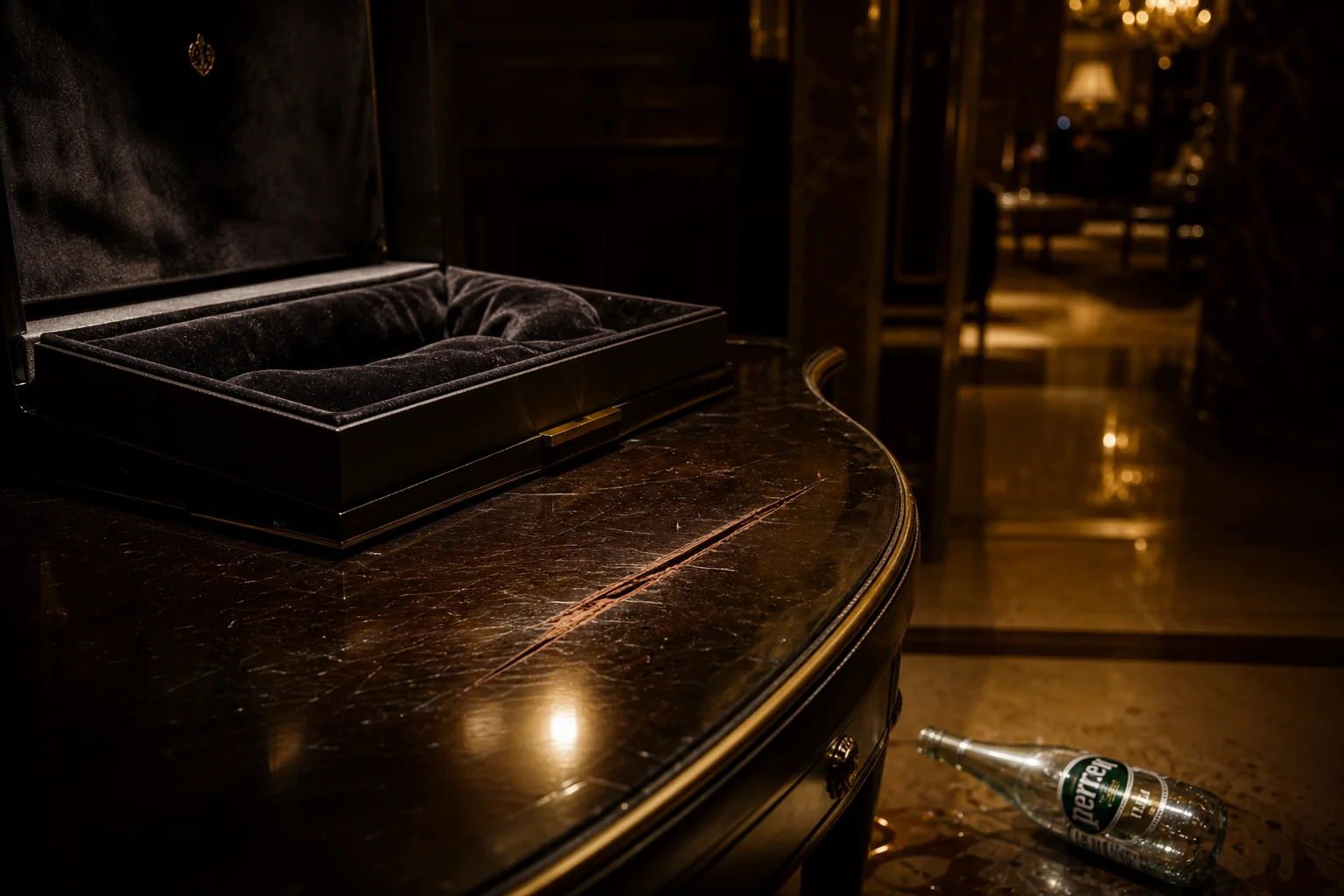
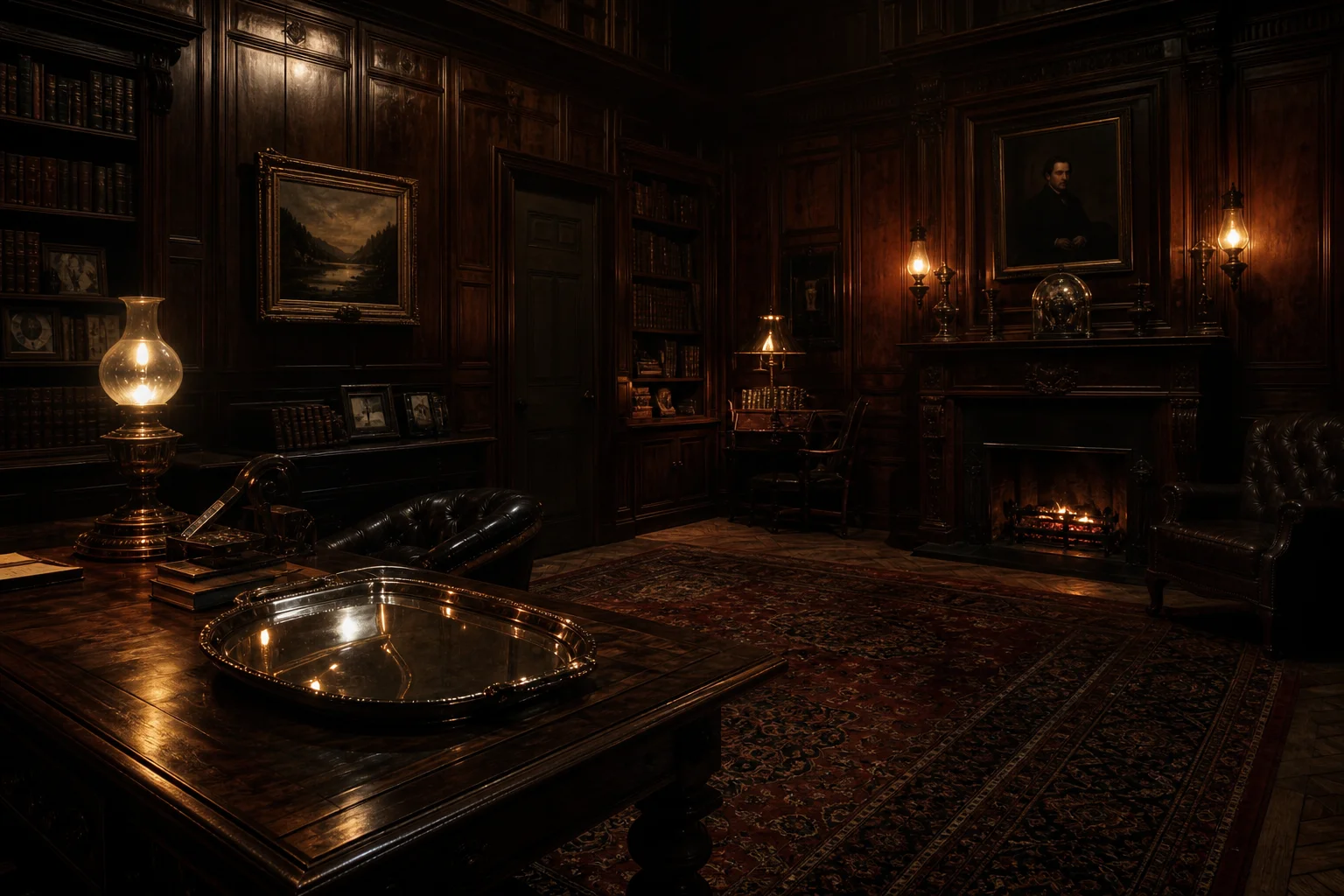
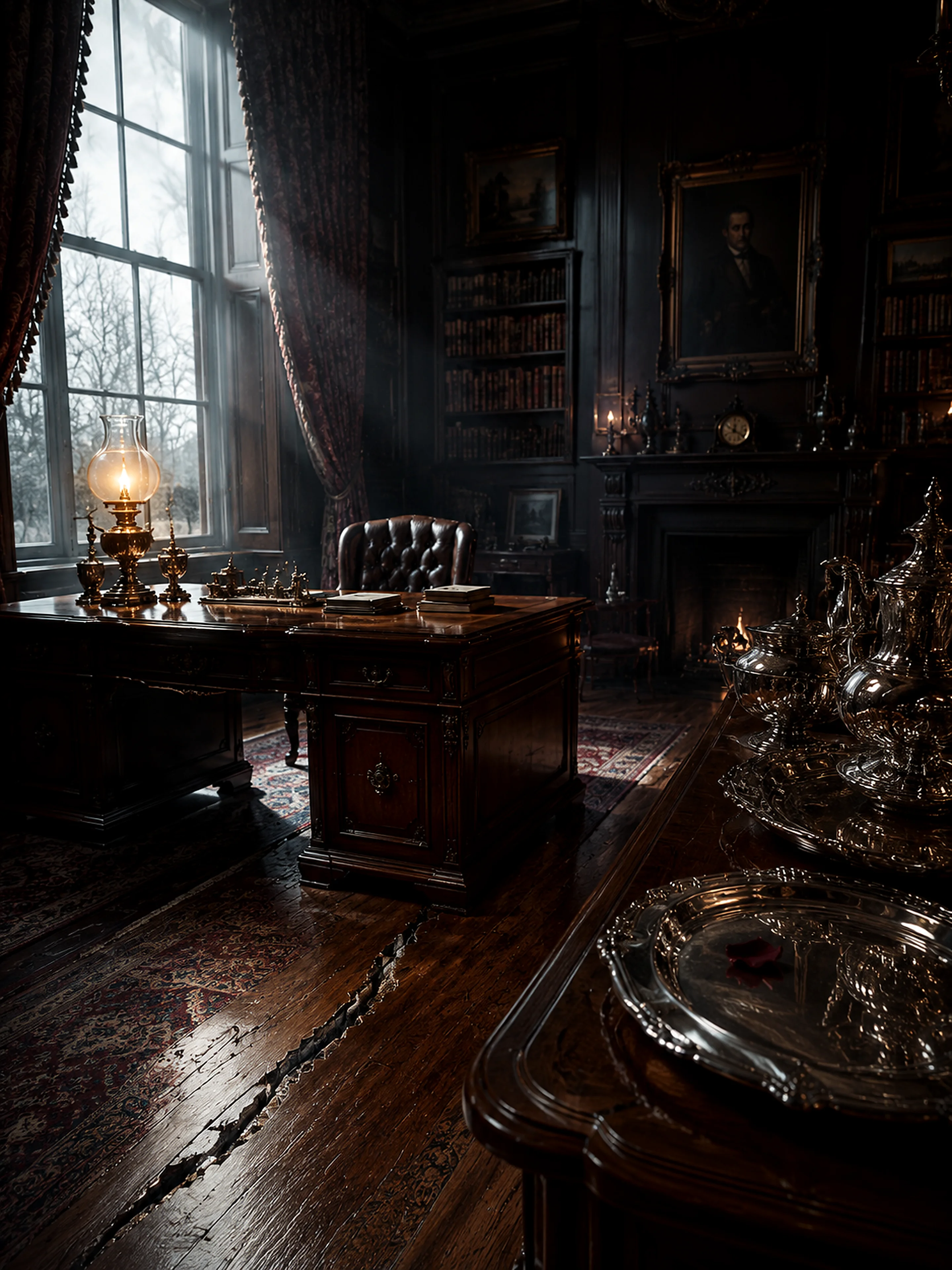
The heavy scent of beeswax polish and dried flowers hangs in the still air, muffling the distant hiss of a gas lamp. Your gaze catches the muted glint of ornate silverware on a sideboard, the deep, directional scar of raw wood marring the polished floor beneath a mahogany desk, and the faint, dust-moted path a single dropped petal traces across the silver tray.
 Crime Scene Environment
The lighting profile is a warm, localized glow from gas lamps, leaving corners in deep shadow. The humidity is low and dry, consistent with a heated, interior room in winter. The acoustic density is high, with sounds muted by heavy damask curtains and thick carpets, creating a layered, private silence.
 Investigation Constraints
Late 19th-century technology. Handwritten correspondence, rotary dial telephones in public offices, mechanical pocket watches, wax seals, manual typewriters in solicitors' offices, gas lamps, horse-drawn carriages, hand-wound gramophones, and rudimentary forensic tools like magnifying glasses and chemical reagents for ink analysis.
✦ Related Cases ✦