A Pemberton House Disquiet
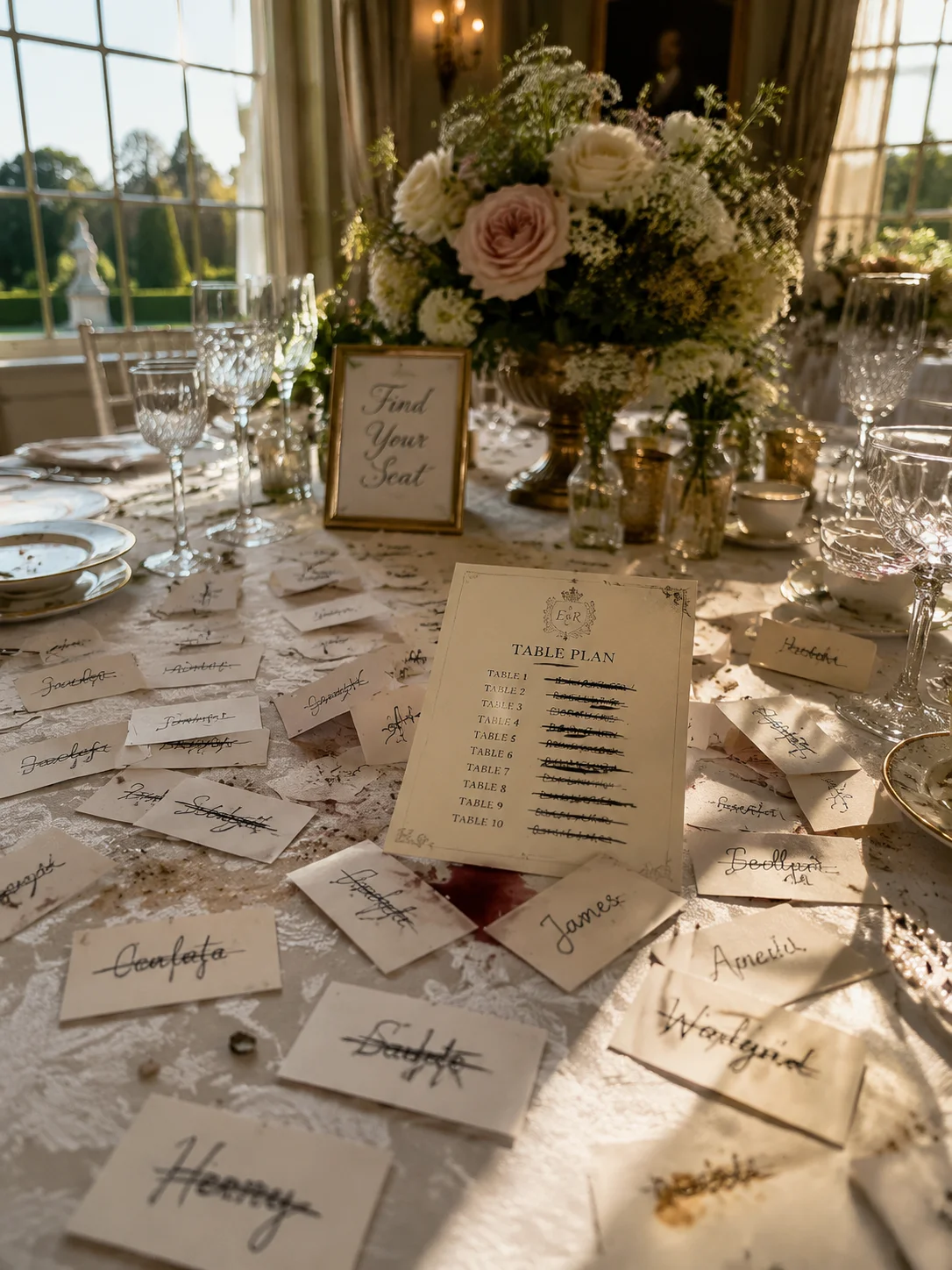
On the morning of a scheduled society union, the prospective groom fails to appear at the altar. An independent investigator is summoned to the estate to conduct a forensic examination of the premises and interview the assembled family and staff, all of whom present composed accounts of the morning.
 Initial Crime Scene
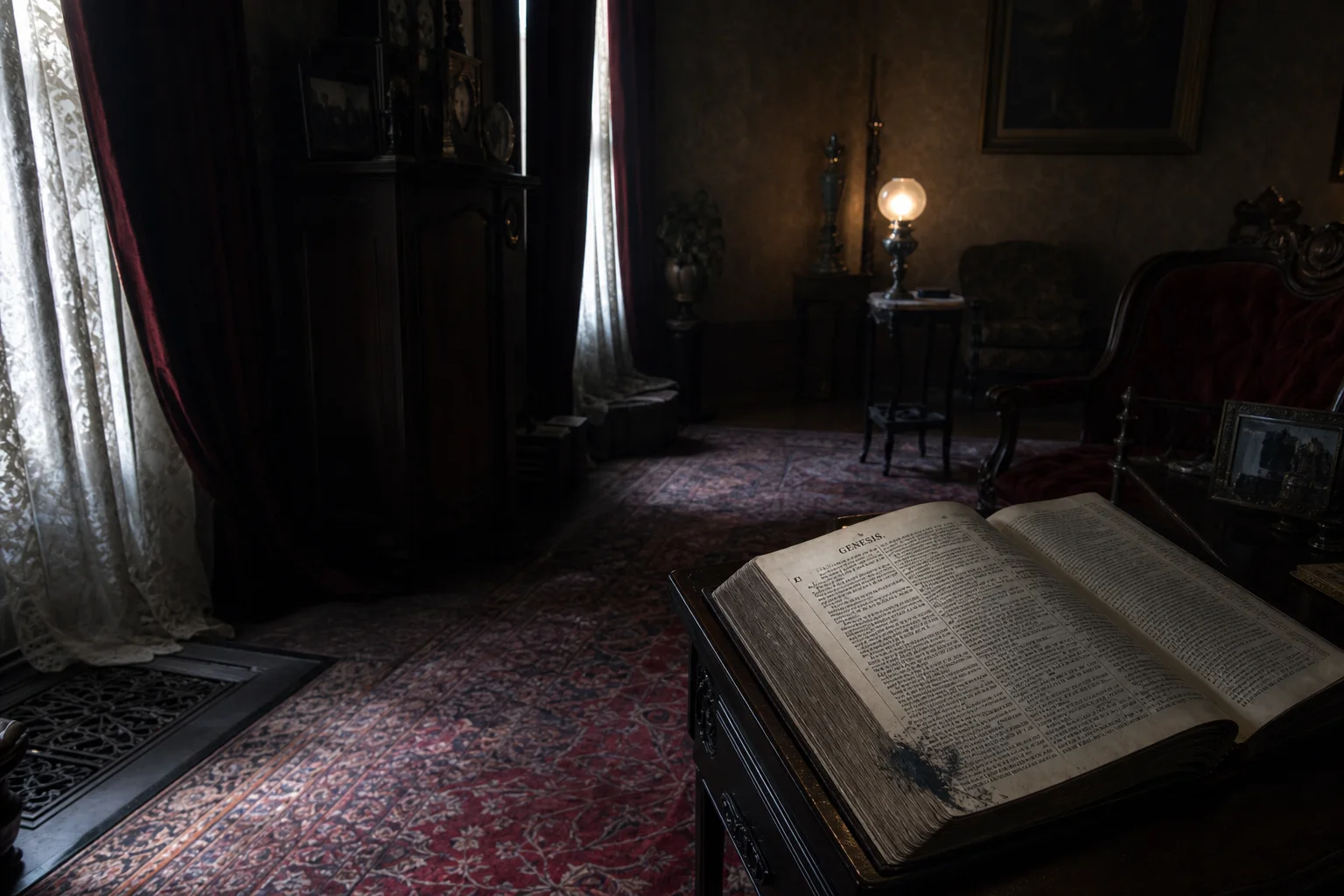
A warped page in the family Bible lies open on a side table, the ink of recorded births and marriages smudged at one corner. The faint, sweet-rot scent of spilled perfume or wine clings to a lace-edged curtain near a heating vent. The rhythmic creak of a rocking chair in an unseen room provides the only ambient sound, punctuated by the distant tick of a mantel clock. The heavy velvet drapes are drawn, admitting slivers of grey light across a Persian rug that muffles every footstep.
 Crime Scene Environment
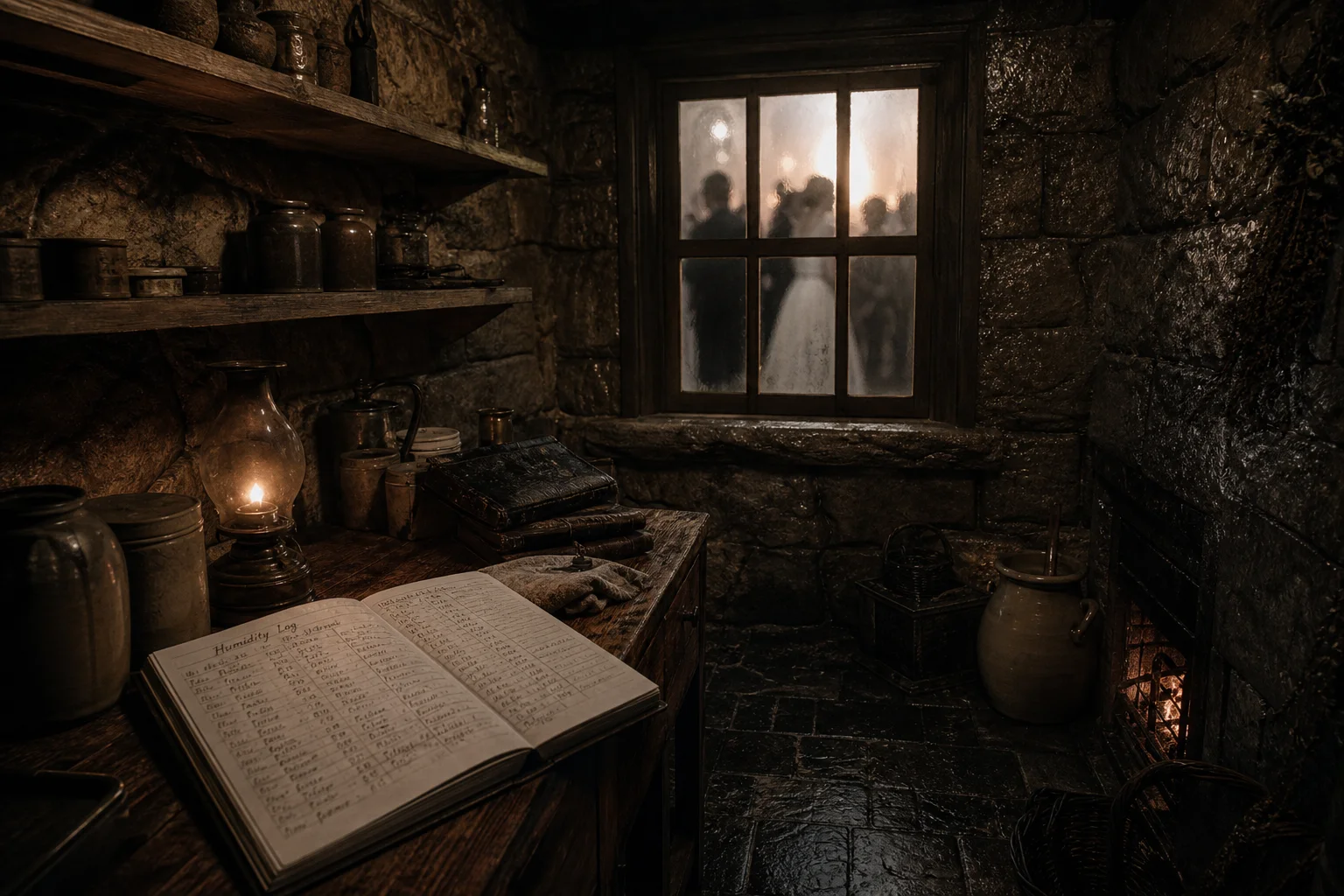
The dominant lighting is the diffused, grey light of a cloudy morning, filtered through heavy curtains and supplemented by the low hiss of a single gas lamp in the butler's pantry. The air is stuffy and overheated, carrying a humidity that feels trapped beneath the high, plaster ceilings. Acoustic density is low; sounds are absorbed by thick rugs and drapes, creating pockets of muffled silence broken only by creaking wood, the soft scrape of silver on cloth, and the occasional distant, echoing cough.
 Investigation Constraints
Early 1900s technologies: handwritten letters, telegrams, mechanical door locks, pocket watches, horse-drawn carriages, early telephones (party lines), gramophones, and candlestick telephones. No electricity beyond basic lighting; forensic tools are limited to magnifying glasses, powder for fingerprints, and basic chemical reagents for stains.
✦ Related Cases ✦