A Reputation's Lacquer
An independent investigator is summoned to a revered fine-dining establishment following a patron's sudden collapse at his table. The proprietor, head chef, maître d', sous chef, sommelier, and lead server each present a polished professional veneer. Beneath the pristine linens and gleaming brass, the inquiry must untangle a series of concealed personal pressures, misaligned timelines, and reactionary concealments that threaten to compromise the scene's integrity.
 Initial Crime Scene
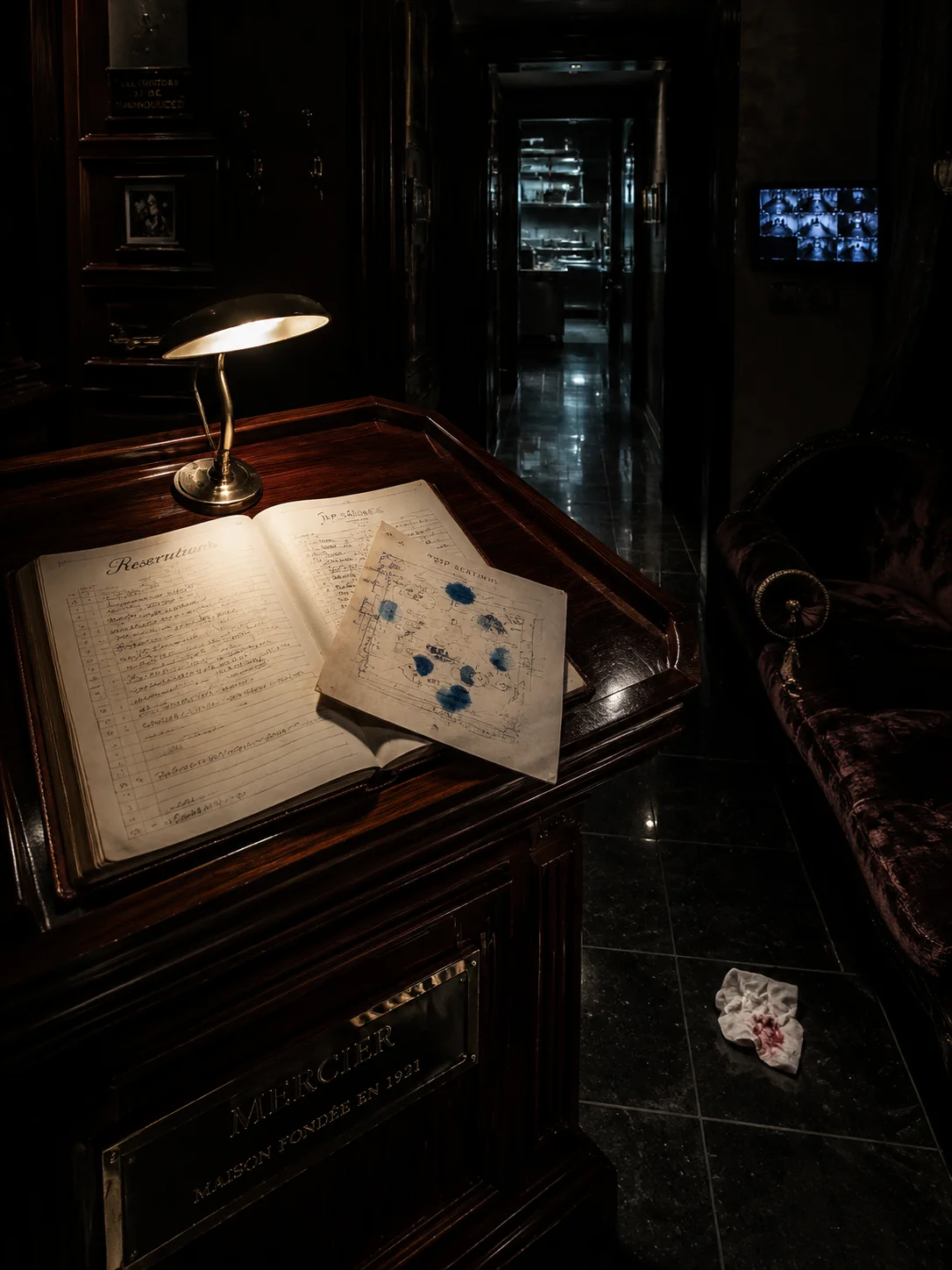
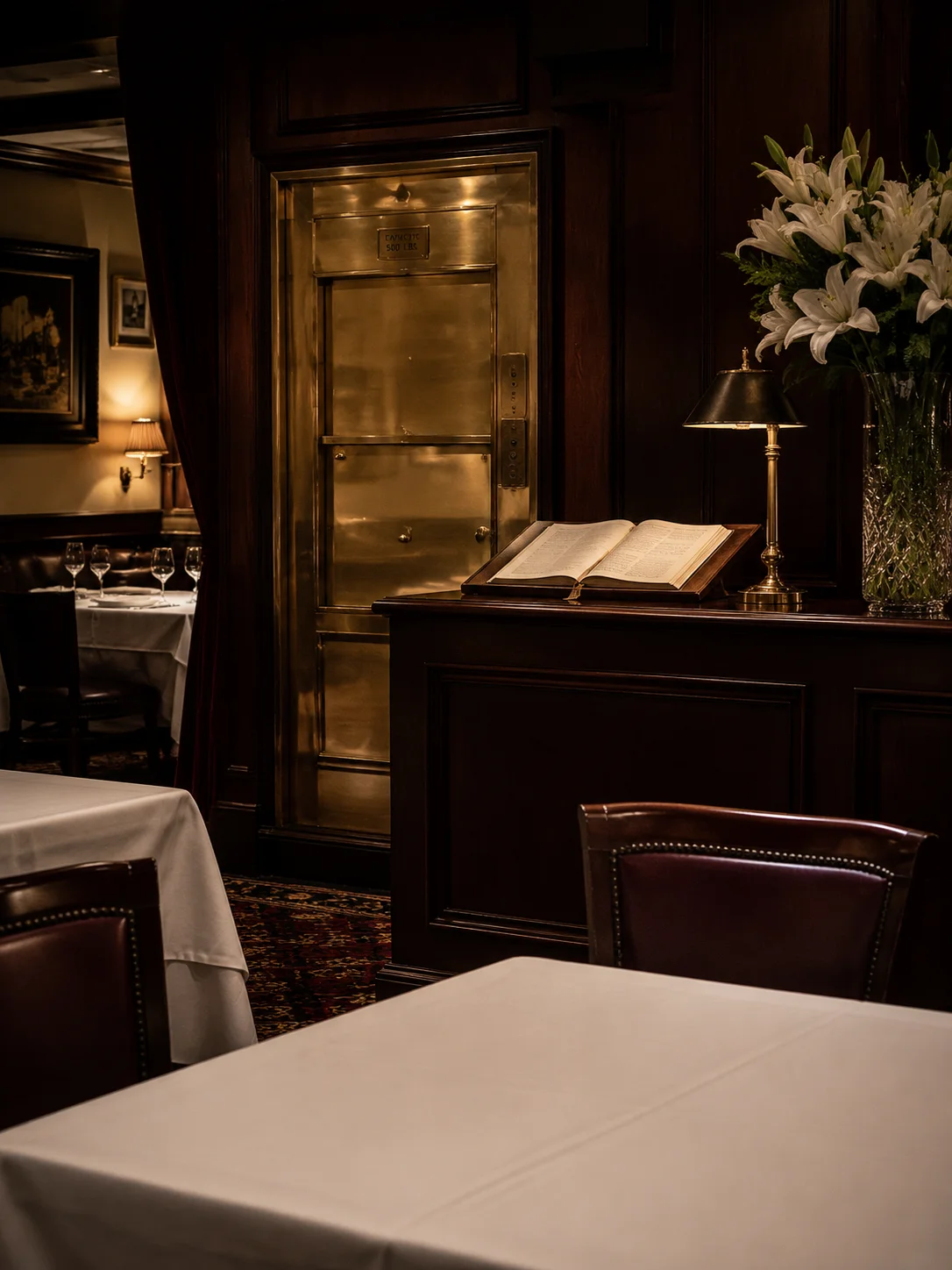
The thick, floral scent of white lilies from the host stand vase battles with the sharper aroma of lemon furniture polish. A single, muted cough from the far dining room punctuates the hush. My gaze travels across the field of pristine white linen tablecloths, each pulled taut over its table. The polished brass fittings of the dumbwaiter shaft catch the light, a silent, gleaming rectangle set into the dark wood wainscoting. A leather-bound reservation book lies open on the mahogany podium, its pages heavy with faint, layered indentations.
 Crime Scene Environment
The lighting is a deliberate, subdued amber from shaded lamps and candlelight, creating pools of warmth that leave the corners in deep shadow. The air is cool and controlled, carrying a precise, low humidity that keeps the linens crisp and the metal fittings cold to the touch. Acoustic density is high; sounds are absorbed by the carpets and heavy drapes, resulting in a muffled, intimate quiet where individual whispers carry further than they should.
 Investigation Constraints
Analog-era domestic and professional tools: rotary telephones, handwritten reservation books, paper-based accounting ledgers, physical mail delivery, manual kitchen timers, carbon-copy order pads, and basic mechanical dumbwaiters. No digital systems, encryption, or electronic surveillance.
✦ Related Cases ✦