A Study in Tarnished Surfaces
The discovery of a body within a private studio trailer initiates a forensic and procedural inquiry into the events of the evening. The investigation focuses on reconstructing a timeline from conflicting personal schedules, digital footprints, and physical traces, while navigating the high-pressure environment of a major film production.
 Initial Crime Scene
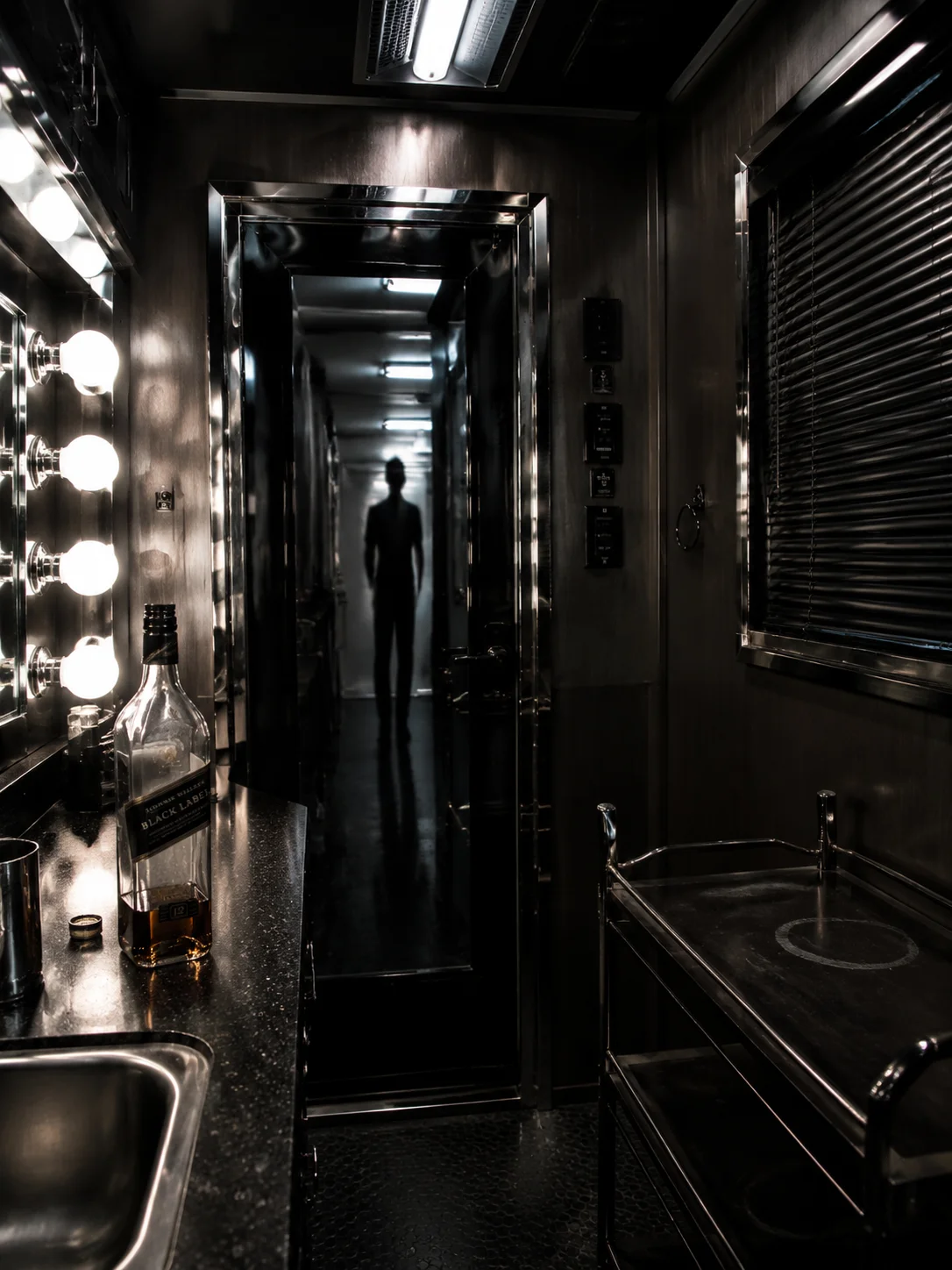
The polished chrome of the trailer doorframe reflects a distorted, elongated version of your own figure. A faint, synthetic berry scent, sweet and chemical, cuts through the ambient studio smell of distant asphalt and hot lighting gel. The interior is dimly lit by the vanity mirror's glow, catching the glint of a half-empty prop whiskey bottle positioned with theatrical precision on the counter. Your gaze tracks to the bar cart in the corner; a perfect circle is etched in the dust where a bottle once sat.
 Crime Scene Environment
The environment is defined by a high-gloss, volatile atmosphere. Overhead fluorescent and key lights create harsh, directional shadows and a constant, low-frequency electrical hum. The air holds a residual, image-obsessed tension, maintained at a cool, controlled temperature with moderate humidity. Acoustic density is layered: the distant, rhythmic clatter of equipment, muffled voices from adjacent soundstages, and the pervasive, performative silence of private spaces.
 Investigation Constraints
Modern Hollywood studio environment. Tools include: personal smartphones with social media apps (Instagram, Twitter/X), encrypted messaging (Signal, WhatsApp), keycard access systems for trailers and soundstages, high-end cosmetic and prop products, publicists' press kits, NDA documents on tablets, studio security camera feeds (often grainy or selectively archived), and a constant barrage of paparazzi with telephoto lenses.
✦ Related Cases ✦