Crimson Ridge's Dry Knot
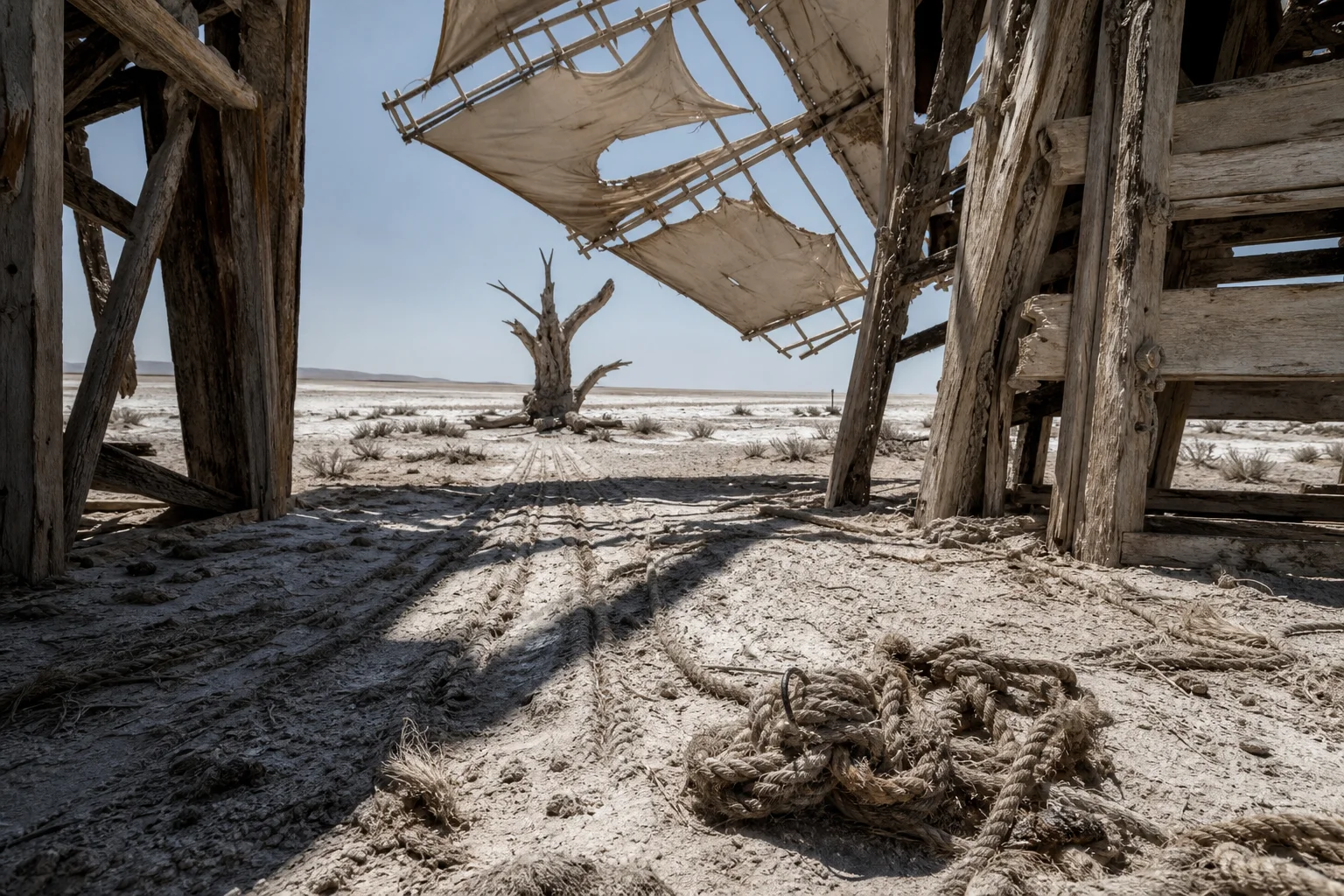
An independent investigator arrives at a sun-baked ranch to examine the death of its patriarch. The study is bone-dry, its air tasting of dust and ash. A tangled web of land leases, financial ledgers, and personal histories surrounds the scene.
 Initial Crime Scene
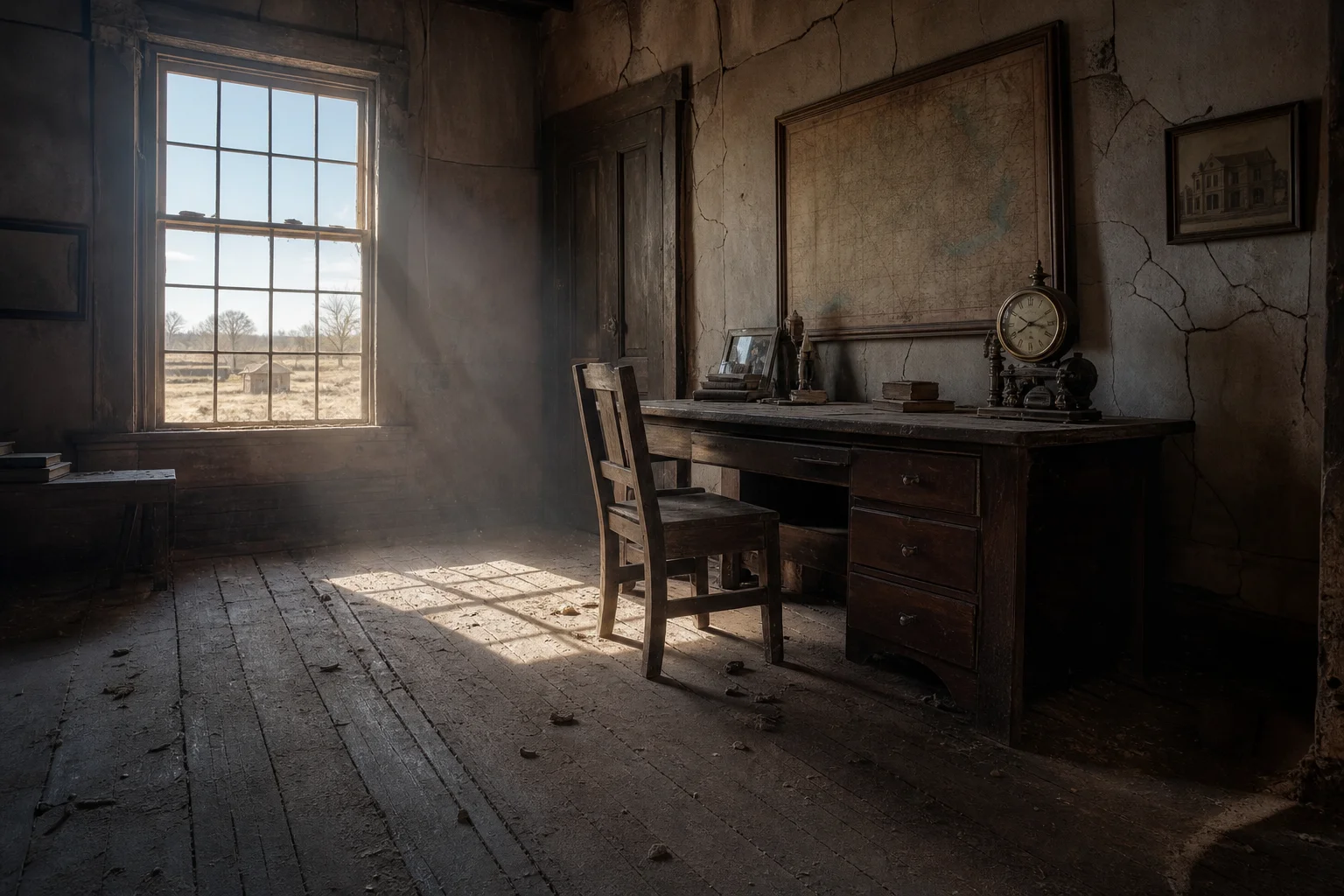
The heavy oak door swings inward, releasing a puff of dry, ash-tinged air. The floorboards are a map of deep cracks, coated in a fine, pervasive dust that catches the slanting light from the open window. A low, metallic ticking from a mantel clock undercuts the silence, marking a rhythm in the still room.
 Crime Scene Environment
The ambient light is a flat, hazy glow from the high sun, filtering through a single large window. The air is arid and brittle, holding the texture of sun-baked adobe and scorched paper. Acoustic density is low; sounds are sharp and localized, swallowed quickly by the dry, open space.
 Investigation Constraints
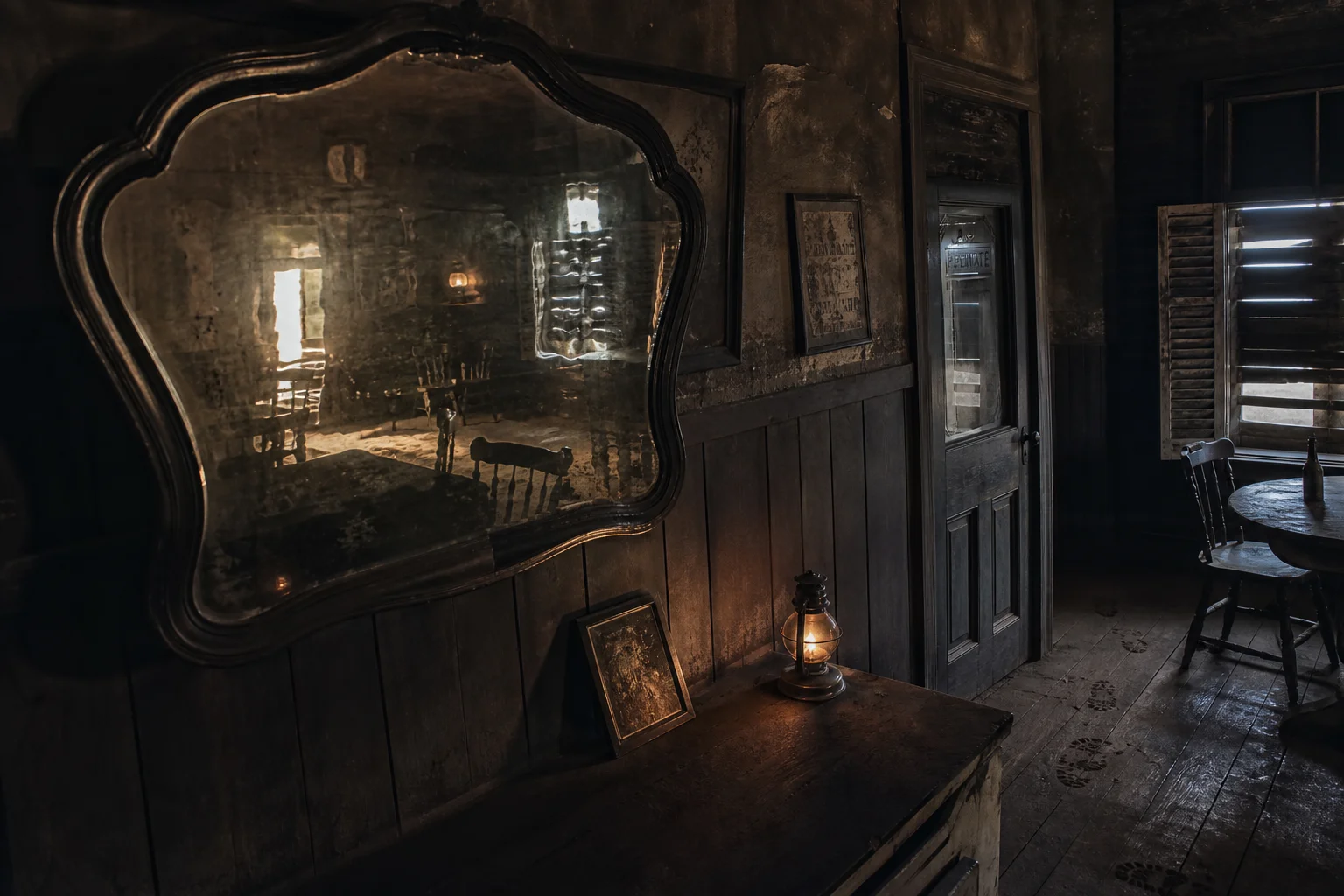
Pre-electrical frontier technology. Communication is by telegraph (limited to the regional office) or physical mail on the stagecoach. Locks are mechanical, key-based. Data storage is handwritten ledgers, wanted posters, and personal diaries. Environmental 'systems' are manual stove heating, kerosene lamps, and open windows. No internal combustion engines, no electricity, no telephones.
✦ Related Cases ✦