Dust and Ledger
An independent investigator arrives at a small town to audit its municipal archives. The initial discovery of a decades-old document discrepancy triggers a cascade of isolated, panicked actions among the town's elite, each striving to conceal their own minor social or financial sins. These independent attempts to erase private histories create a labyrinth of conflicting physical evidence within the paper records.
 Initial Crime Scene
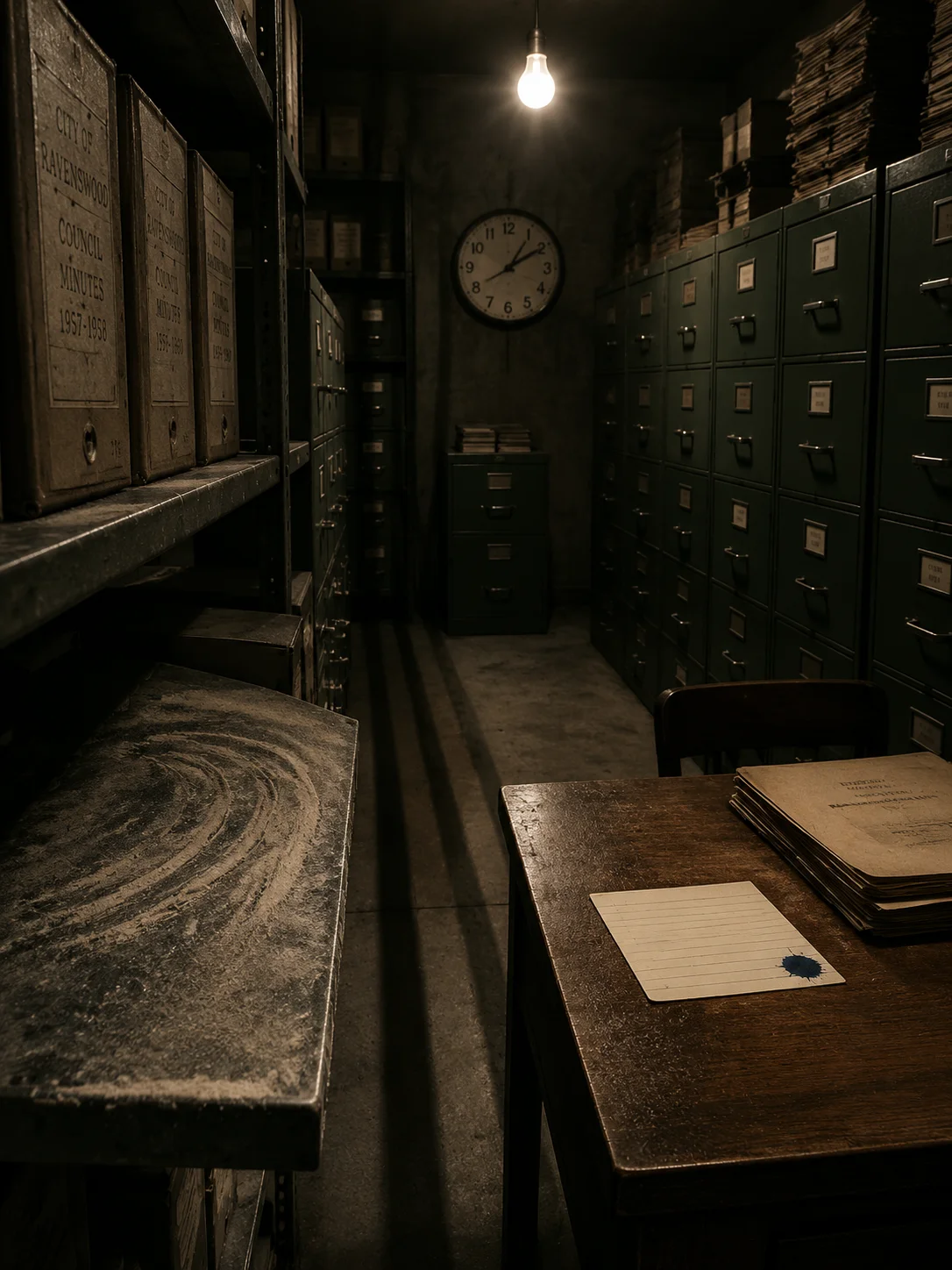
The smell of musty paper and cold coal dust is the first thing through the door, thick in the throat. A single, bare bulb overhead casts long, precise shadows that stretch across rows of metal filing cabinets. The only sound is the clipped, rhythmic ticking of a wall-mounted mechanical clock. On the nearest shelf, dust is disturbed in a specific, fresh sweeping pattern. A faint, fresh ink blot stains an otherwise immaculate index card on a desk. The absence of a scheduled 3 PM town clock chime hangs in the still air.
 Crime Scene Environment
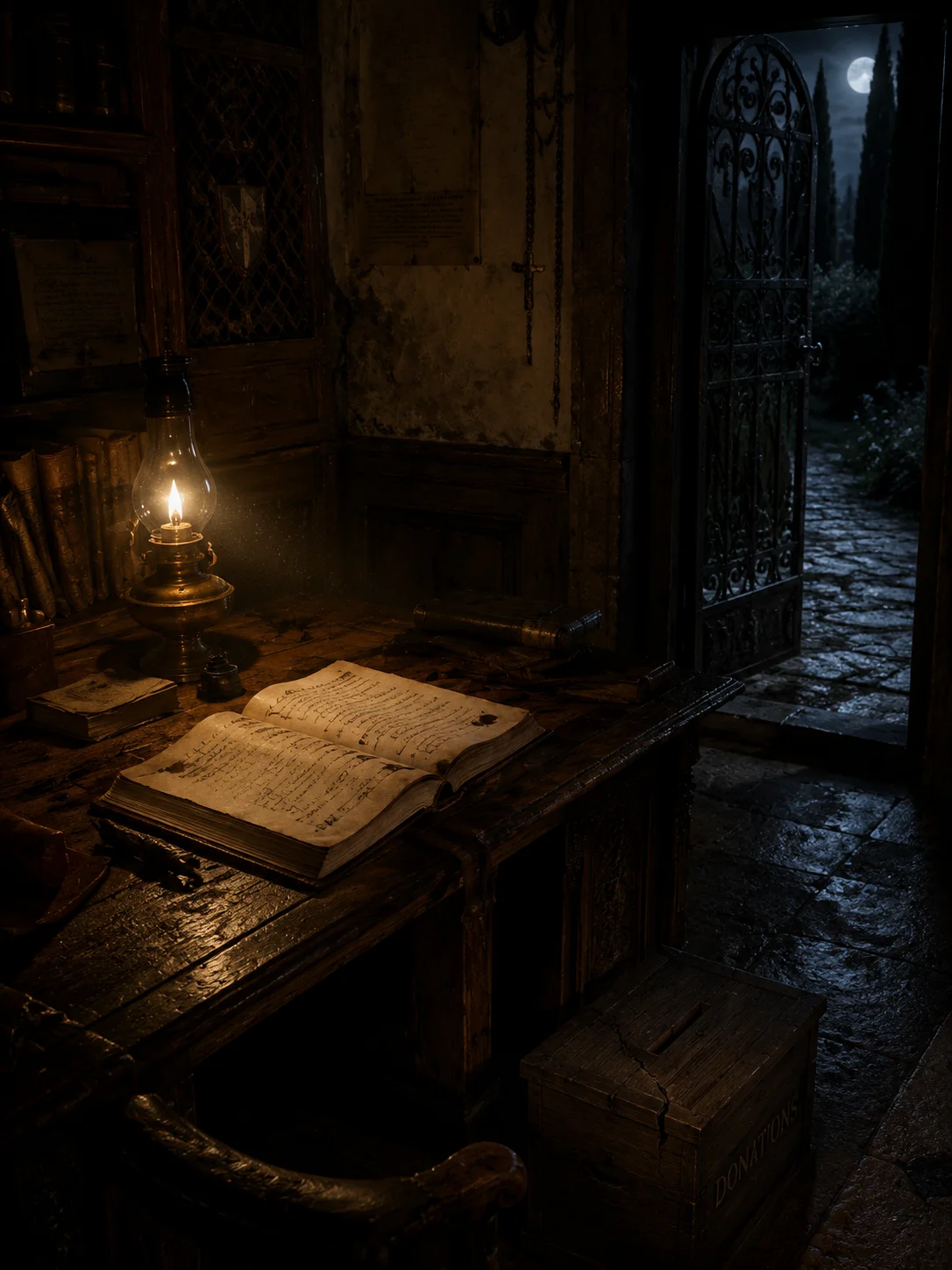
Lighting is a hushed, focused pool from single bare bulbs or brass desk lamps, leaving deep, precise shadows. The air is cool and still, carrying a humidity profile of dry, brittle paper and stone dust. Acoustic density is low, dominated by the clipped ticking of mechanical clocks and the whisper of turning pages, creating a perfunctory, hushed atmosphere.
 Investigation Constraints
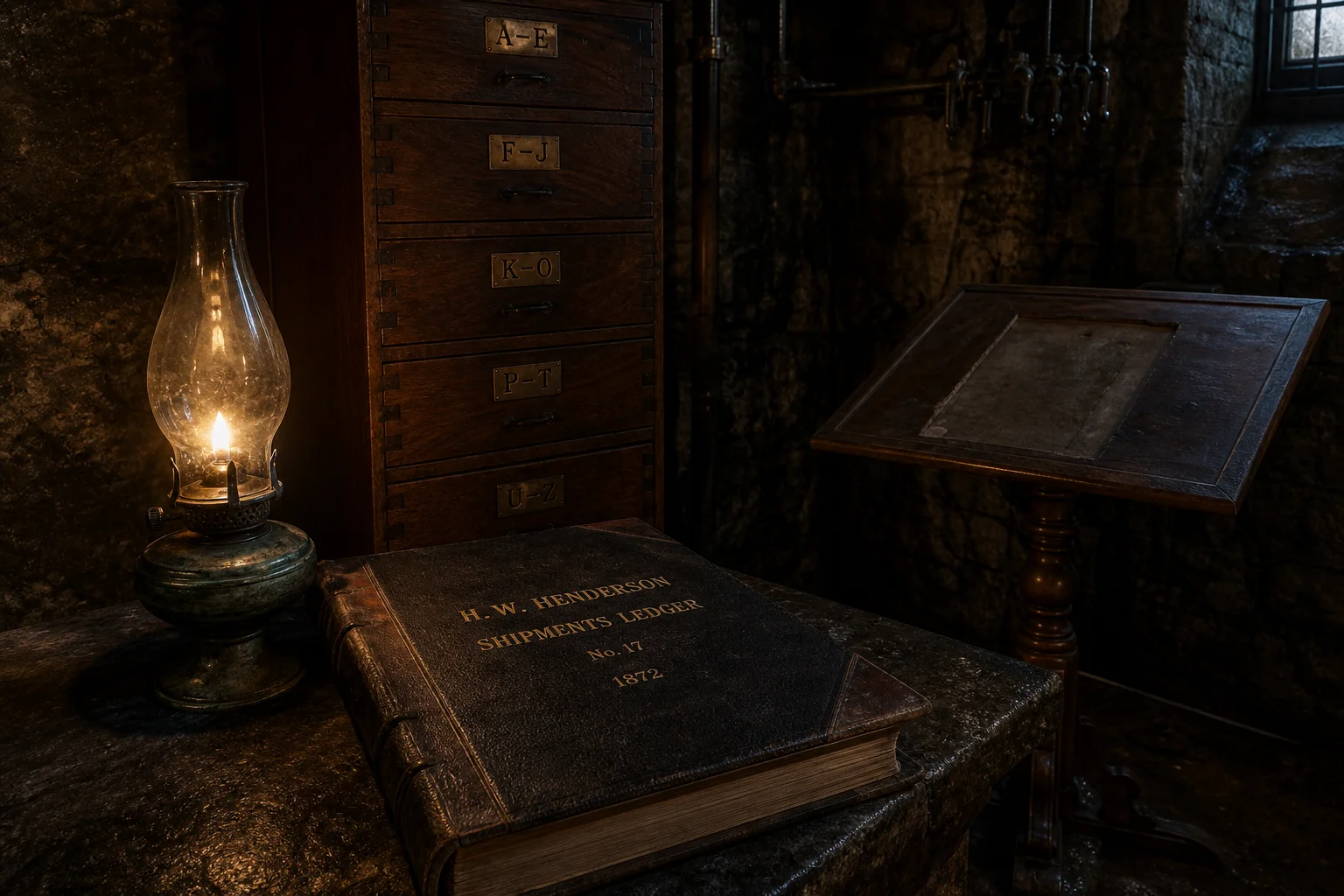
Manual ledgers, leather-bound registry books, handwritten letters, wax seals, rotary dial telephones (in the Mayor's office), skeleton keys, coal furnaces, wall-mounted mechanical clocks, carbon-copy receipts, and physical voting booths. Information is stored on paper and conveyed by hand or through the local post office. 'Deleting' a record means physically burning or misfiling a page.
✦ Related Cases ✦