Helios-7 Telemetry
An independent forensic systems auditor arrives at the isolated Helios-7 mining station for a routine corporate compliance review. The audit timeline is disrupted when the station's Chief Engineer, Elias Vance, is discovered deceased in a pressurized cargo bay. The auditor must analyze the station's data-logs, environmental telemetry, and personnel manifests to reconstruct the sequence of events leading to the death and locate missing cargo.
 Initial Crime Scene
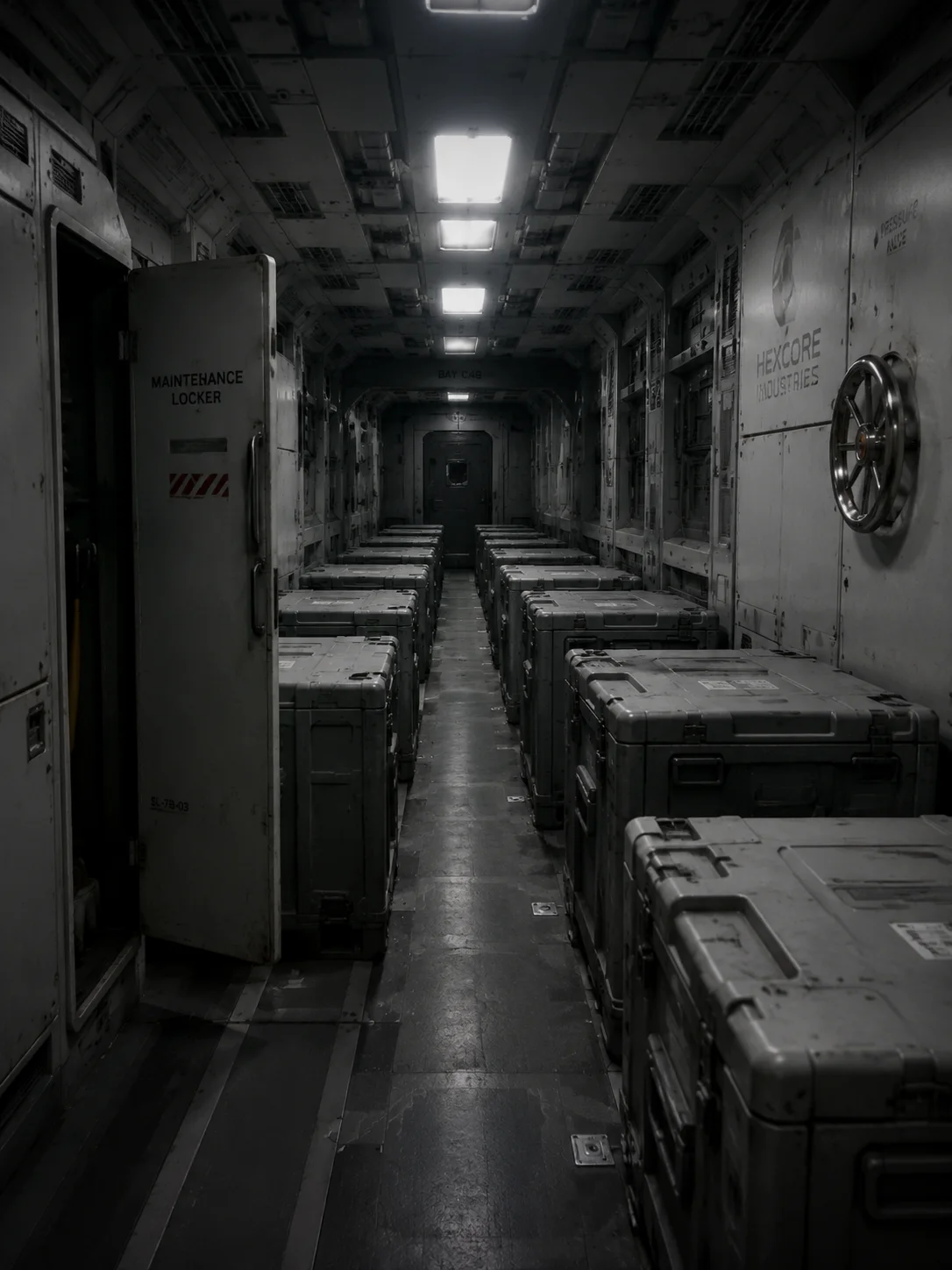
The threshold hisses shut behind you, a pneumatic sigh that seals in the cold. The recycled air carries a faint, acrid tang of industrial lubricant and ozone. Three rows of pressurized cargo containers stretch into the sterile gloom, their matte surfaces eating the light. To the left, a maintenance locker door hangs slightly ajar, its seal broken. A single, deep pressure valve on the starboard bulkhead gleams, catching the overhead light like a dull eye.
 Crime Scene Environment
The environment is defined by oppressive, centralized corporate control. Lighting is a uniform, sterile glare from overhead panels, casting long, hard shadows without warmth. Humidity and temperature are maintained at a constant, dry, cool level by automated life-support systems, creating a sensation of static, pressurized air. Acoustic density is low, dominated by the low-frequency, constant hum of air recyclers, cooling fans, and distant machinery, creating a background drone against which all other sounds are anomalies.
 Investigation Constraints
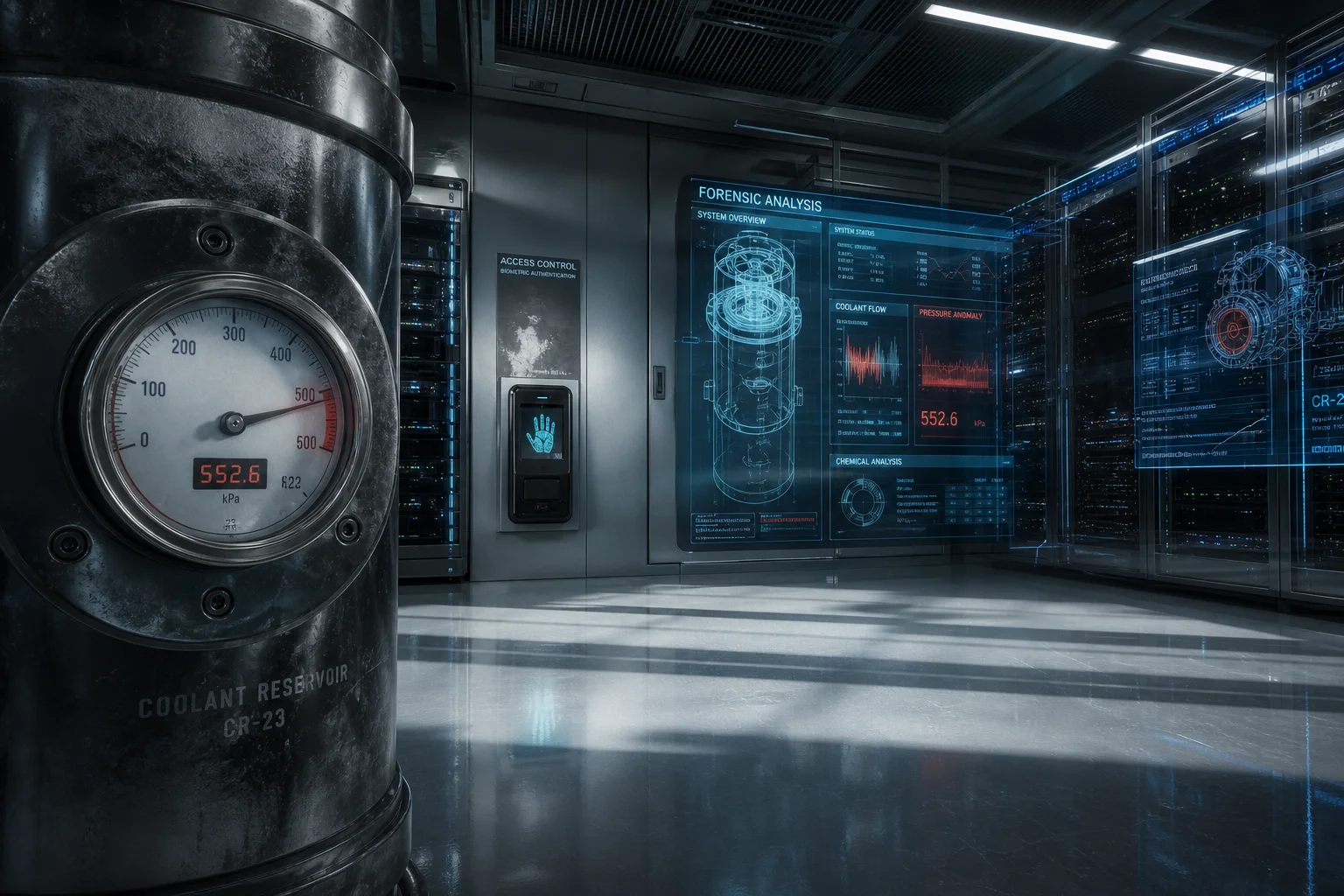
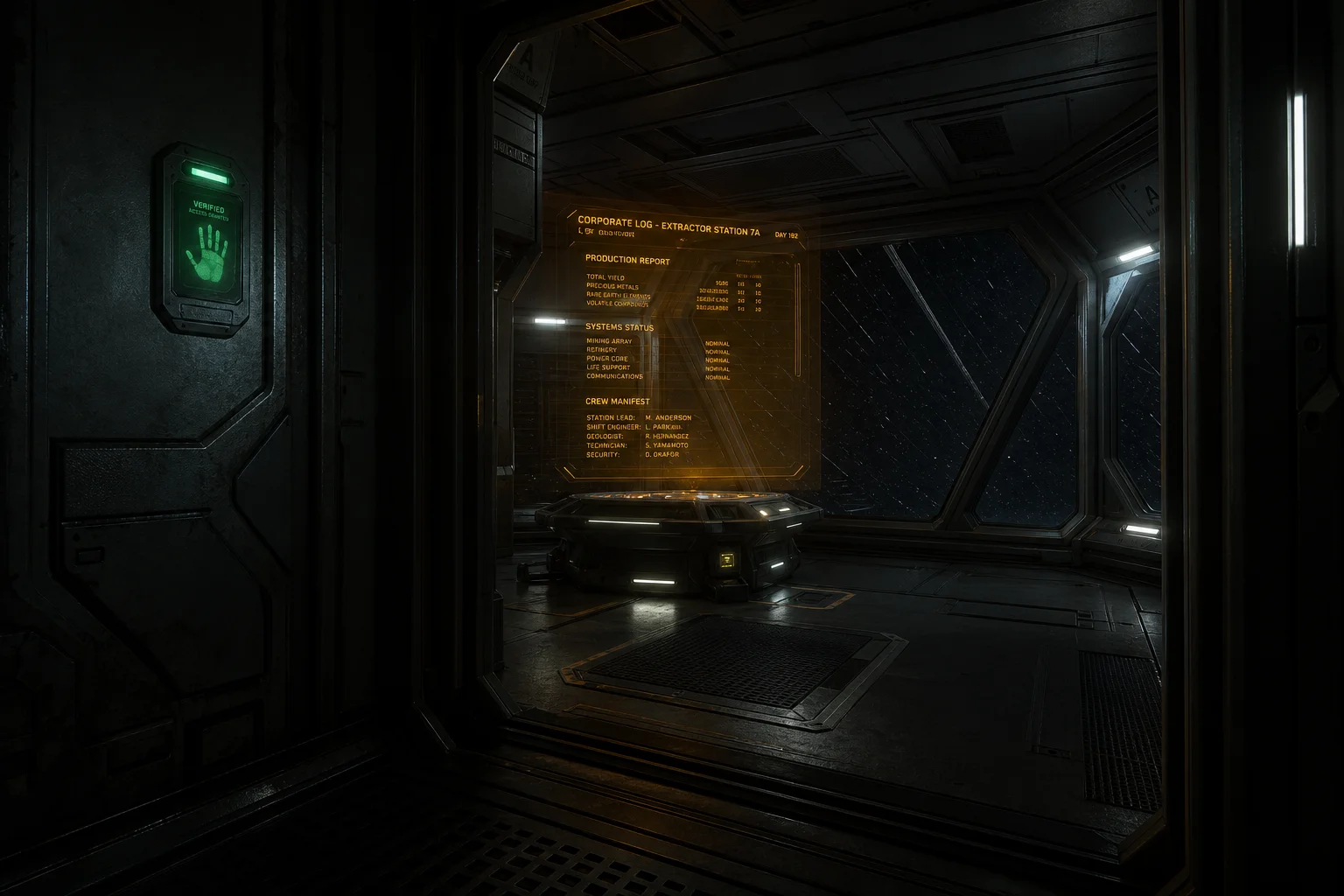
Centralized corporate data-logs with blockchain timestamp verification; biometric access panels with retinal/fingerprint scanners; personal data-slates with encrypted local storage; internal comms networks with message deletion trails; environmental suit telemetry with life-sign monitors; automated cargo manifest scanners; handheld forensic chemical analyzers. No faster-than-light comms; all communication with Earth has a significant lag.
✦ Related Cases ✦