Systemic Residue
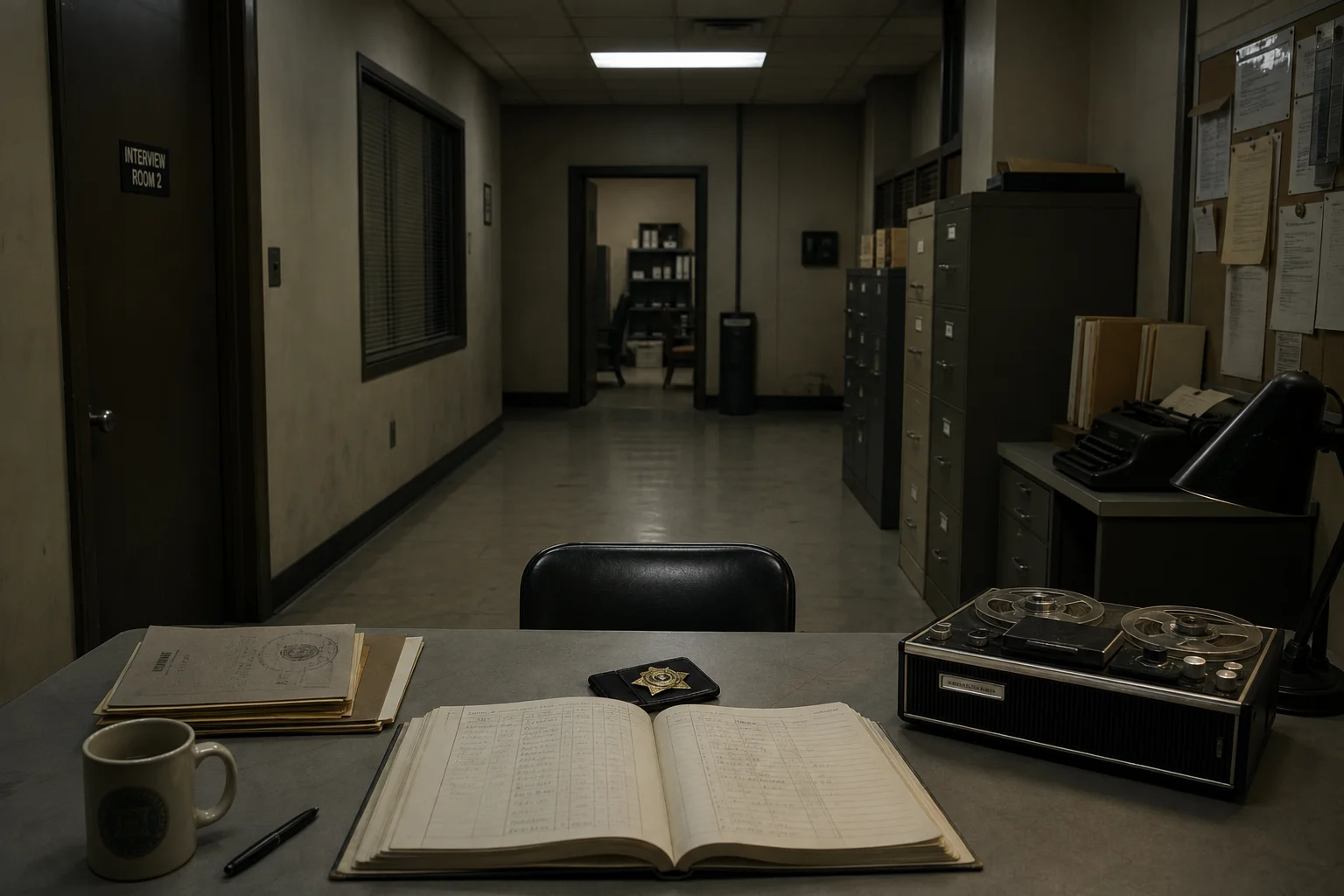
An independent forensic specialist is summoned to the penthouse of a deceased corporate executive. The environment is a controlled space populated by the executive's widow, a cautious board of directors, and a single piece of undelivered correspondence. The initial data streams present a network of alibis, financial records, and security logs.
 Initial Crime Scene
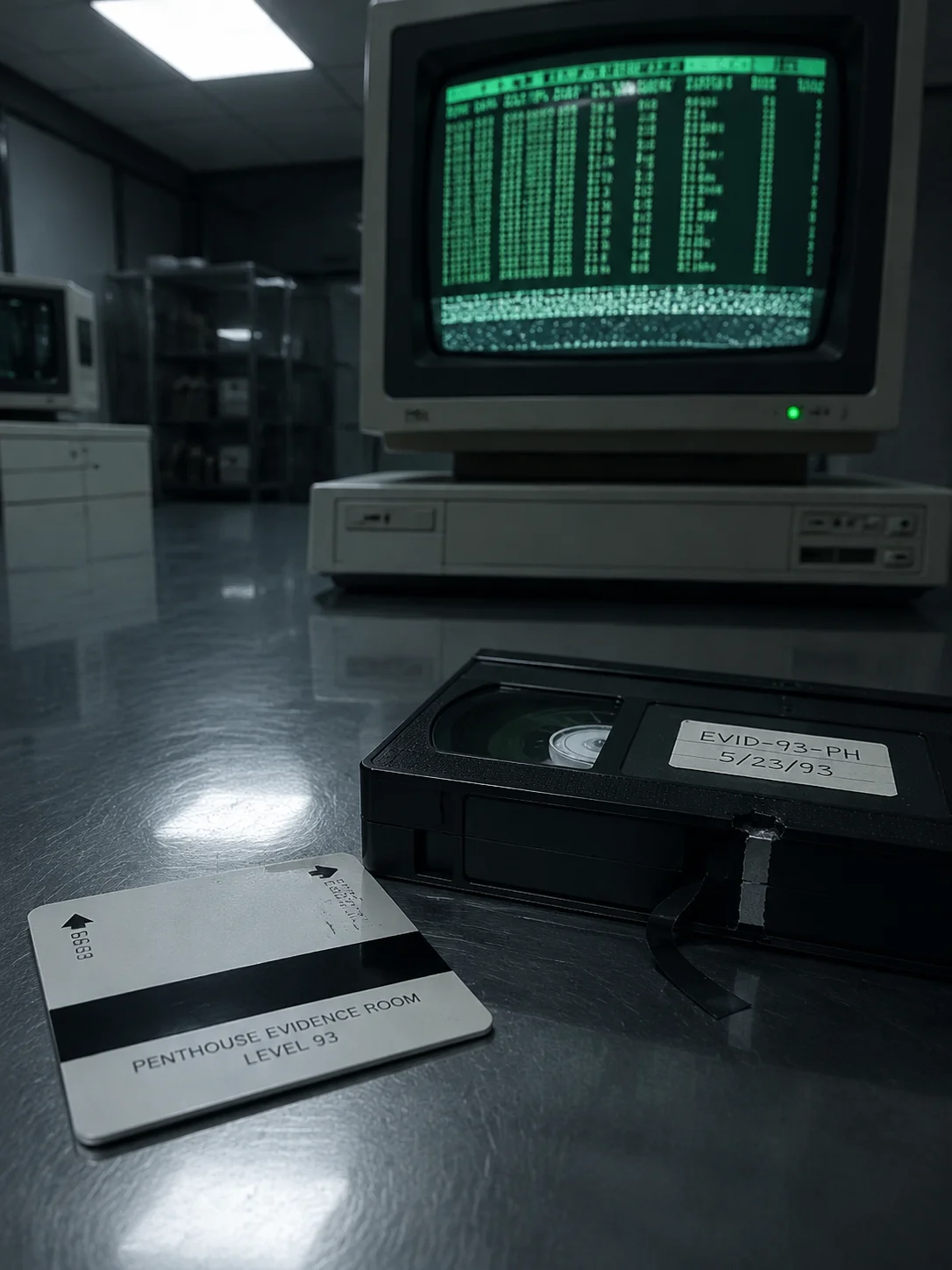
The entry is marked by the waxy, chemical smell of thermal paper. A constant white noise hum, like the internal cooling fans of a mainframe server, fills the air. Visual markers include a magnetic stripe keycard on a polished desk, a VHS tape with a visible splice in its ribbon, and the phosphor glow of a desktop terminal screen.
 Crime Scene Environment
The lighting profile is a flat, phosphor glow from CRT monitors and fluorescent fixtures. The humidity and temperature are climate-controlled, cool and sterile. The acoustic density is defined by a constant analog hiss from electronic equipment and a calculated, low-frequency hum from building systems.
 Investigation Constraints
Hardwired desktop terminals with dial-up modems, internal mainframe server rooms with physical tape backups, analog security camera systems with VHS tape loops, encrypted landline telephony, pager networks, magnetic stripe keycard access systems, early-generation DNA and chemical analysis labs, digital micro-cassette recorders.
✦ Related Cases ✦