Terminal Protocol Breach
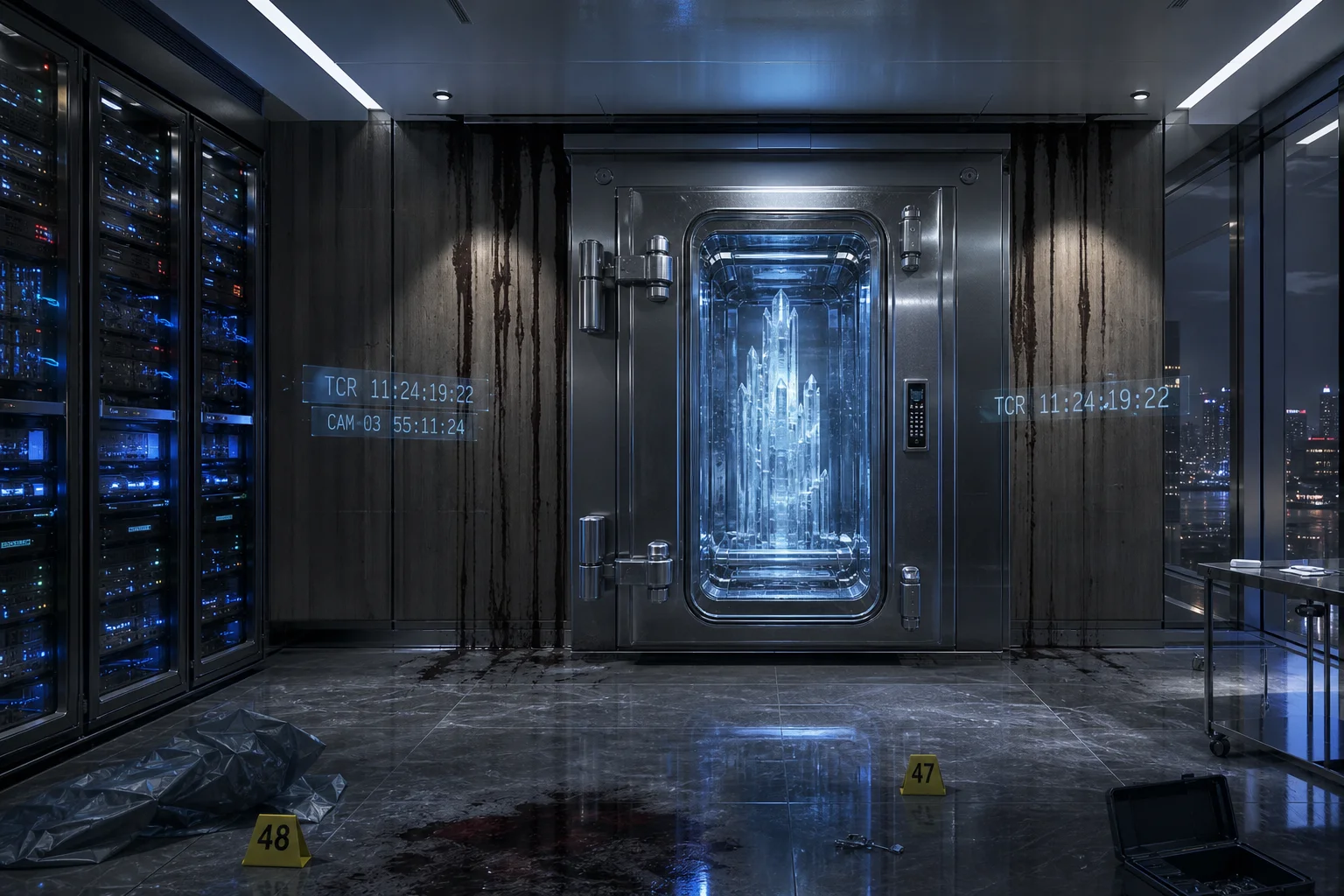
A forensic specialist is dispatched to Sector Gamma following a detected anomaly in the corporate biometric and logistical systems. The investigation centers on a deceased employee, a mismatched ID chip, and a cascade of irregularities in the sector's automated logs and physical access points. The goal is to reconstruct the sequence of events from objective system data and physical traces.
 Initial Crime Scene
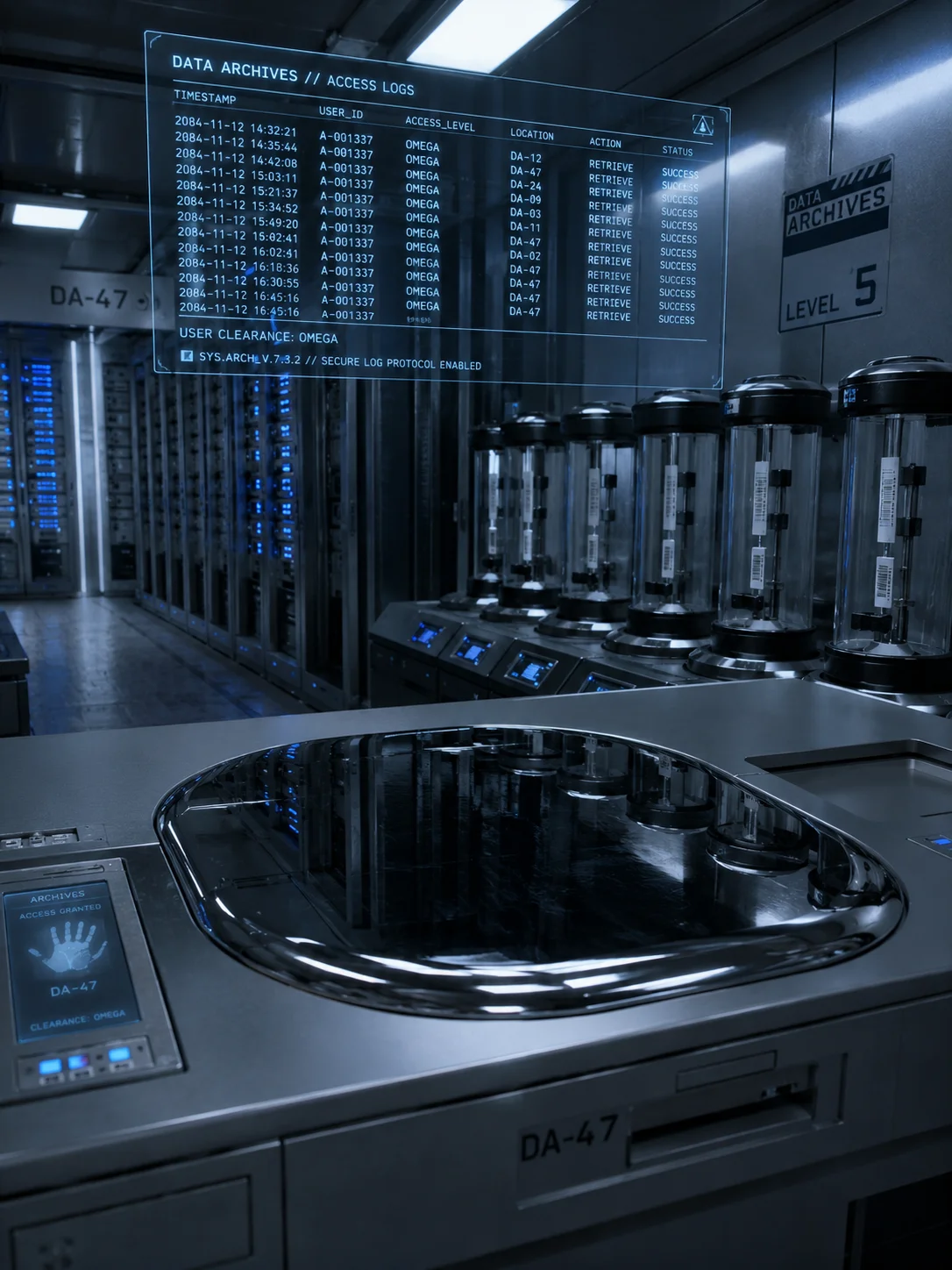
The polished chrome of the biometric scanner plate reflects distorted server racks as you step into the Data Archives. The sterile air hums with the low-frequency vibration of data cores, carrying a faint scent of ozone and chilled electronics. Holographic access logs flicker overhead, their string-IDs scrolling in a cold, blue light. Pneumatic tube capsules rest in their stations, their seals showing minute scuffs. Your boots make no sound on the polymer floor.
 Crime Scene Environment
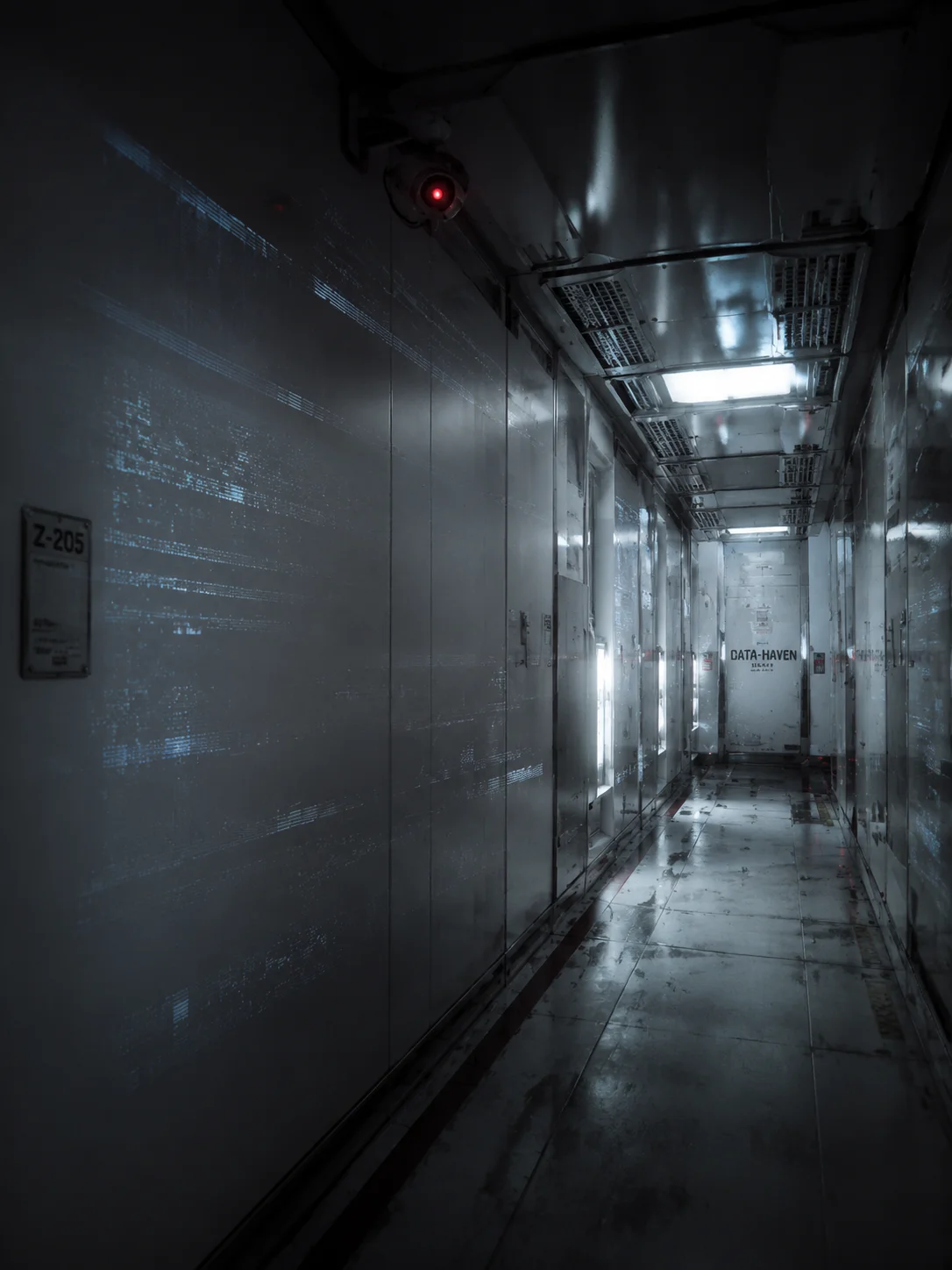
The sector operates under cold, clinical fluorescent lighting with no natural light sources. The air is humidity-controlled to a sterile 35%, temperature maintained at a constant 18°C. Acoustic density is low, characterized by the persistent hum of climate control and data storage, punctuated by the occasional soft hiss of pneumatic tube arrivals. All surfaces are matte, institutional polymer or brushed metal.
 Investigation Constraints
Biometric scanners requiring specific ID chips for access, encrypted corporate data-slates, networked forensic loggers that record location and access timestamps, pneumatic tube delivery systems for physical media, hardwired internal comms panels, and mechanical 'black box' storage nodes for sensitive physical documents or override keys. No wireless data transfer; all digital evidence requires physical interface.
✦ Related Cases ✦