The Absence at Marigold Cottage
On the morning after a 70th birthday gala at Marigold Cottage, an investigator is summoned. The central ceramic master mould is no longer in its display case. The household, comprising family and staff, each recounts their evening within the estate's walls, their narratives marked by observable personal tensions and discrepancies in timeline.
 Initial Crime Scene
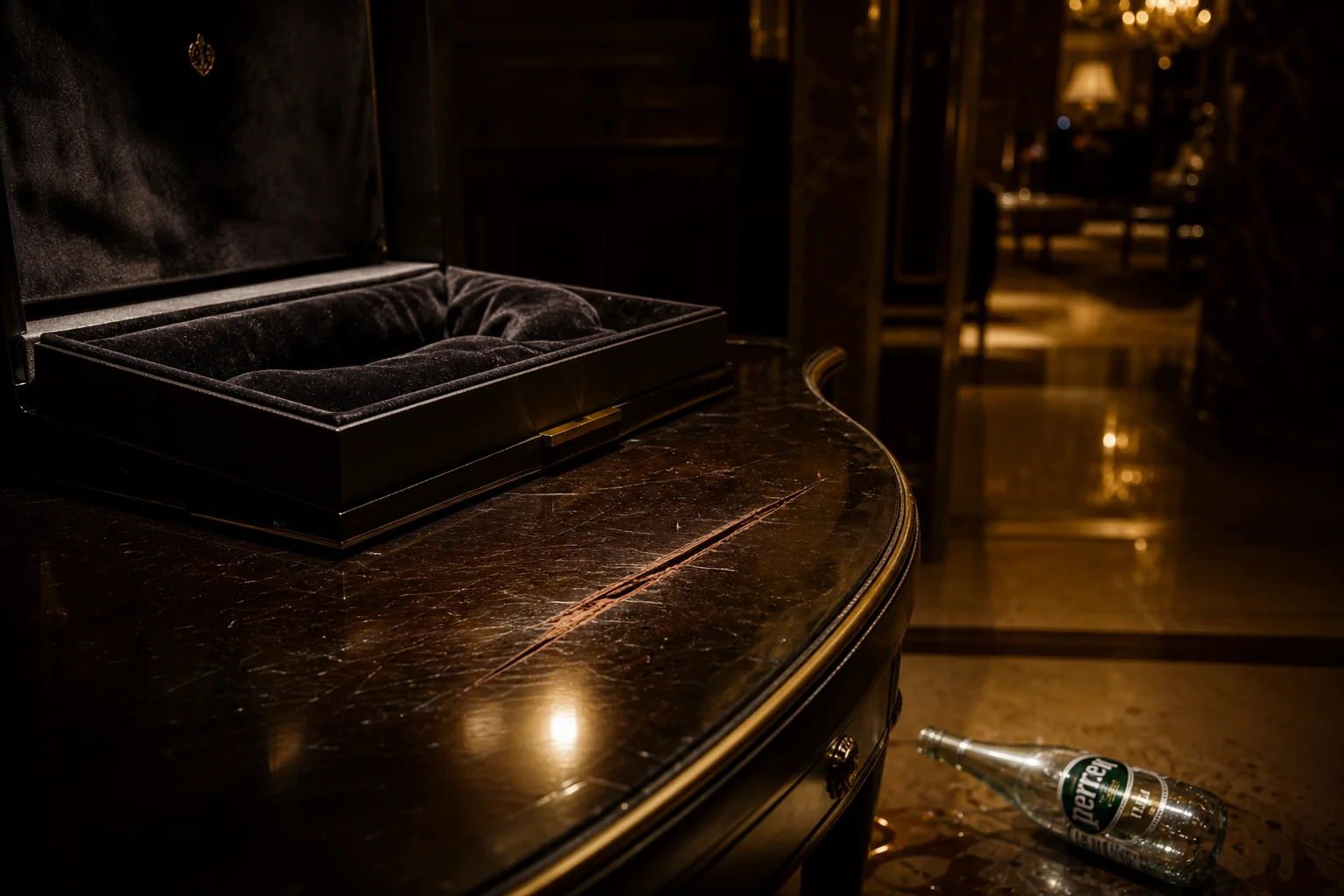
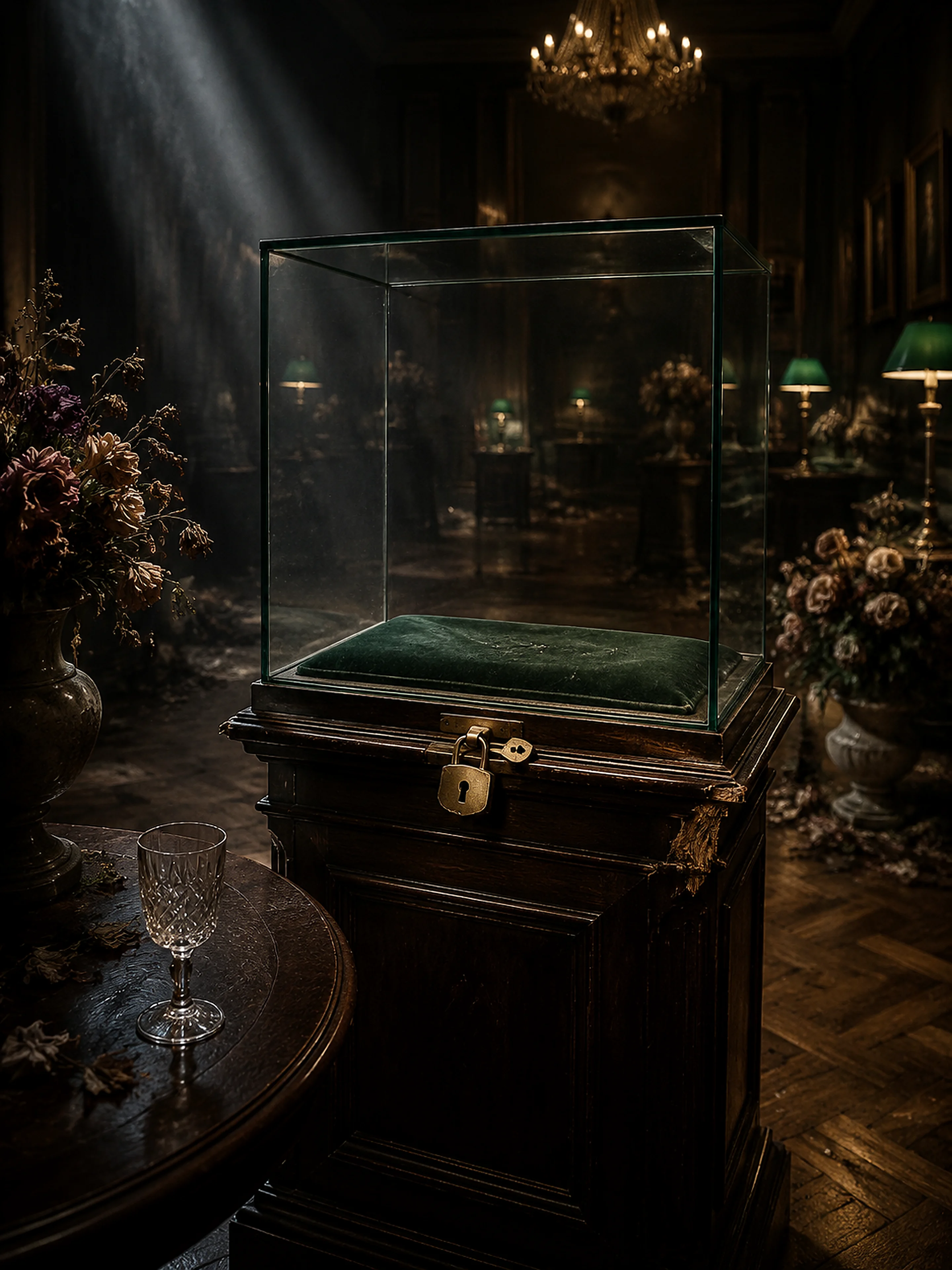
The scent of stale sherry and wilting floral arrangements hangs in the gallery air. A grandfather clock ticks with deliberate slowness from the hallway. Three localized visual markers define the initial scene: the empty, flat velvet cushion inside the unlocked glass display case, a single thin scratch parallel to the keyhole on its brass lock, and the heavy wooden pedestal base bearing a splintered edge.
 Crime Scene Environment
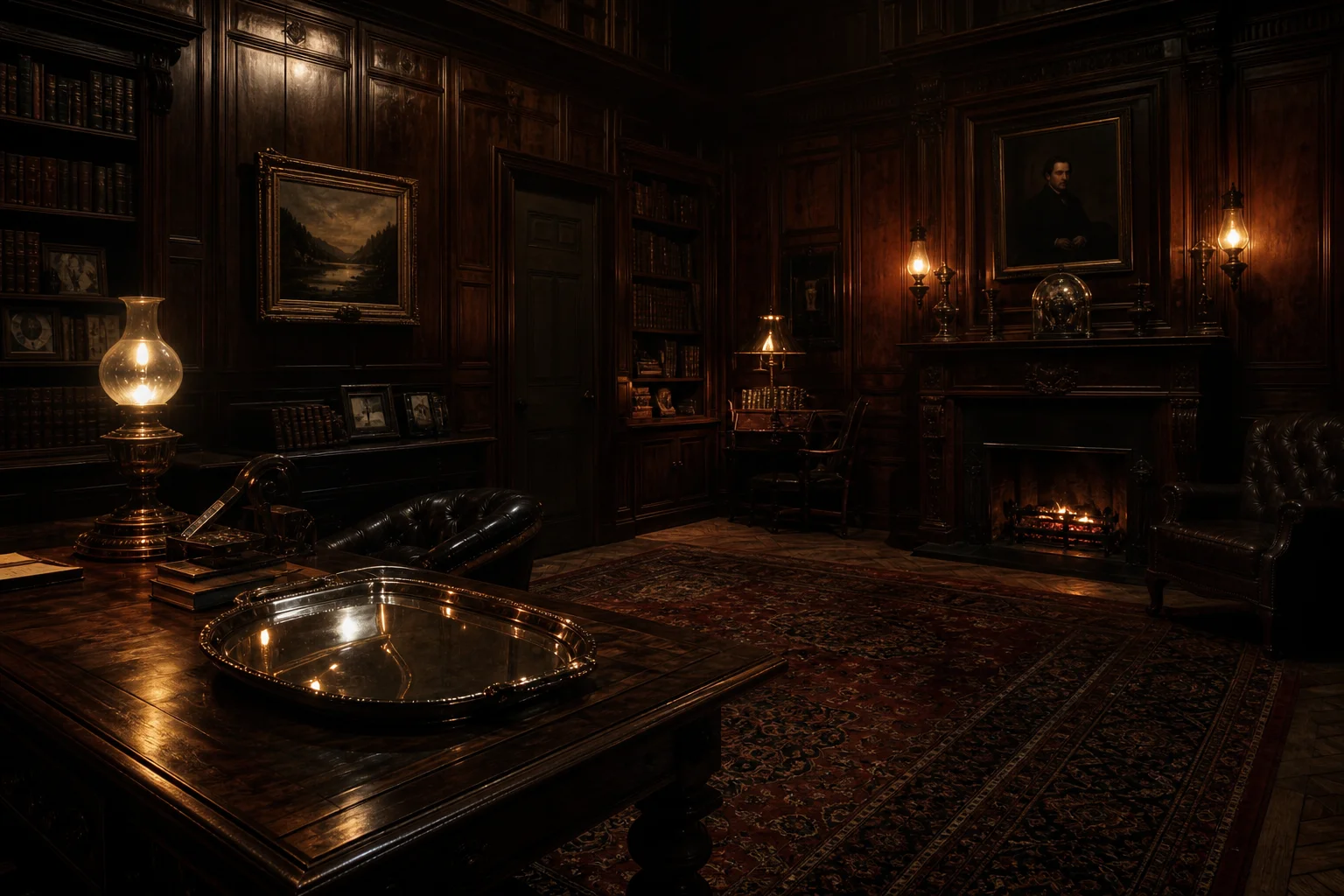
Lighting is dim, supplied by green-shaded desk lamps and a single chandelier casting weak pools onto parquet floors. The humidity is low, the air dry with dust and old paper. Acoustic density is minimal, dominated by the loud tick of the hallway clock and the profound silence of the unused rooms.
 Investigation Constraints
Period-appropriate tools: rotary-dial telephones, handwritten ledgers and diaries, carbon-copy invoices, mechanical cash registers, skeleton keys, analog gramophones, telegrams, and private correspondence via hand-delivered notes. No digital or electronic surveillance.
✦ Related Cases ✦