The Absent Impulse
A forensic specialist is dispatched to a corporate penthouse following a fatality. The initial scene presents with conflicting digital footprints, compromised biometric logs, and a suite of witnesses whose official timelines contain gaps and anomalies.
 Initial Crime Scene
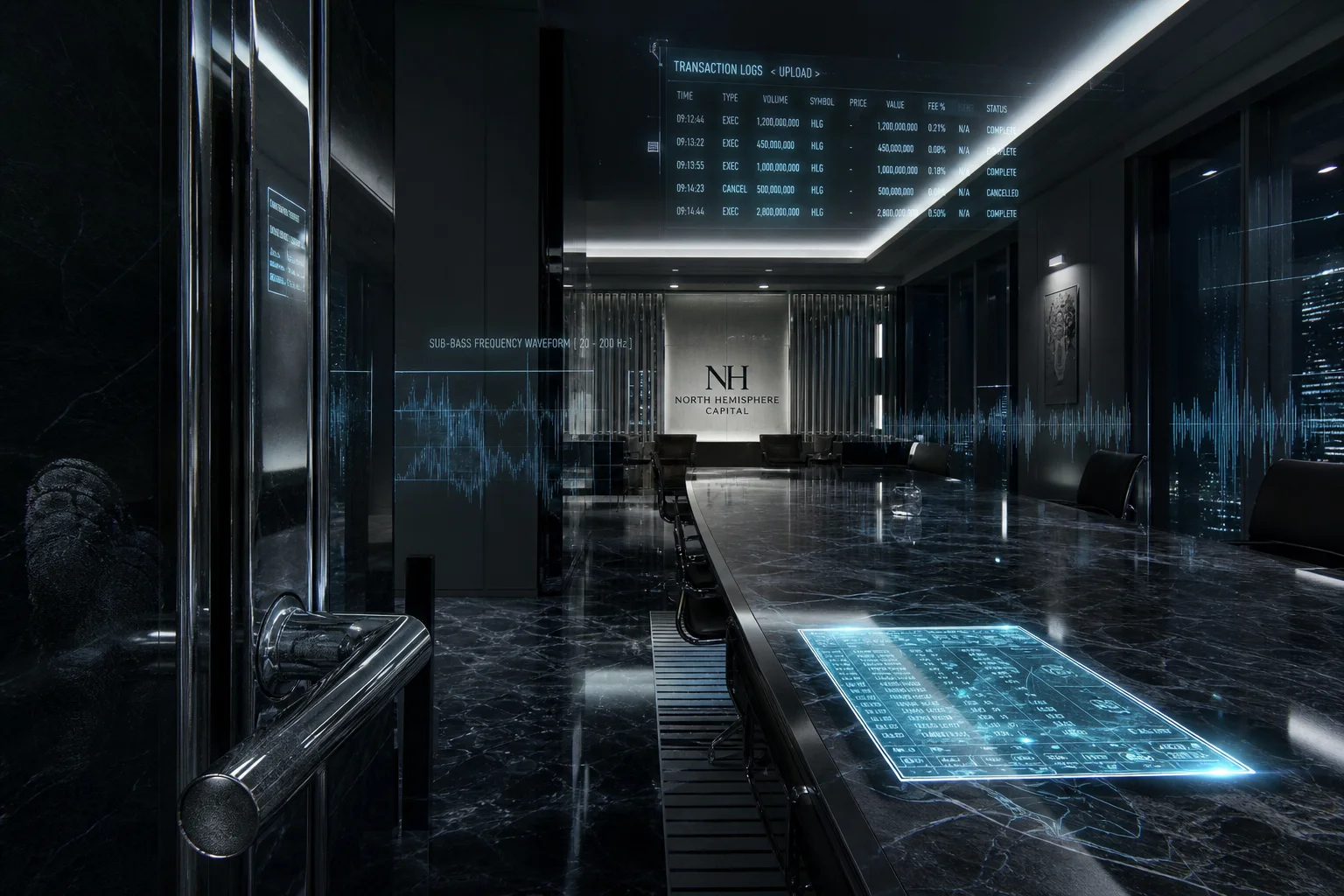
The sterile, chemical scent of a forensic lab underlaid by something sweeter and more organic meets you at the threshold. Fingerprint dust clings to the chrome door handle, a fine grey powder. The cold glow of a data pad displaying scrolling transaction logs reflects off the polished marble of a long conference table. A faint, acrid smell of ozone seeps from the wall vents. The sound is a low, pervasive hum from server racks in the adjacent room.
 Crime Scene Environment
Lighting is cold and recessed, creating sharp shadows on chrome and glass. The environment is temperature-controlled to a glacial state, with low humidity and high acoustic density filled by server hum and distant, intermittent electronic chimes. All surfaces are synthetic, sterile, and commodified, from the marble to the carpet.
 Investigation Constraints
Urban environment with high-density data systems: central server rooms with audit logs, encrypted corporate intranets, biometric door access panels with timestamp records, ubiquitous CCTV with motion-activation, forensic chemistry labs with mass spectrometers, early-generation personal data pads (PDPs) with local memory, landline phones with caller ID. No ubiquitous social media or AI; data is siloed, institutional, and requires physical or high-level digital access to retrieve.
✦ Related Cases ✦