The Ashes of a Seal
An independent investigator is called to the Whitmore Estate following the end of a high-society country wedding. The first ceremonial slice of the wedding cake has vanished. The task is to examine the physical remnants of the event—the comings and goings, the objects out of place, the traces left behind—to determine what transpired in the spaces between the polished statements of the elite.
 Initial Crime Scene
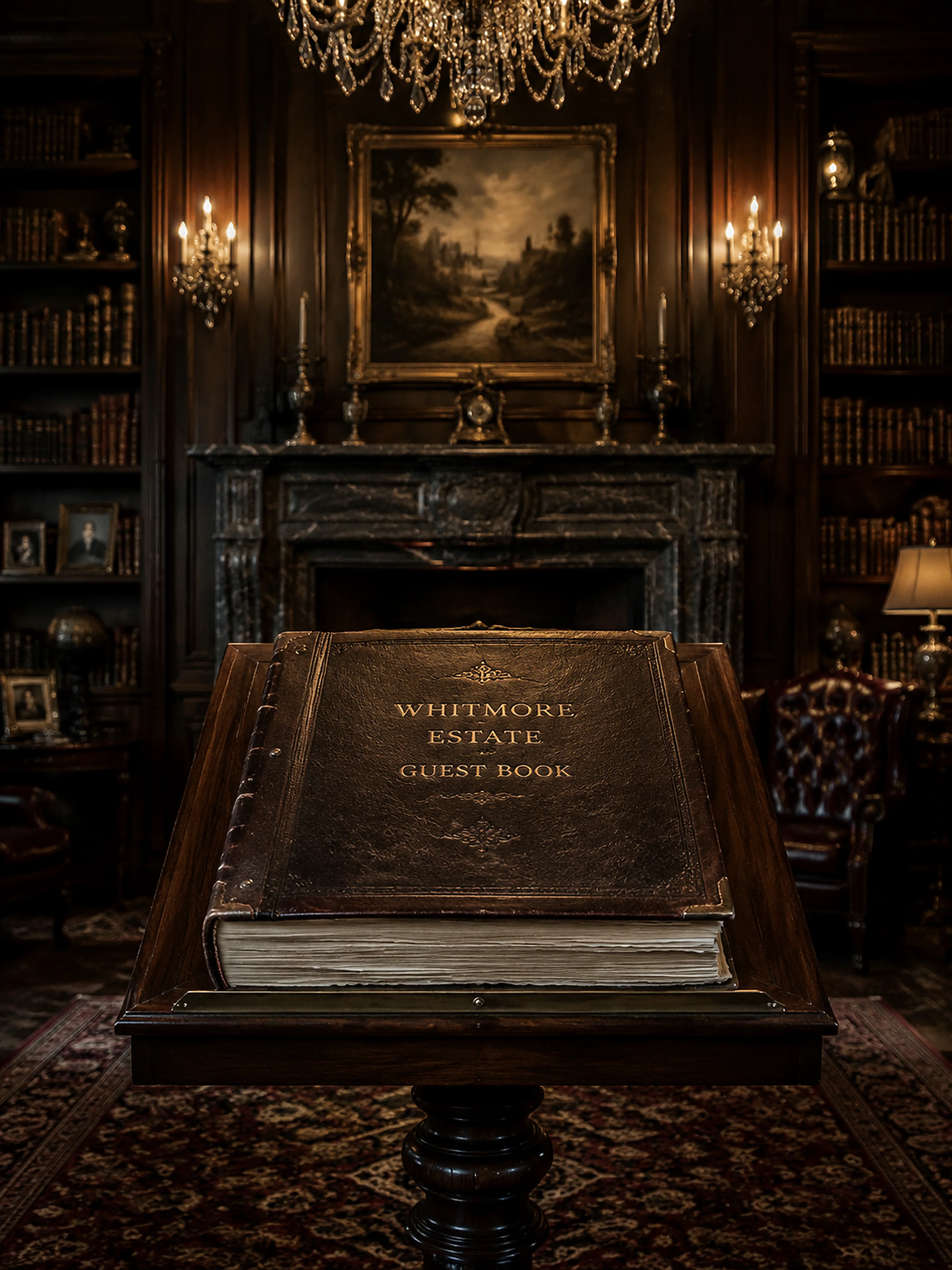
The scent of beeswax polish and old paper hangs in the air as you step into the Whitmore library. A distant, sharp clink of silver against porcelain echoes from beyond the door. Your eyes adjust to the dim light, first catching the deep, cold grey of the marble fireplace, then the dark, book-lined oak panels of the walls, and finally the heavy leather-bound guest book on its mahogany stand, its pages slightly ruffled.
 Crime Scene Environment
The primary indoor environment is a Cool, dry interior with heavy acoustic absorption from wood paneling, carpets, and book-lined walls, creating a hushed, dense acoustic profile. Artificial light is provided by crystal chandeliers and wall sconces, casting a warm but shadowed illumination. The air is still and carries the layered scents of its inhabitants and their activities.
 Investigation Constraints
Early 1930s technology. Communication via handwritten letters, party-line telephones, and personal telegrams. Security relies on mechanical key locks, personal butler vigilance, and signed guest books. Record-keeping uses leather-bound ledgers, paper receipts, and carbon-copy invitations. No electronic surveillance or digital data.
✦ Related Cases ✦