The Ashworth Absence
The absence of a brass key to a hunting cabin on the Ashworth estate has drawn an investigator to Ashworth Hollow. Residents maintain careful routines and polite smiles, but the search for the missing item uncovers a network of personal anxieties, altered records, and disturbances in dust. Each resident's professional or social role masks a private concern, and the physical evidence within the estate's rooms and grounds presents a series of objective anomalies.
 Initial Crime Scene
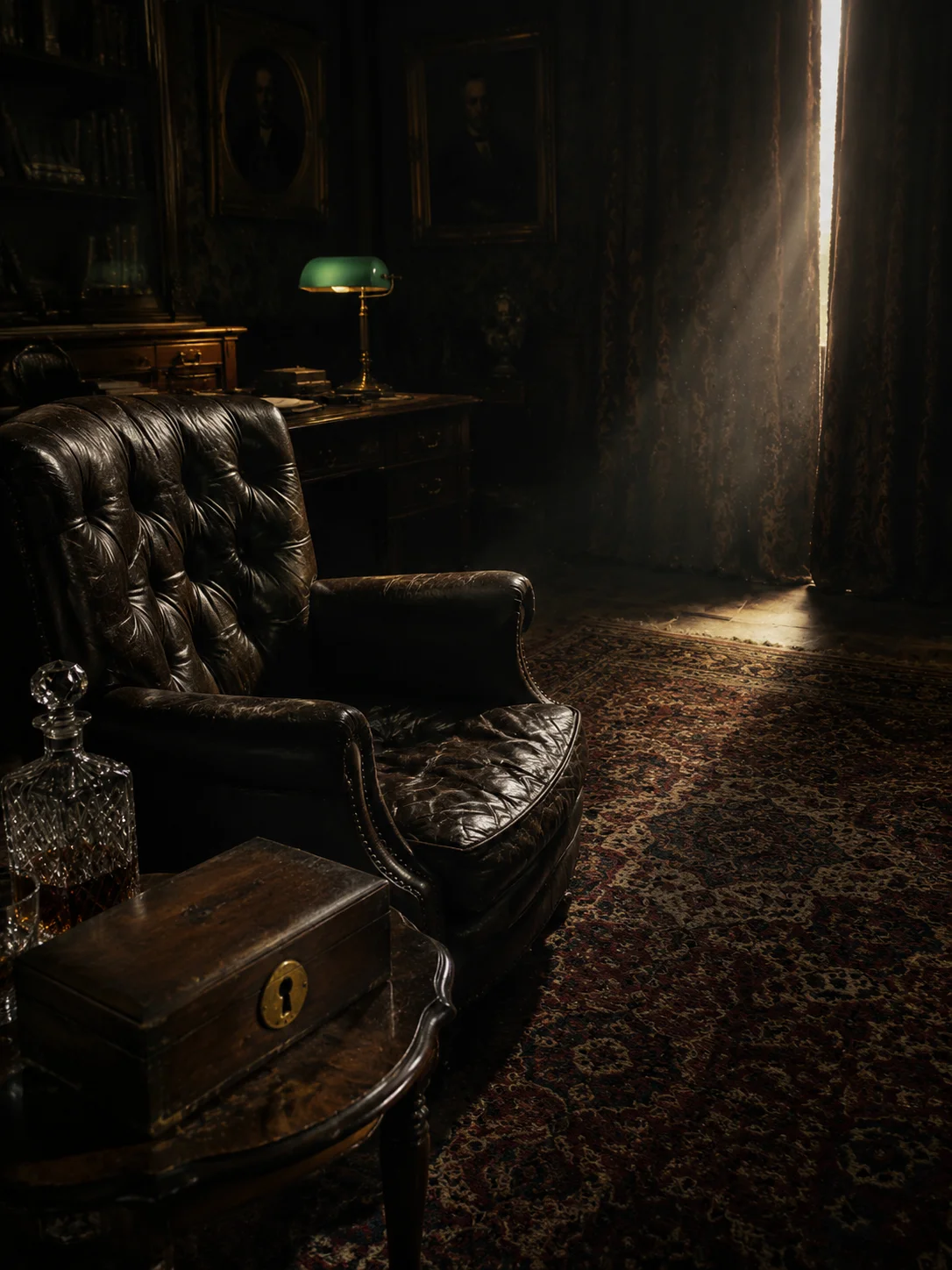
The leather of the study chair is cool against your back, its scent of old hide mixing with the musty perfume of closed books. A single floorboard creaks under a weight not your own, the sound sharp in the quiet. Your eyes adjust to the dim light, first catching the tarnished gleam of a brass keyhole on a lockbox, then the deep, plush impression of the Persian rug's weave, and finally the dust motes dancing in a thin shaft of sunlight from a gap in the heavy curtains.
 Crime Scene Environment
The interior is defined by a permanent twilight, with weak, yellowish light from green-shaded lamps creating pools of visibility. The air is cool and carries a high, oppressive humidity, clinging to tweed and velvet surfaces. The acoustic density is low, hushed and muffled, where every small sound—a cleared throat, a creaking chair—is amplified against the quiet.
 Investigation Constraints
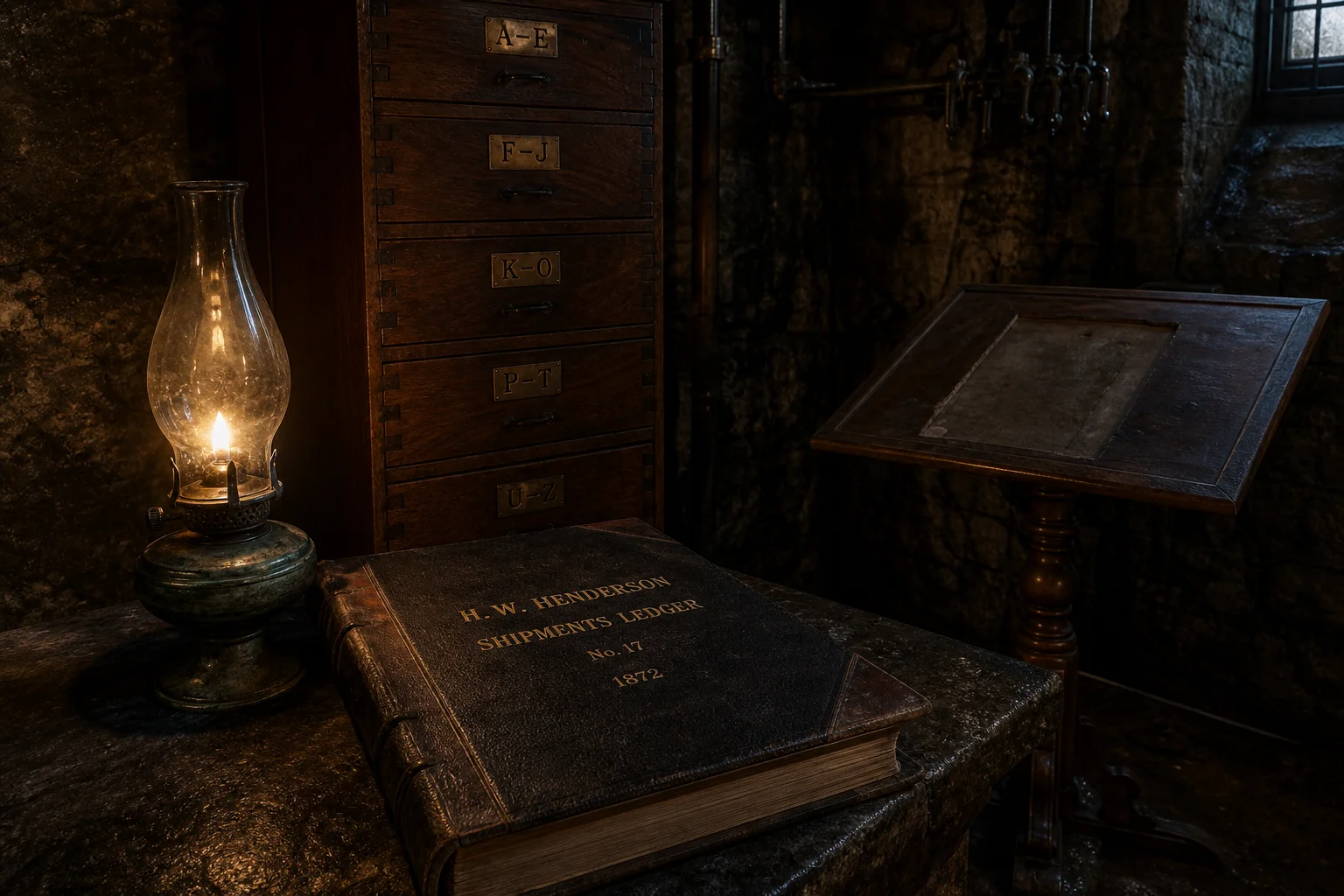
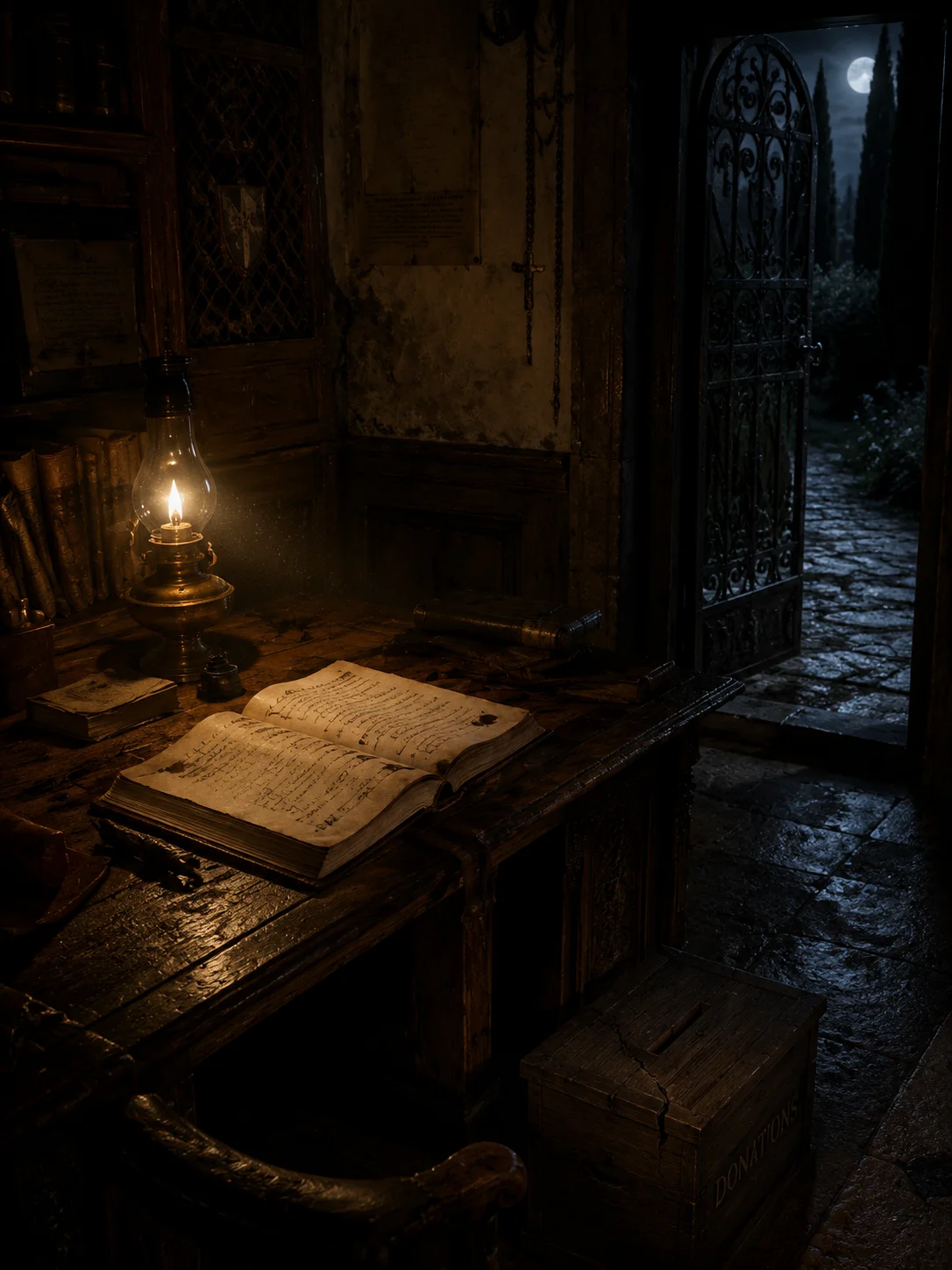
Physical keys (brass, iron, skeleton), mechanical combination locks on strongboxes, handwritten ledgers, personal diaries, printed legal documents (wills, deeds), landline telephone party-lines, local post office mail sorting, hand-wound clocks, hand-operated printing press for local gazette, carbon paper for duplicate notes.
✦ Related Cases ✦