The Ashworth Inquiry
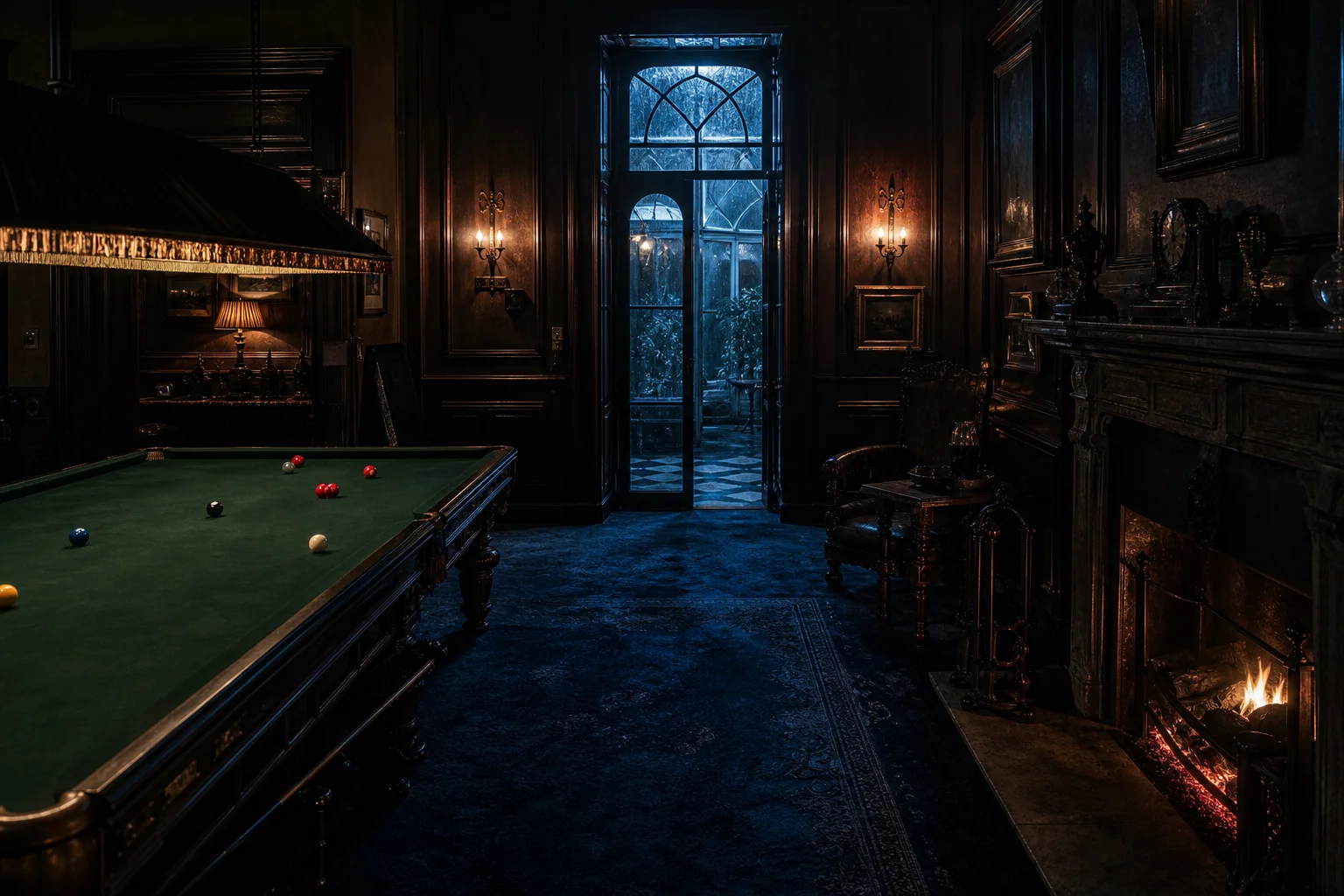
A weekend gathering at a remote estate. The host is discovered deceased in the library. Guests with private concerns are present. The investigation begins with a cold entry into an unfamiliar scene.
 Initial Crime Scene
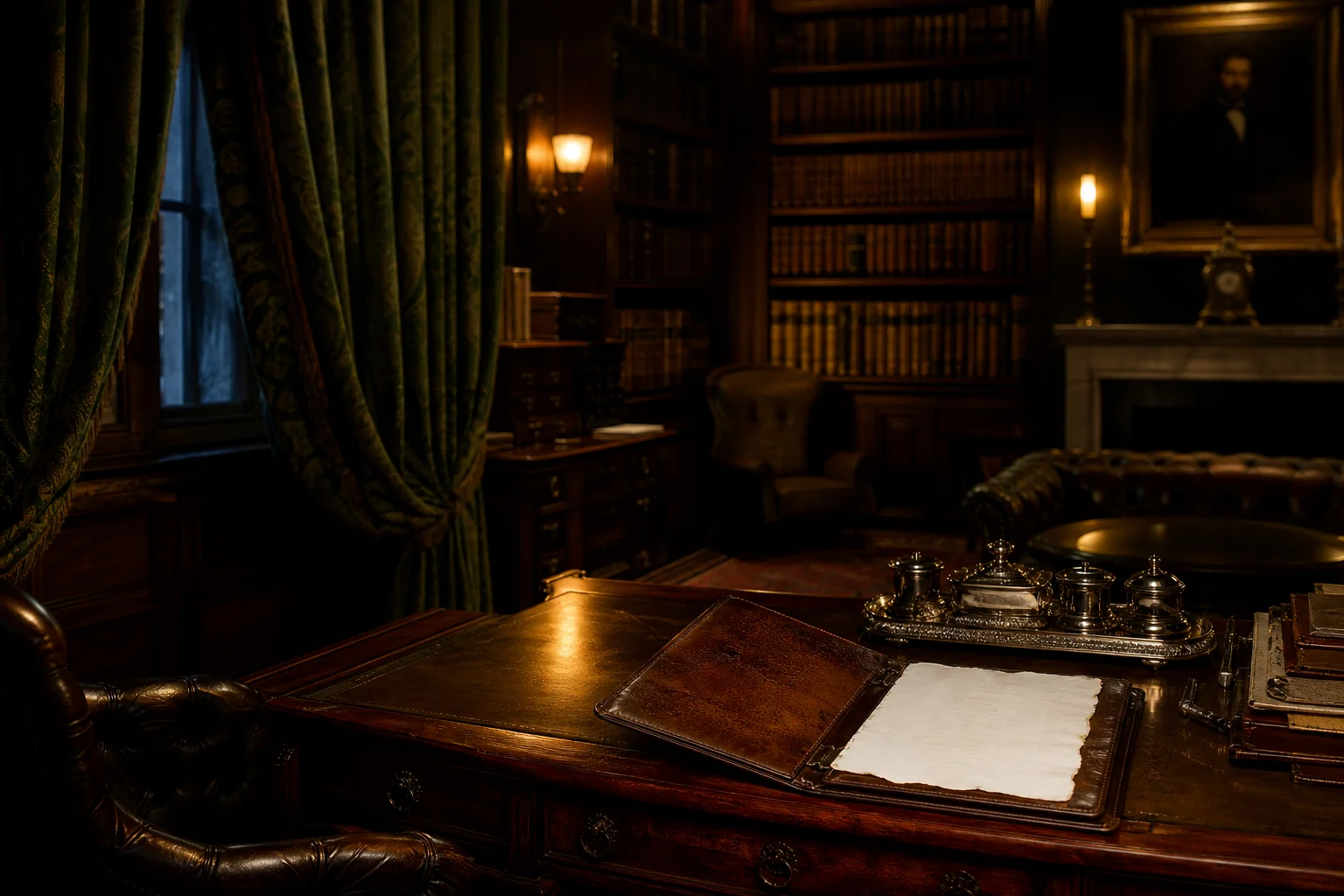
The heavy scent of beeswax polish and old paper hangs in the air. From the hall, the persistent tick-tock of a longcase clock is absent, replaced by a profound silence. Your gaze adjusts to the dim gaslight, catching on the deep green folds of heavy damask curtains, the stark white of a torn page in an open leather ledger, and the dull gleam of a polished silver desk set.
 Crime Scene Environment
Lighting is low, sourced from flickering gas lamps. The air is cool and dry, with a noticeable stillness. Acoustic density is high, with sounds absorbed by thick carpets, heavy curtains, and wood-paneled walls.
 Investigation Constraints
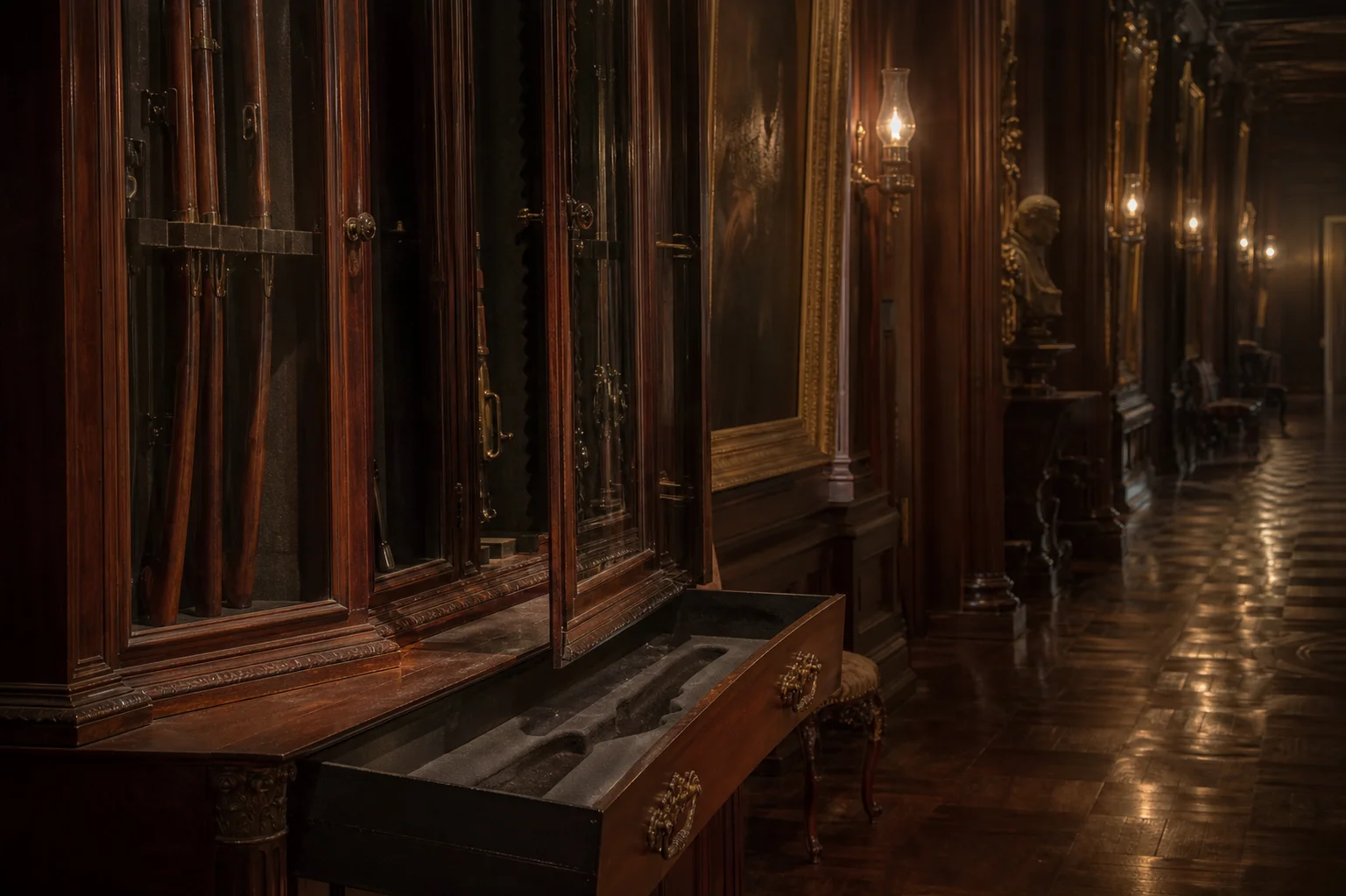
Late Victorian/Edwardian era. Communication is via handwritten letters, telegrams, and house servants. Locks are mechanical pin-tumbler or warded. Data storage is in leather-bound ledgers, personal diaries, and wills stored in a solicitor's office. Forensics relies on magnifying glasses, measuring tapes, and basic toxicology (tasting, smelling).
✦ Related Cases ✦