The Ashworth Paradox
An independent forensic specialist is summoned to Ashworth Manor following a death discovered during the New Year's Eve gala's midnight countdown. The investigation must untangle the contradictory physical evidence and character statements surrounding the host's final hours.
 Initial Crime Scene
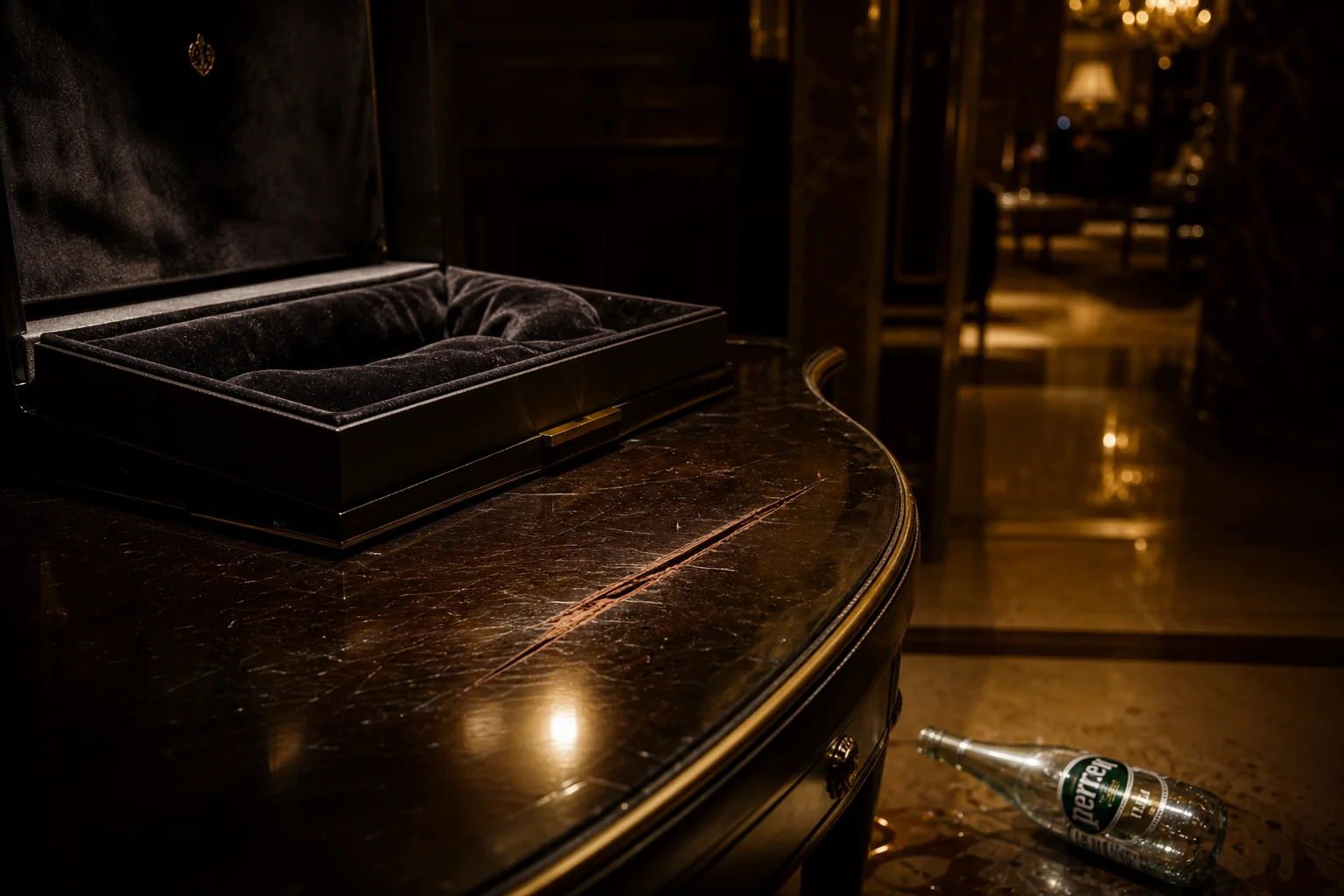
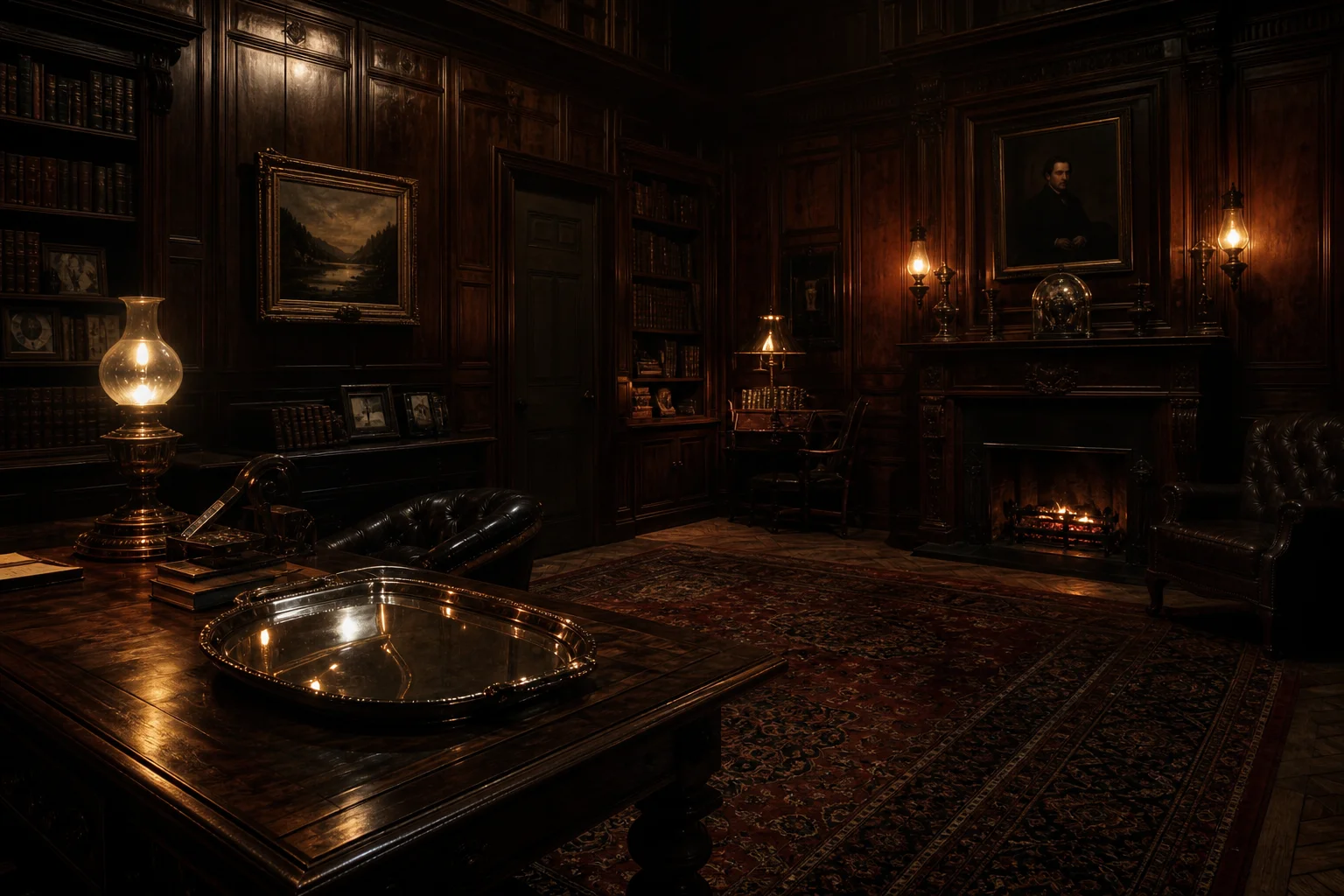
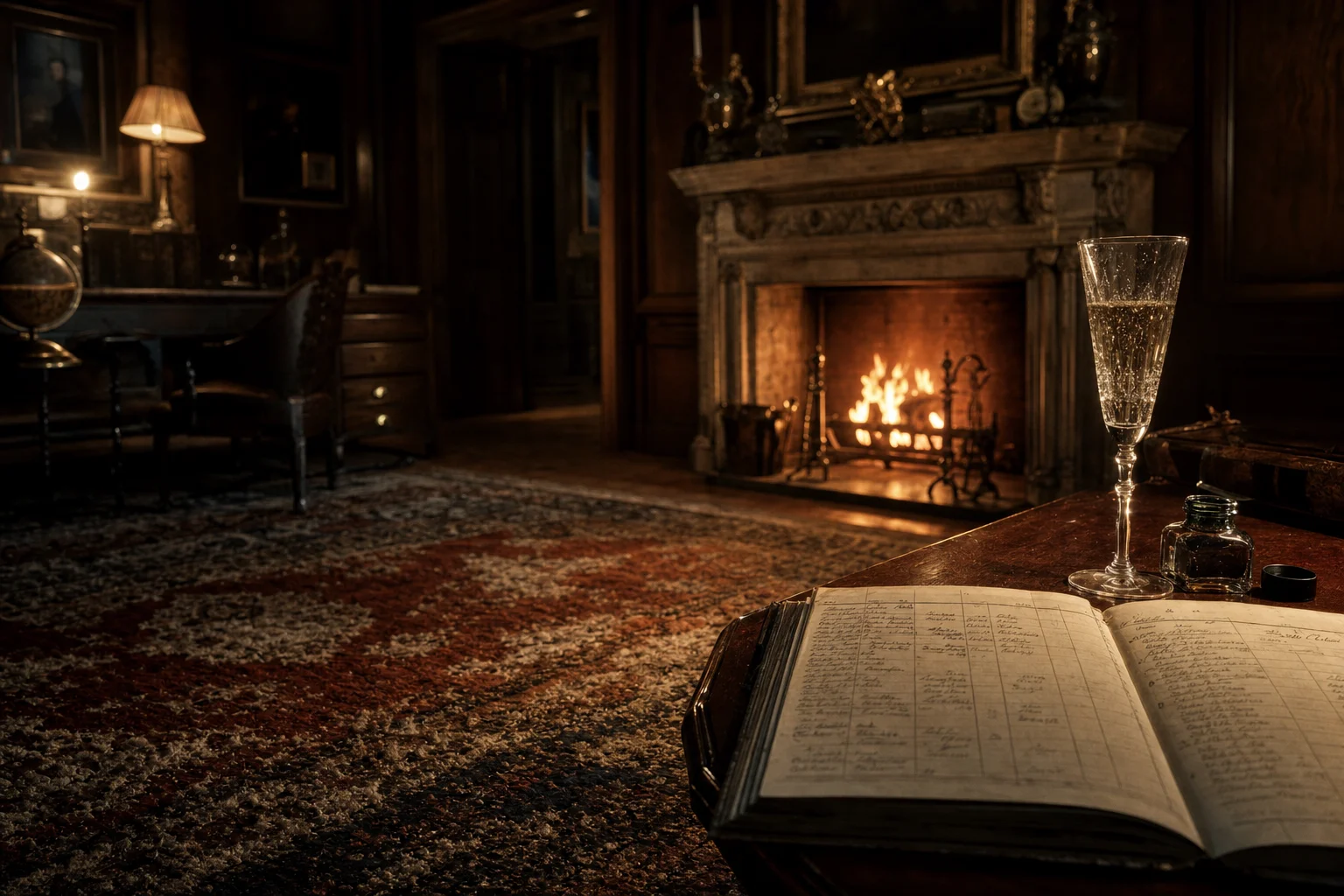
The scent of old paper and lacquered wood hangs hushed in the air. The precise crystal pattern on a champagne flute catches the low, flickering light from the crackling fire. The unique, coarse weave of a Persian rug fills the foreground, its fibers disturbed in one localized area. The specific brand of ink from an uncapped ledger adds a faint metallic tang to the room.
 Crime Scene Environment
Mid-to-late 20th century analogue lighting with firelight and isolated electric bulbs casting long shadows. The air is perfumed with a hushed, dry warmth from the hearth, but carries a damp, cool undertone from the outer halls. Acoustic density is low, dominated by the ticking of a clock and the occasional crackle of fire, punctuated by whispered, starched fabric movements.
 Investigation Constraints
Mid-to-late 20th century analogue setting. Technologies include: analogue telephone systems, mechanical clocks, film-based photography, handwritten ledgers, mechanical door locks with unique brass keys, local newspaper archives, record players, and early 1980s computer terminals used only for basic inventory or payroll by staff.
✦ Related Cases ✦