The Aspidistra Alcove
The reclusive patriarch is found deceased in his library armchair. An independent forensic specialist is summoned to catalog the scene's physical anomalies and interrogate the household staff. The environment contains multiple points of evidence that appear contradictory, suggesting various personal timelines intersected with the primary event.
 Initial Crime Scene
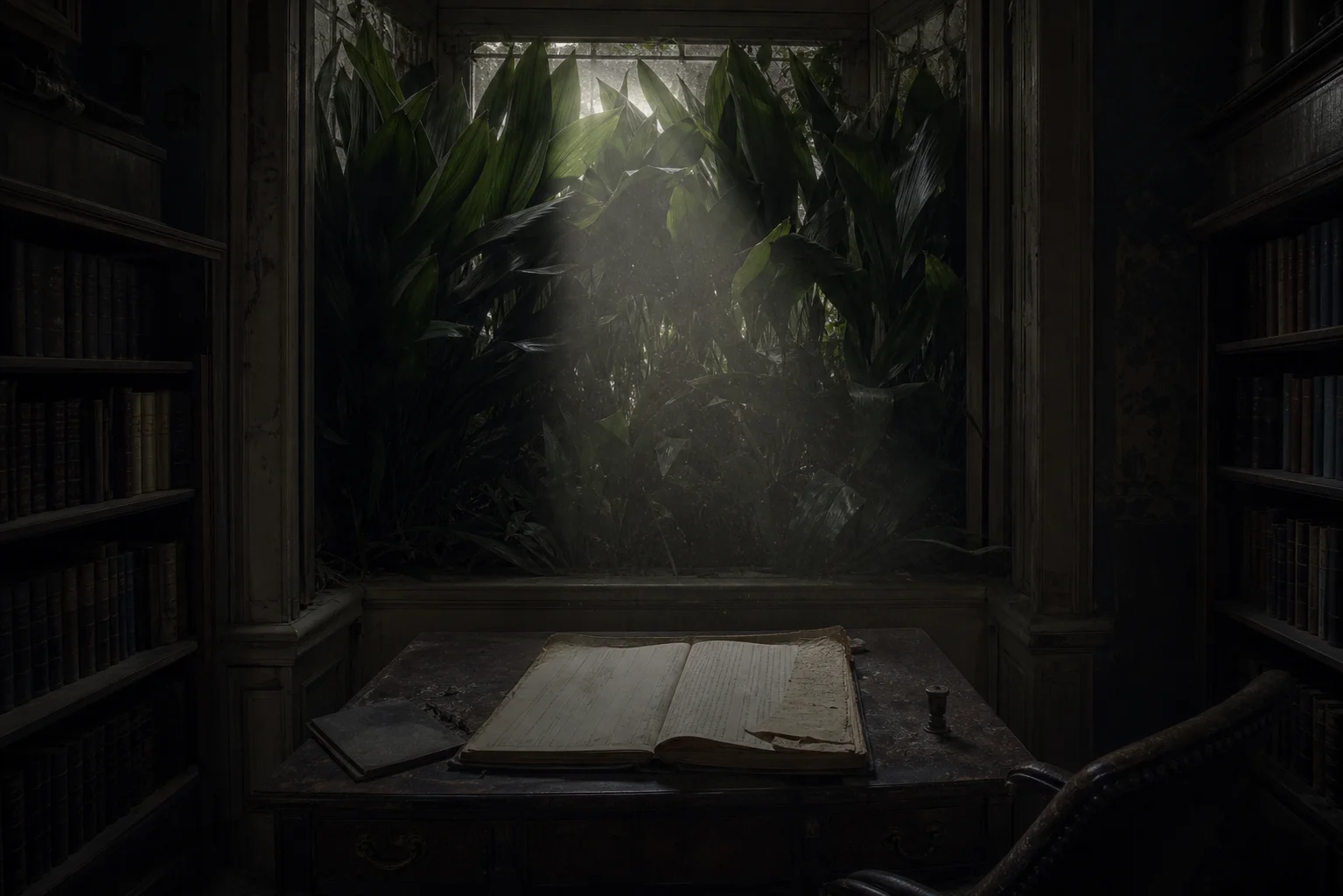
The air hangs with the scent of lemon polish and old paper, undercut by a cold draft from the bay window. A persistent, rhythmic creak marks the threshold where the hallway meets the room. The dominant visual is the large aspidistra stand, its leaves pressing against the glass, completely blocking the window alcove. Dust motes dance in the sliver of light that escapes its leaves. A leather-bound household ledger lies open on the desk, its current quarter page torn.
 Crime Scene Environment
The lighting is a diffuse, grey gloom filtered through the obstructed bay window, casting deep shadows in the alcove. The acoustic density is high, defined by the audible creak of a specific floorboard and the muffled silence of a house holding its breath. The humidity is low, with a dry, dusty chill permeating the space. The atmosphere is one of strained propriety and recent, hidden disturbance.
 Investigation Constraints
Handwritten correspondence (letters, notes), personal diaries, manual door locks (keys), household staff schedules, local telephone exchange (party line), hand-wound clocks, physical ledgers, and early forensic techniques like powder dusting for fingerprints.
✦ Related Cases ✦