The Auditor's Ledger
An independent forensic specialist is summoned to Pinnacle Financial Group following the death of a lead auditor in his locked office. The investigation begins in a sterile, late-1990s corporate environment where timestamps are recorded on dot-matrix paper and documents are stored as carbon copies. The probe must disentangle overlapping access logs, chemical inventories, HR files, and network data to reconstruct the sequence of events.
 Initial Crime Scene
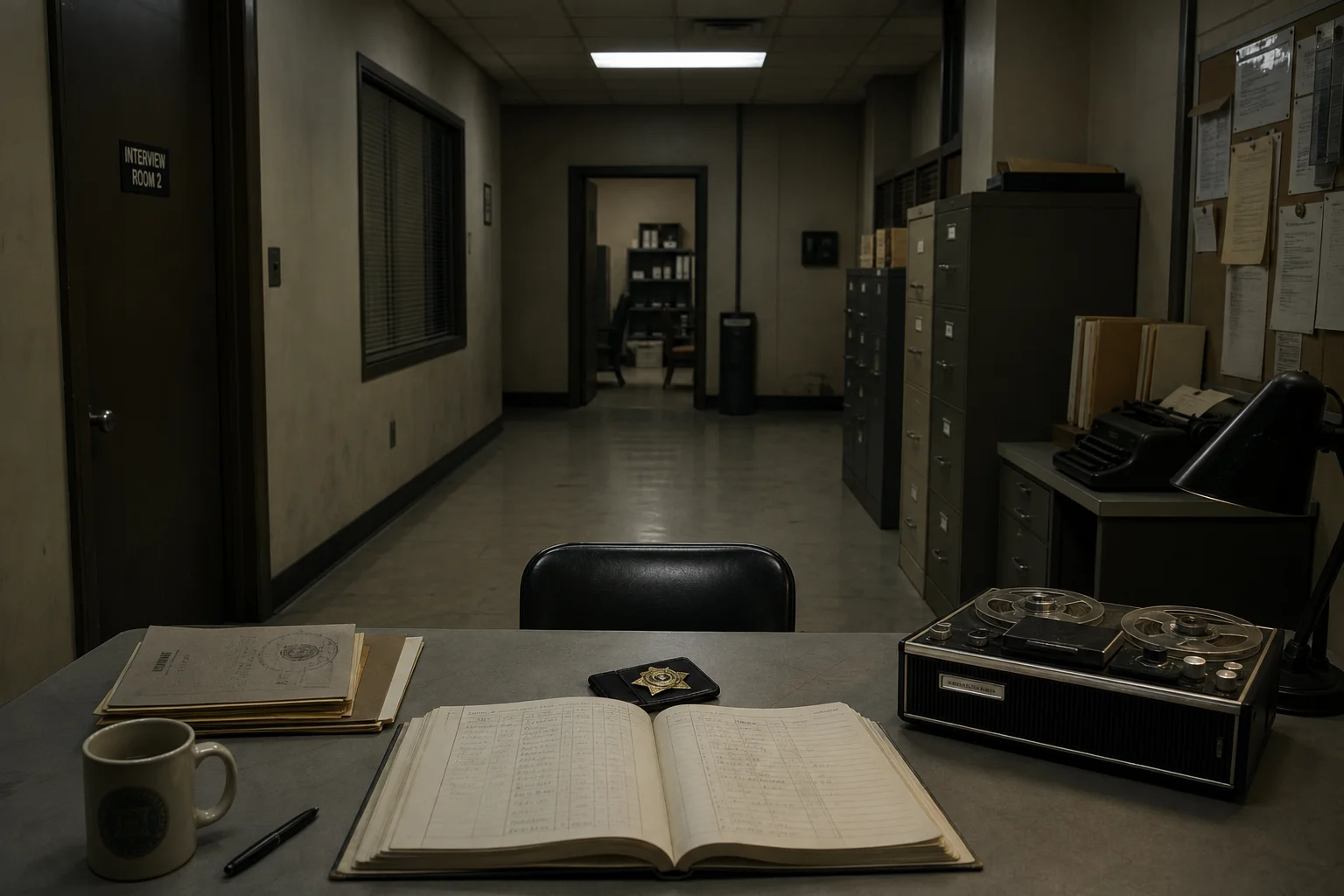
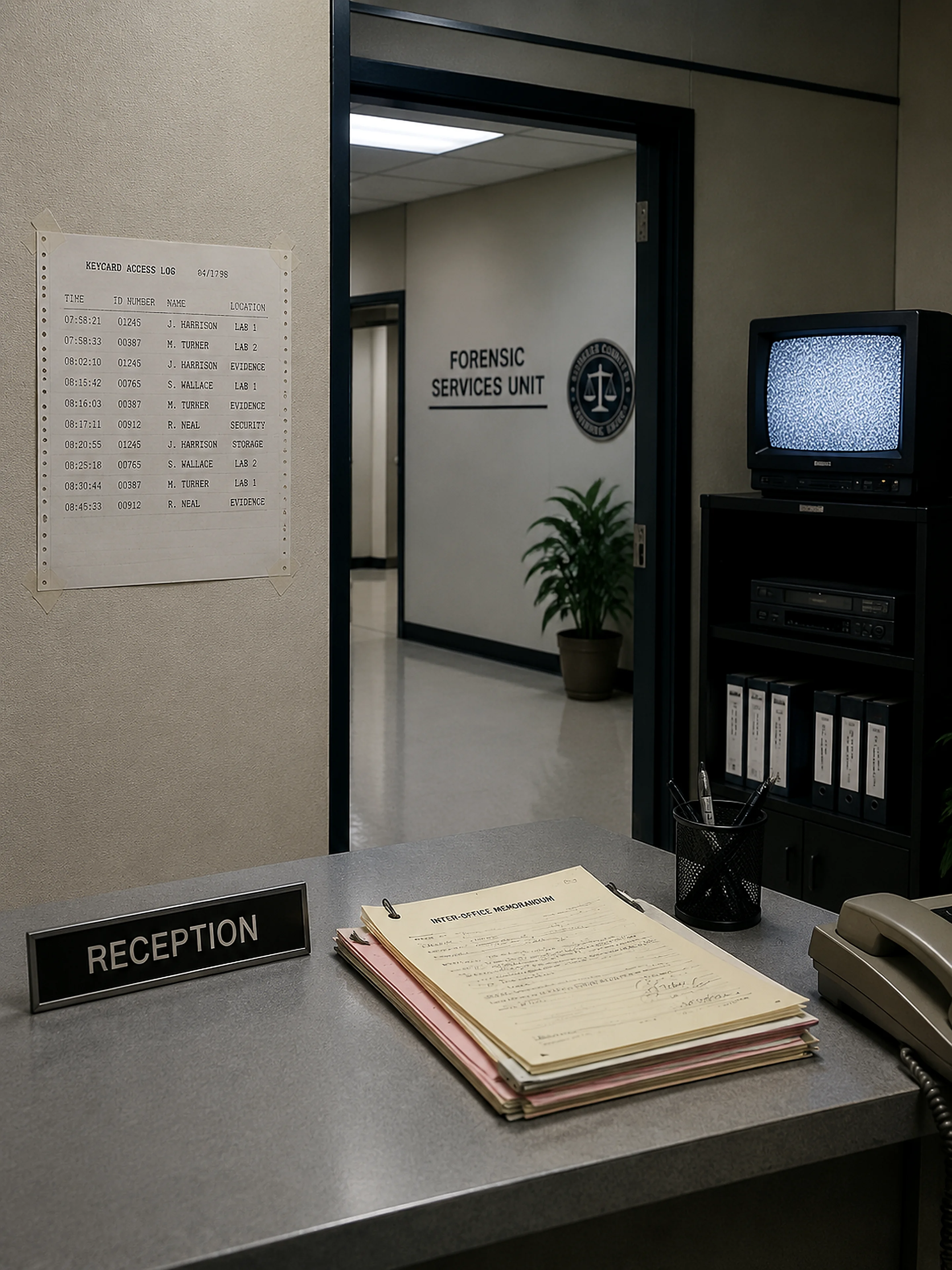
The faint, acrid smell of ozone from overworked copiers and servers hangs in the air. A low, analog hum emanates from fluorescent light fixtures, casting a flat, shadowless glare across the linoleum floor. Your eye catches the dot-matrix printout of key-card access logs taped to the wall, the carbon copies of inter-office memos on the reception desk, and the time-stamped VHS security tape monitor showing static.
 Crime Scene Environment
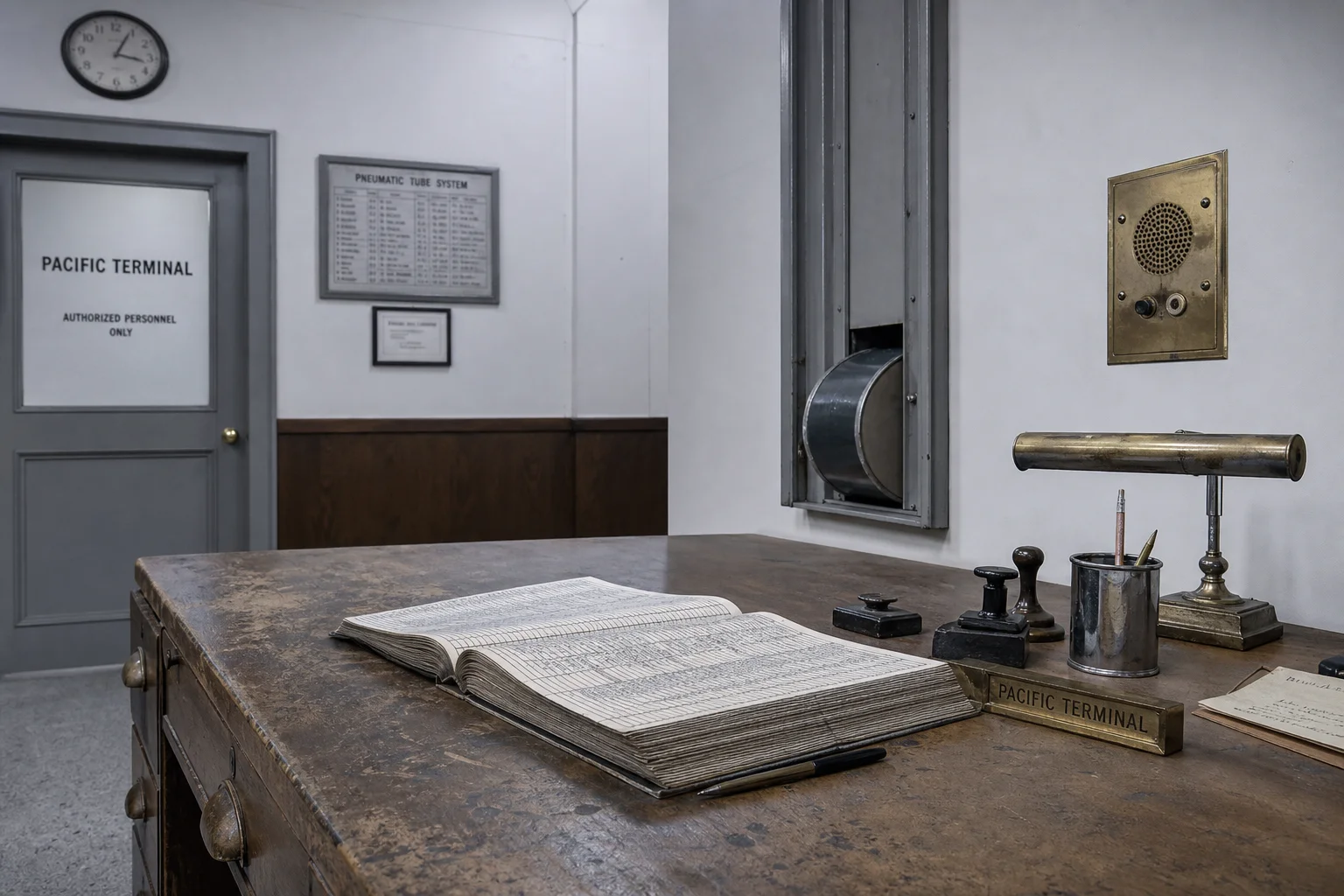
The lighting profile is a sterile, fluorescent wash that eliminates shadow, creating a flat and shadowless visual field. The humidity and temperature profile is dry and climate-controlled, maintained for electronic equipment, producing a consistently cool, still air. The acoustic density is dominated by a persistent, low analog hum from fluorescent ballasts and computer cooling fans, punctuated by the intermittent hiss of pneumatic tubes and the dot-matrix buzz of a printer.
 Investigation Constraints
Late-1990s to early-2000s corporate tech: Landline phones with message recorders, VHS security tapes, early digital CCTV with poor resolution, fax machines, pneumatic tube systems for inter-office document delivery, desktop computers with floppy disk drives, early corporate email (text-based), basic network server logs (login/logout, file access times), mechanical key-card door locks with time-stamped logs, analog fire suppression systems, forensic chemical analysis (lab-based), basic toxicology reports, paper-based HR files.
✦ Related Cases ✦