The Aura del Mar Incident
At the coastal Aura del Mar resort, an engagement party is disrupted when a guest suffers a medical crisis. The ensuing investigation examines the event's complex social and digital landscape, where multiple individuals manage their professional and personal narratives.
 Initial Crime Scene
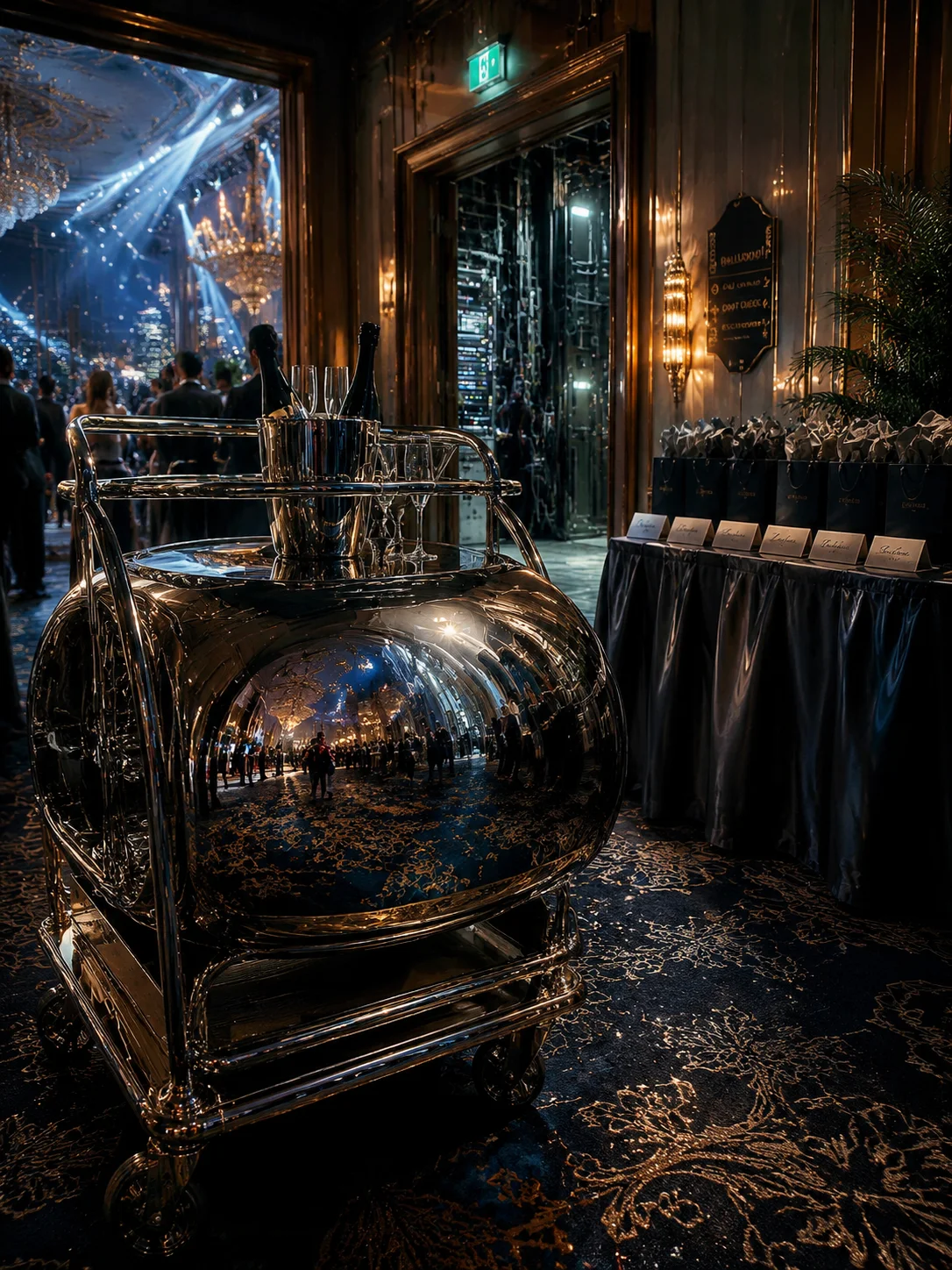
The first thing you notice is the scent: a cloying, expensive perfume layered over the sharp, ozonic tang of electronics and the faint, sweet decay of spilled champagne. A low, constant hum vibrates from a cluster of lighting rigs near the ballroom entrance, their transformers buzzing like trapped insects. Your eyes track across a polished chrome service cart, its surface reflecting a warped, fish-eye view of the crowd; a deep-pile decorative rug near the lighting zone, its fibers catching stray sequins; and the precise, silk-draped grid of the gift bag station, where personalized name tags are arranged with unsettling order.
 Crime Scene Environment
The lighting is a curated blend: warm, dim pools in the VIP lounge and bar area, stark, clinical fluorescence near the service corridors, and the dramatic, focused beams from the ballroom rig. The humidity is controlled but carries a tangible weight—perfume, sweat, and the cool, misting air from the refrigeration room doors. Acoustic density is layered: the muted thump of a bassline, the constant, low buzz of transformers, the clink of flutes, and beneath it all, the pervasive, algorithmic hum of phones refreshing feeds and encrypted messages pinging.
 Investigation Constraints
Smartphones with social media apps (Instagram, Twitter, TikTok), encrypted messaging apps (Signal, WhatsApp), cloud-based photo storage, resort security keycard systems, digital event planning software, public Wi-Fi networks, livestream platforms, wireless Bluetooth speakers, and modern point-of-sale systems. No advanced cybernetics, AI, or deep-web encryption.
✦ Related Cases ✦