The Baldwin Estate Affair
During a 1928 society gala, a handwritten musical score vanishes from the Baldwin Estate. The subsequent discovery of the host, composer Arthur Baldwin, deceased in his study prompts a formal investigation. Guests and staff present accounts of their whereabouts and activities throughout the evening, offering testimonies that must be cross-referenced against the physical state of the estate's rooms and objects.
 Initial Crime Scene
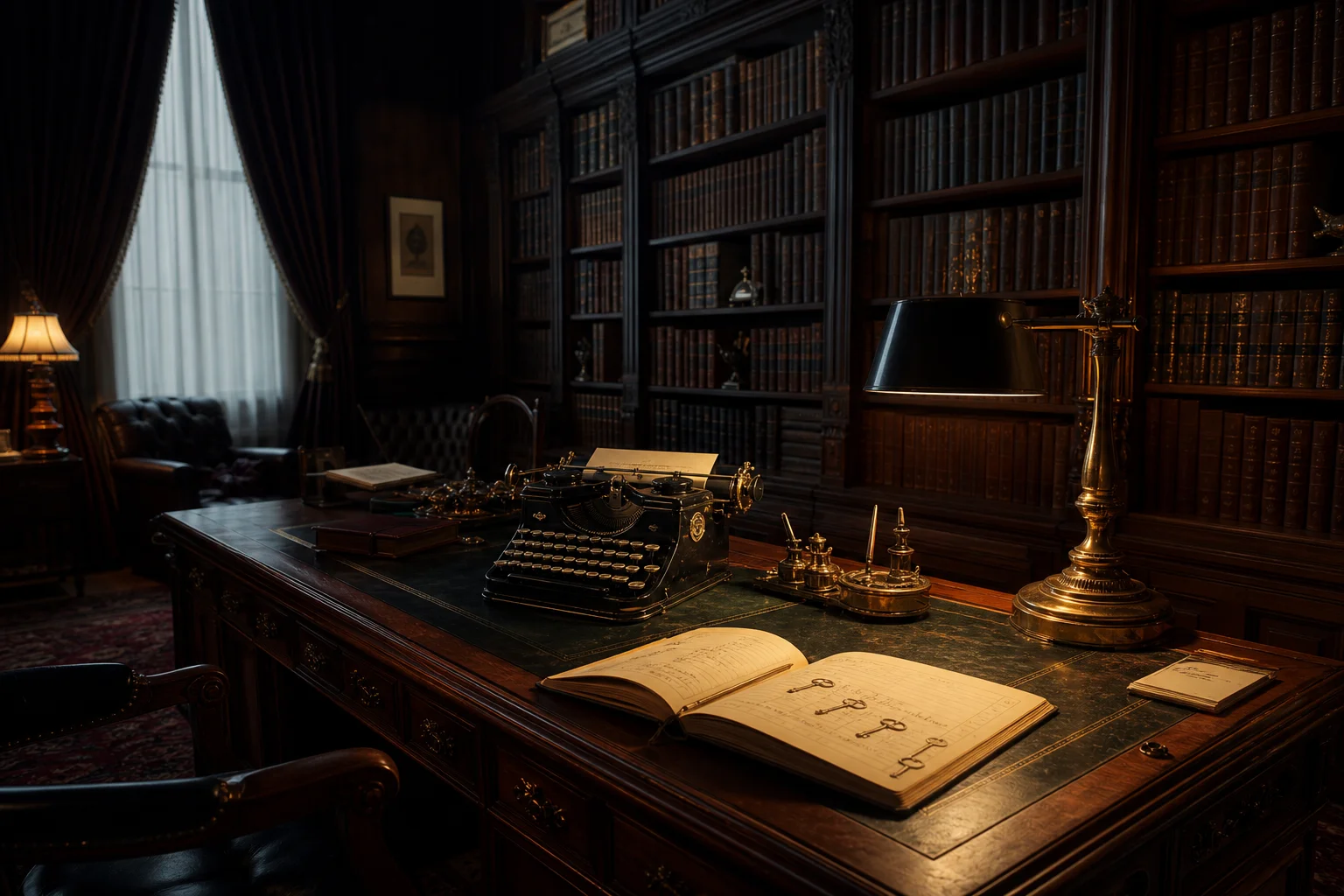
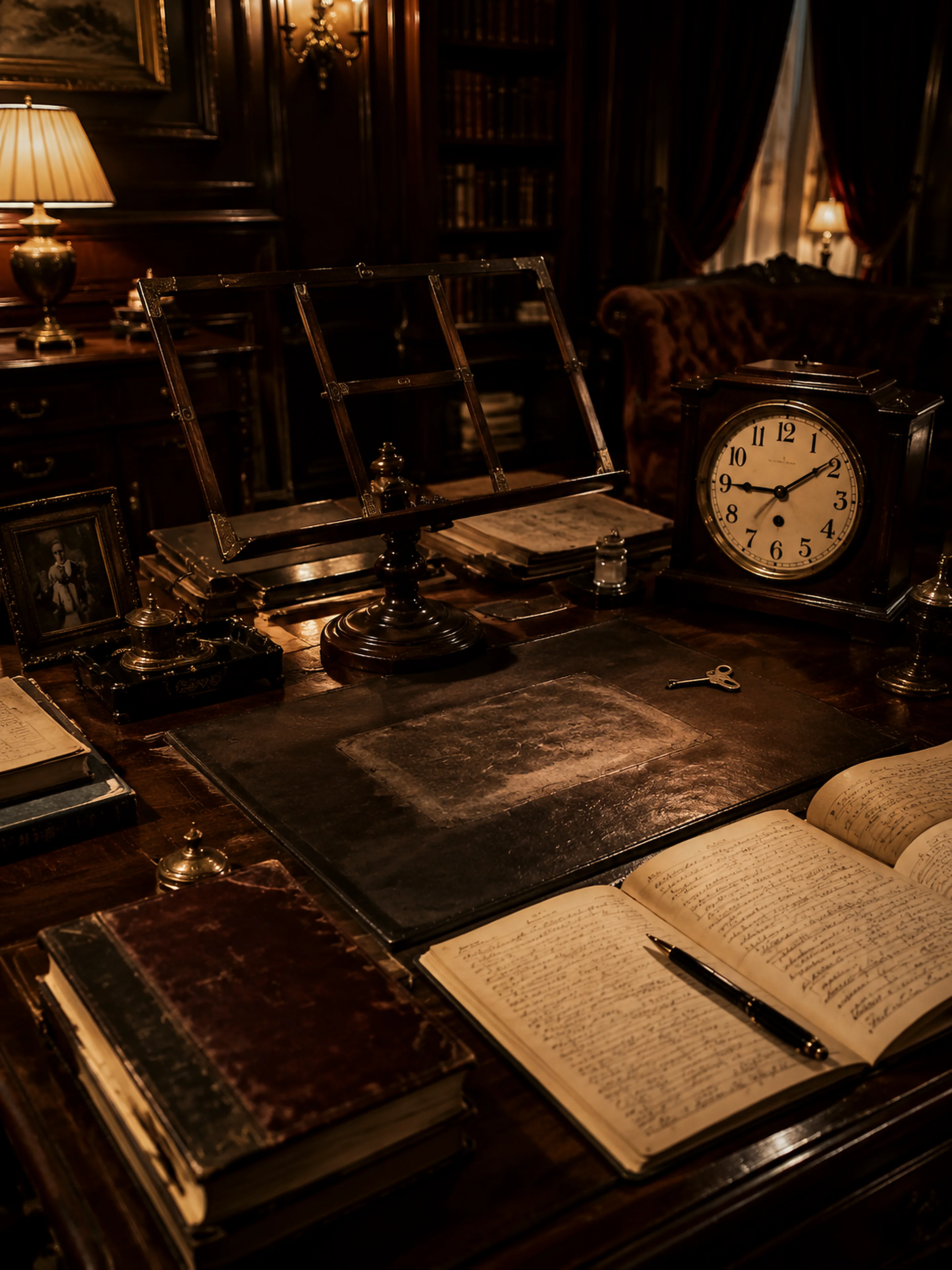
The heavy scent of lemon polish and old paper hangs in the wood-paneled study. Your gaze sweeps across the mahogany desk cluttered with ledgers, the inconsistent ticking of the mantle clock with its loose winding key, and the faint, rectangular indentation on the leather blotter beneath an empty music stand.
 Crime Scene Environment
A low, warm lighting profile from table lamps casts long shadows. The humidity is neutral, carrying the dry, static quality of heated rooms and polished wood. Acoustic density is high, with sounds muted by thick carpets and velvet drapes, punctuated by the irregular tick of the mantle clock.
 Investigation Constraints
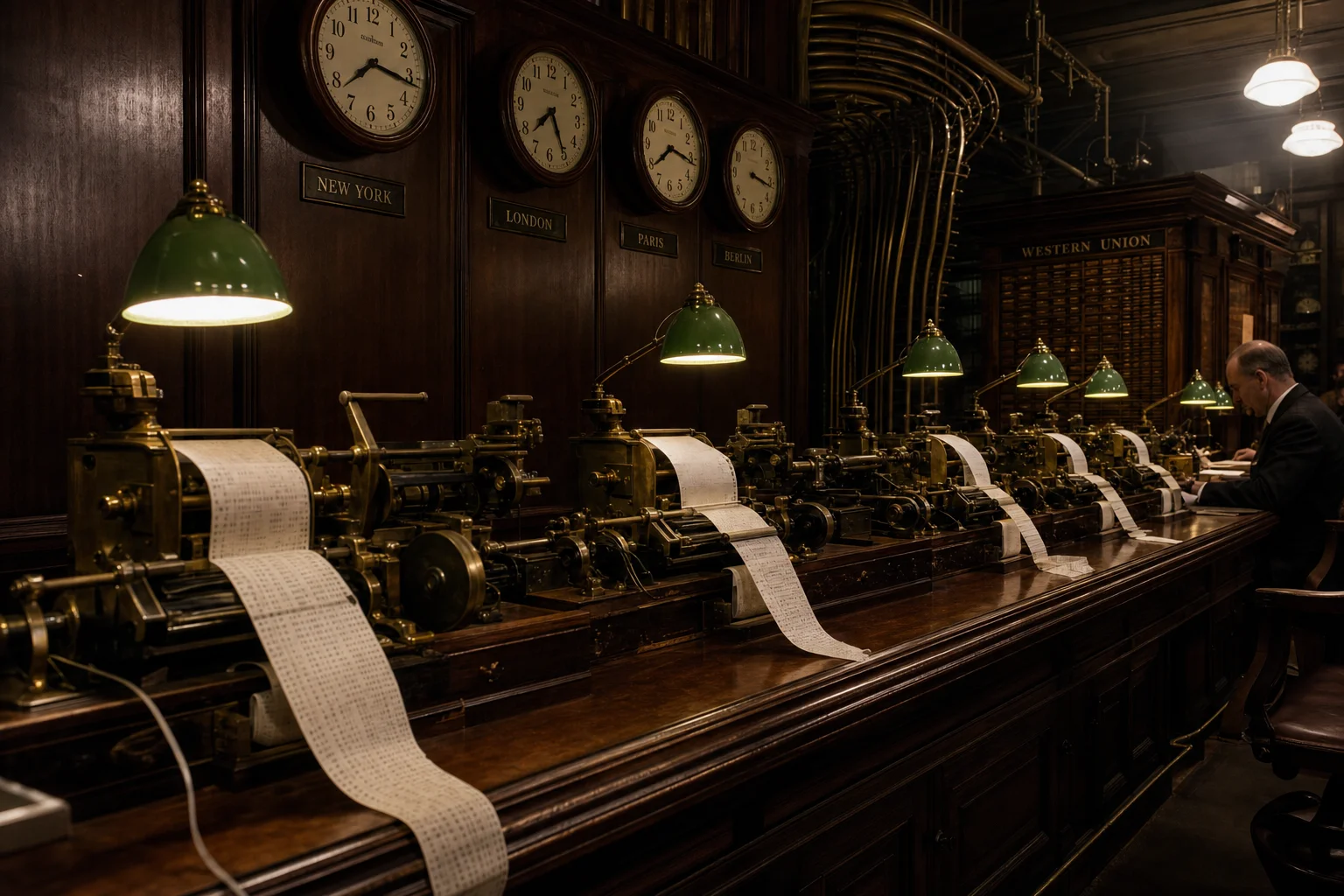
Manual typewriters, carbon paper, rotary telephones (operator-connected), pneumatic tube systems in large buildings, hand-cranked gramophones, fountain pens, mechanical door locks, leather-bound ledgers, hand-written sheet music on heavy manuscript paper, analog clock systems, dumbwaiters, manual elevator (lift) with operator.
✦ Related Cases ✦