The Bitter Reserve
An independent investigator is called to an exclusive, reservation-only restaurant after a patron collapses during service. The investigation reveals a web of competing professional pressures, personal anxieties, and incomplete records that each staff member is desperate to protect.
 Initial Crime Scene
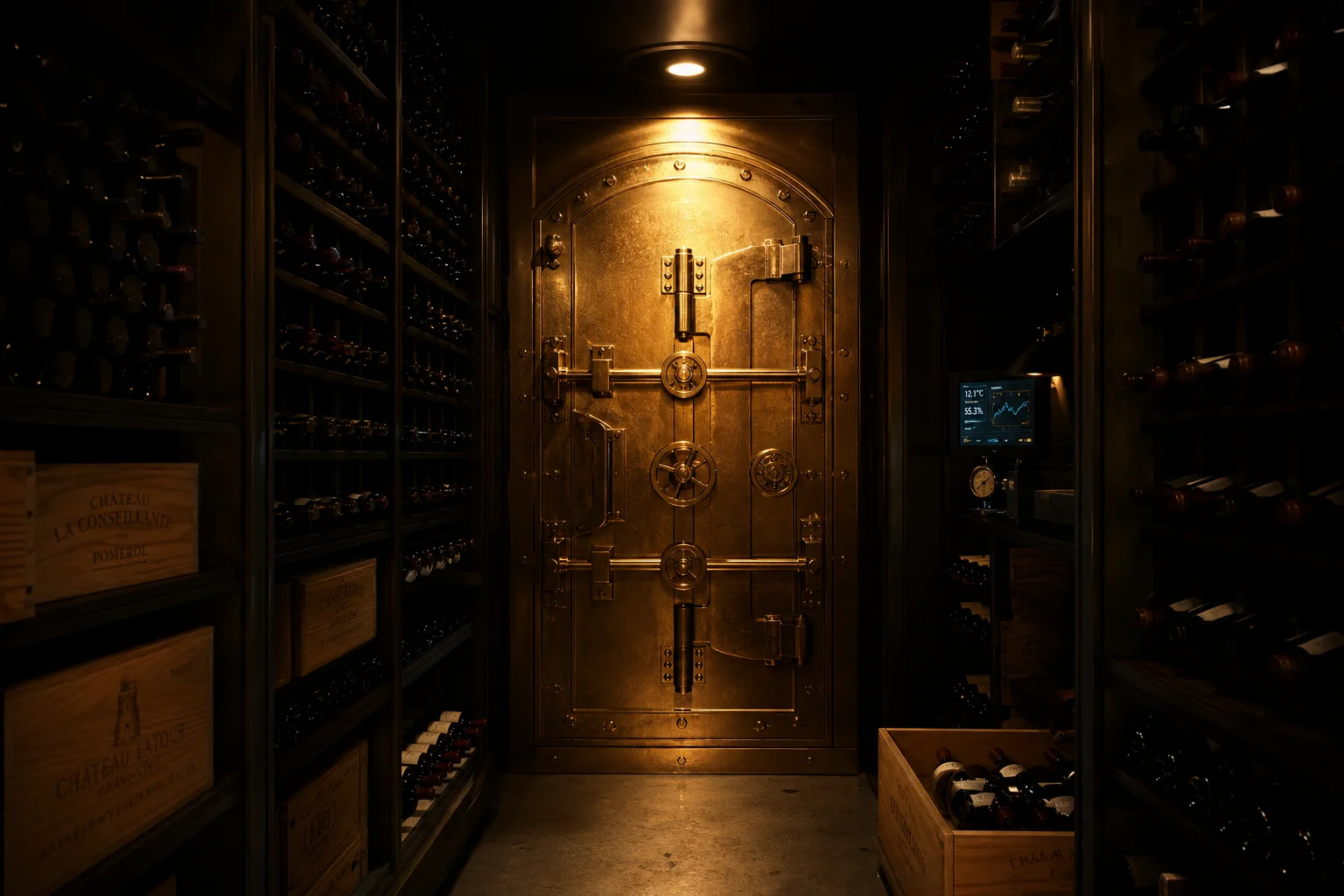
The polished brass door to the private wine cellar is the first thing you see, its surface catching the light from a single, focused spotlight. A faint, sweet scent of aging cork and damp stone hangs in the cool air. Behind the steel kitchen pass, the rhythmic, high-pitched scrape of a knife on a cutting board sets the ambient tone. Your eyes adjust to the dim, amber glow from a crystal chandelier, the heavy starched white linen of a corner table, and the dark, receding shadows of bottle racks.
 Crime Scene Environment
Lighting is a curated contrast: the dining room is bathed in a low, amber glow from crystal fixtures, while the kitchen is under harsh, functional fluorescents and the cellar is near-dark with singular spots. The air is heavy with a precise, temperature-controlled humidity—cool and dry in the cellar, steamy with a butter-scented haze in the kitchen, and carrying a faint, floral perfume in the dining room. Acoustic density is layered: the dining room holds a low, expectant murmur and the clink of silver, the kitchen is a wall of mechanical noise—sizzling, clanging, and shouted orders—and the cellar is silent except for the hum of climate control and the pulse of a digital terminal.
 Investigation Constraints
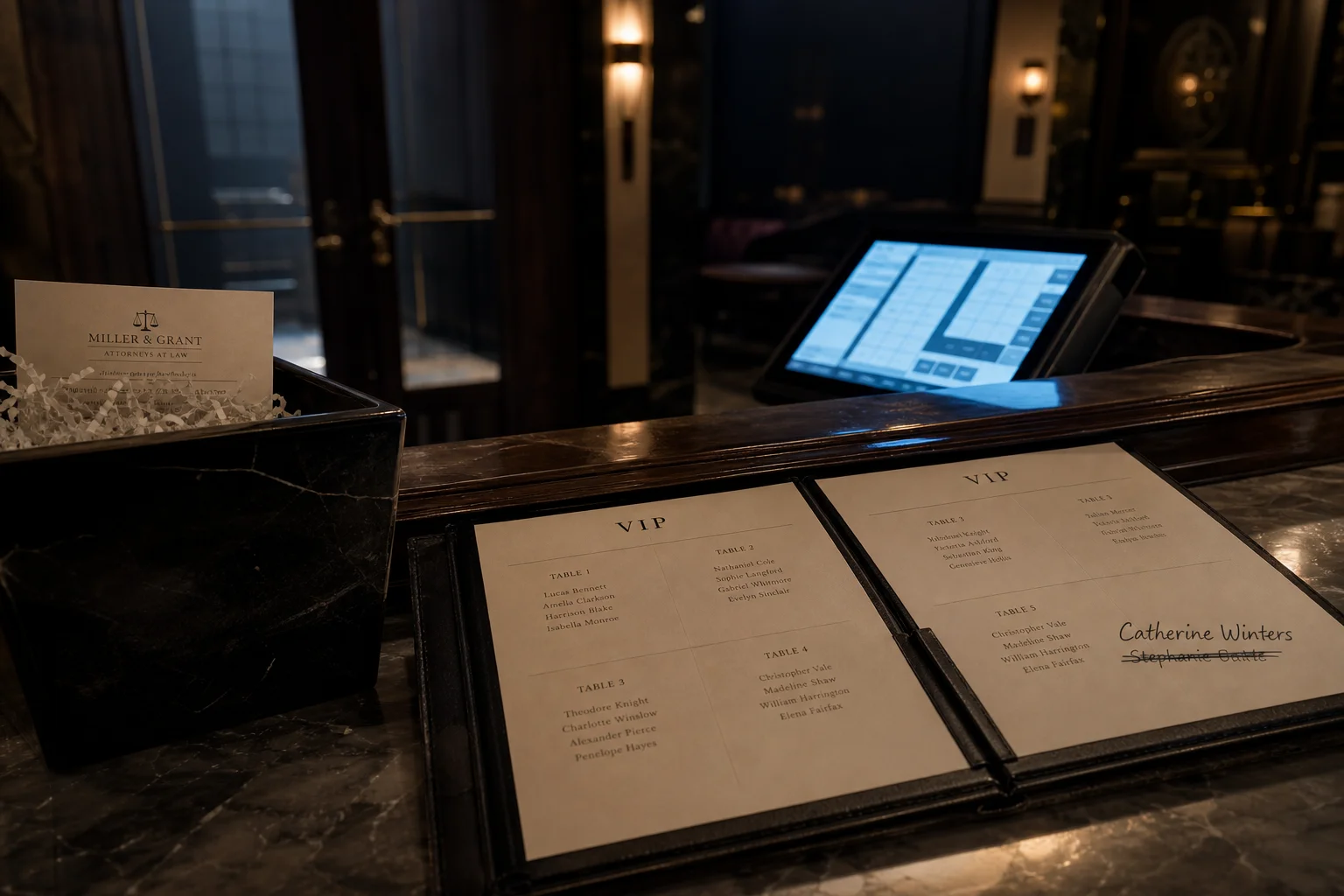
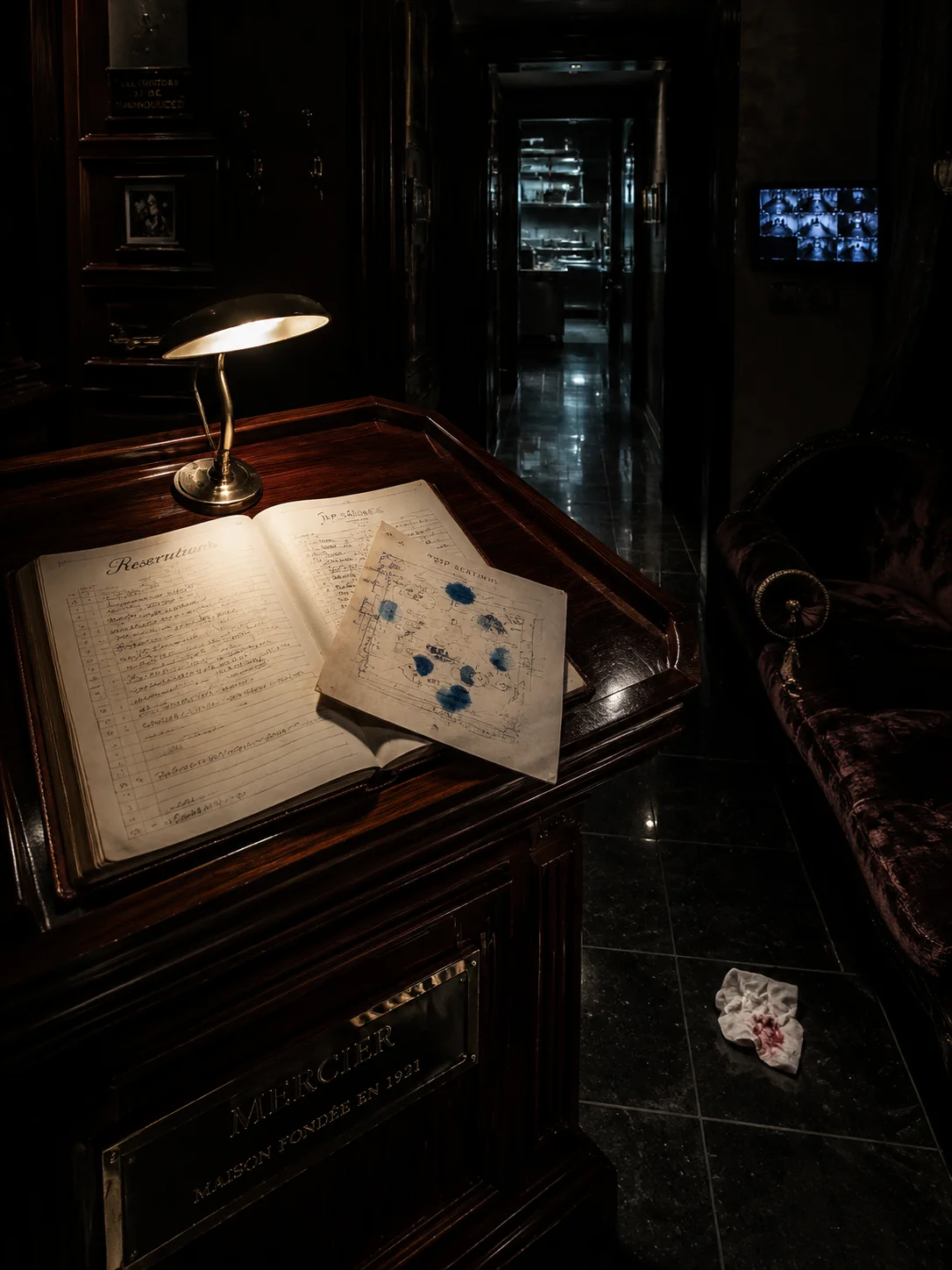
Smartphones with basic social media, digital reservation systems, printed menus, email, encrypted messaging apps (Signal, WhatsApp), basic security cameras in public areas only, printed contracts and NDA pages, digital payment terminals, paper-based inventory logs.
✦ Related Cases ✦