The Blue Dahlia Ledger
An independent forensic investigator is called to the Blue Dahlia jazz club after its owner, Silas Thorne, is discovered deceased in his private office. The scene presents a complex field of contaminated physical evidence and conflicting witness statements. The investigation requires untangling a web of social shame, career-saving lies, and accidental timeline contamination to reconstruct the cold truth.
 Initial Crime Scene
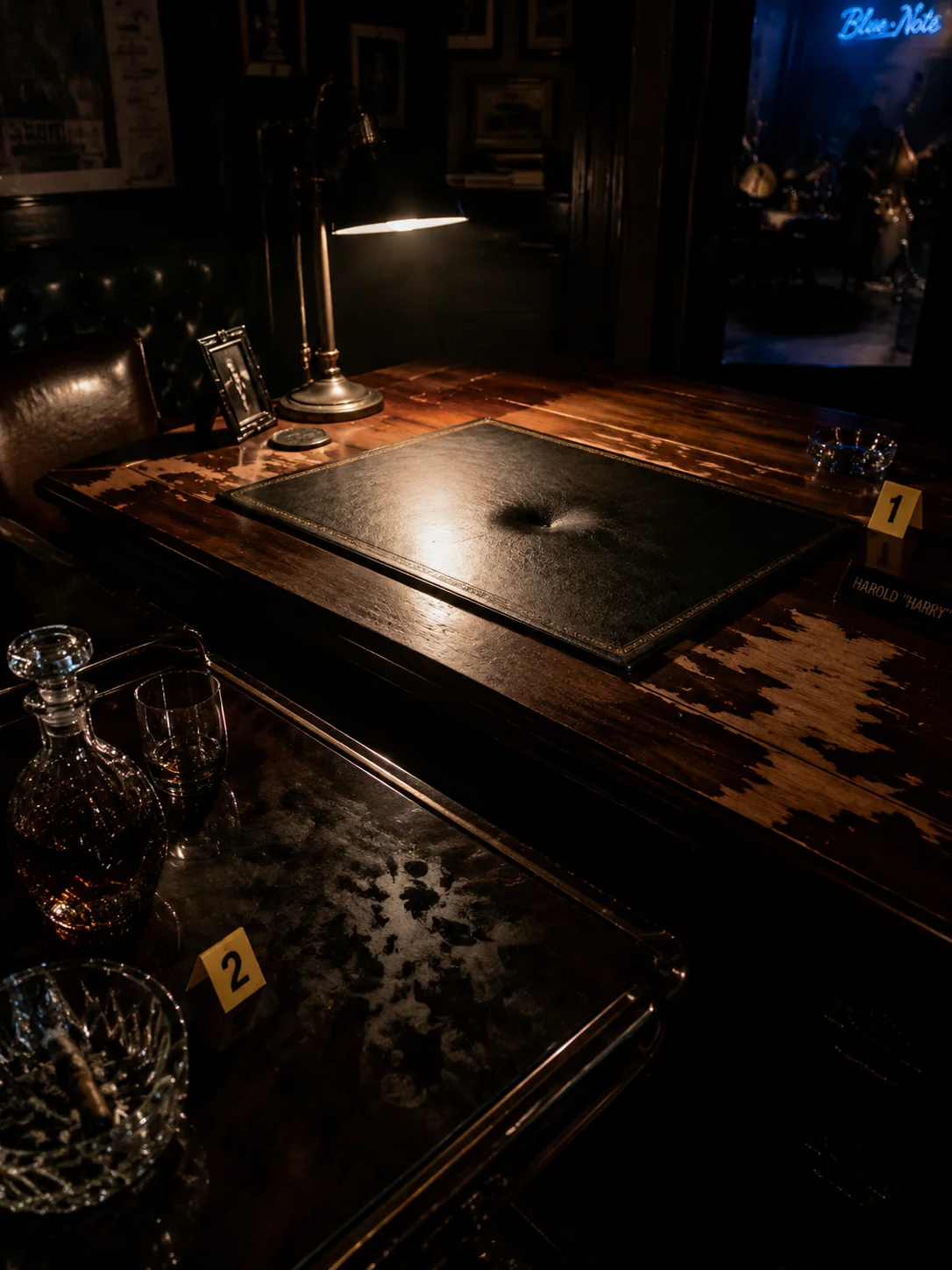
The first thing you register is the chemical bite of turpentine cutting through the stale air. From the main floor, the muffled brassy pulse of a saxophone bleeds through the walls. Your focus adjusts to three visual anchors: the deep, singular indentation centered on the leather blotter pad, the aggressive stripping of lacquer exposing raw wood grain on the mahogany desk surface, and the smudged, directional trails of fingerprint dust on the polished side table.
 Crime Scene Environment
Lighting is a chiaroscuro scheme: a single, oblique lamp on the desk casts long, stark shadows, leaving the room's corners in a smoky gloom. The humidity is low and dry, the temperature cool, with the air itself feeling heavy and suffocating. Acoustic density is layered: the distant, flickering hum of the club's music is underpinned by a profound, investigative silence punctuated only by the occasional, sharp clink of ice from an unseen glass.
 Investigation Constraints
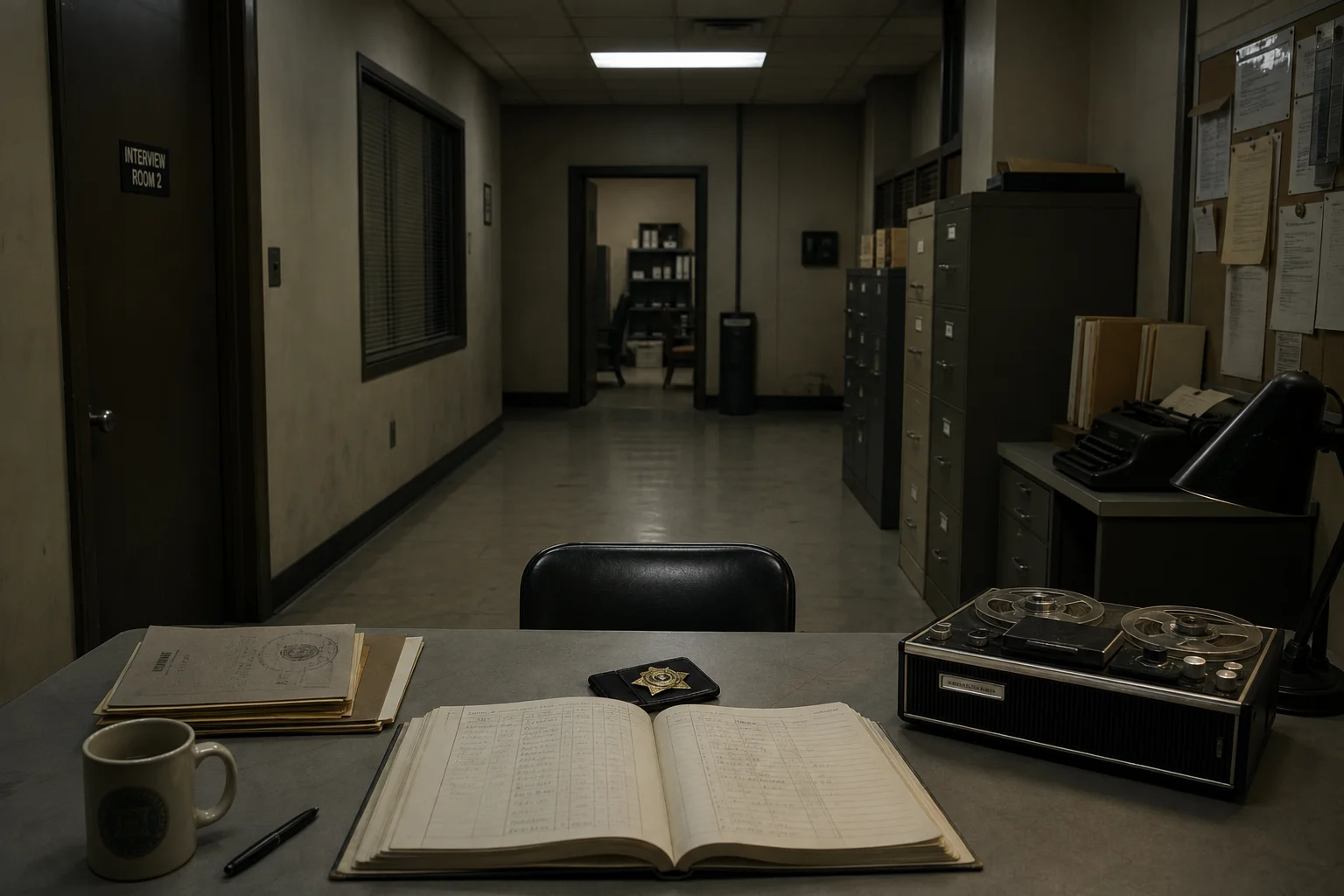
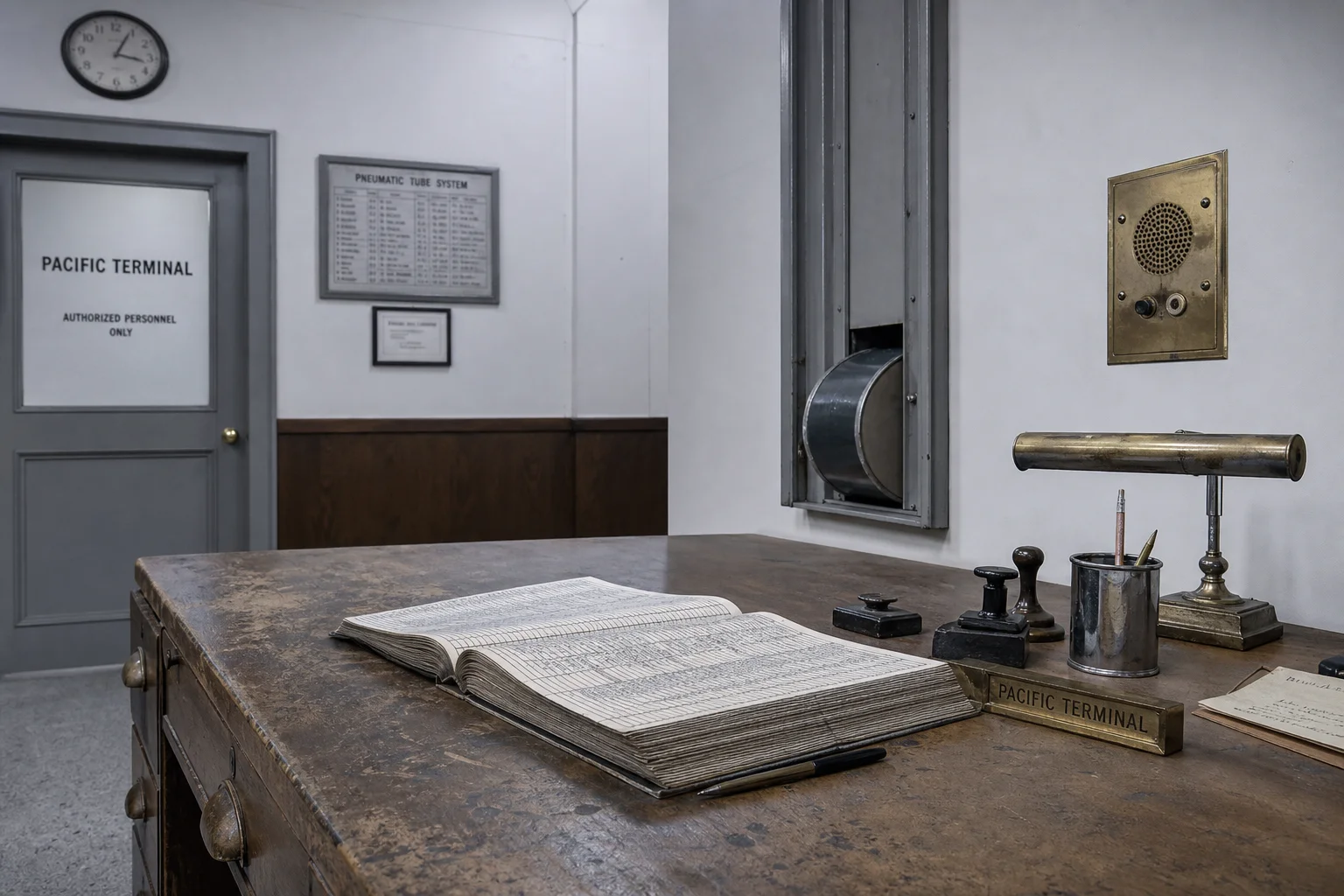
Prohibition-era forensic tools: fingerprint powder & magnifying glasses, paper ledger books, rotary telephones on party lines, mechanical ticker-tape machines for stock quotes, manual typewriters, early ballistics comparison microscopes, photocopied (mimeograph) documents, handwritten notes, physical keys and combination safes. No digital technology, computers, or modern forensics.
✦ Related Cases ✦