The Caloric Paradox
An independent auditor arrives at a deep-space corporate research station following reports of minute variances in the food synthesizer's output. The investigation must navigate a web of procedural logs, personnel testimonies, and environmental data to determine the root cause before the next scheduled resupply.
 Initial Crime Scene
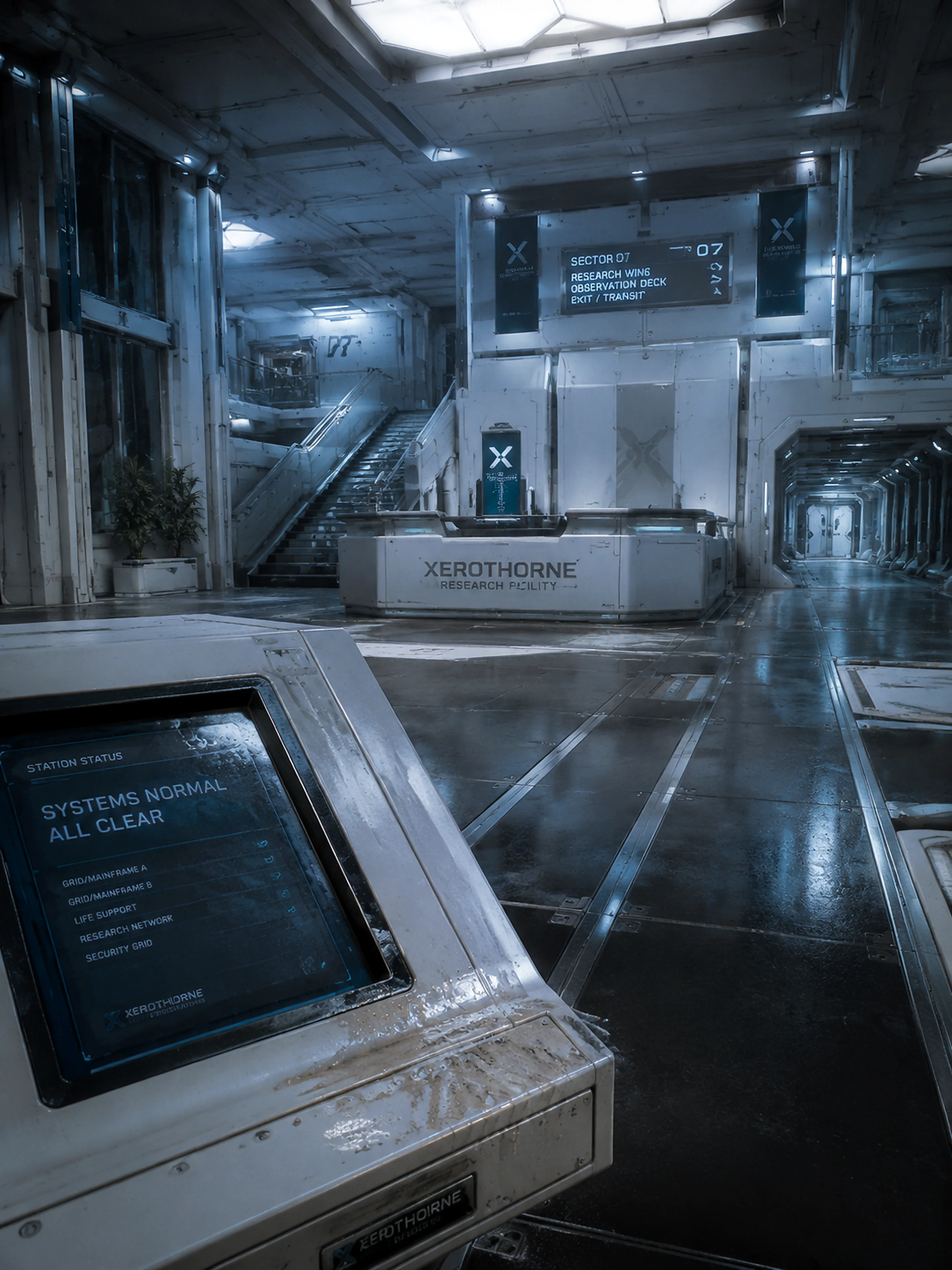
The threshold of the station's main concourse crosses your vision. The air, chilled and recycled, tastes faintly of metallic filtration agents. Ahead, the rhythmic hum and status-light patterns of the life support mainframes pulse against the bulkheads. Your first visual marker is a sticky, translucent residue on the nearest console edge. The second is the sterile, clinical sheen of the polymer walls under regulated lighting. The third is the faint, acrid odor of ozone or scorched polymers lingering near a ventilation grille.
 Crime Scene Environment
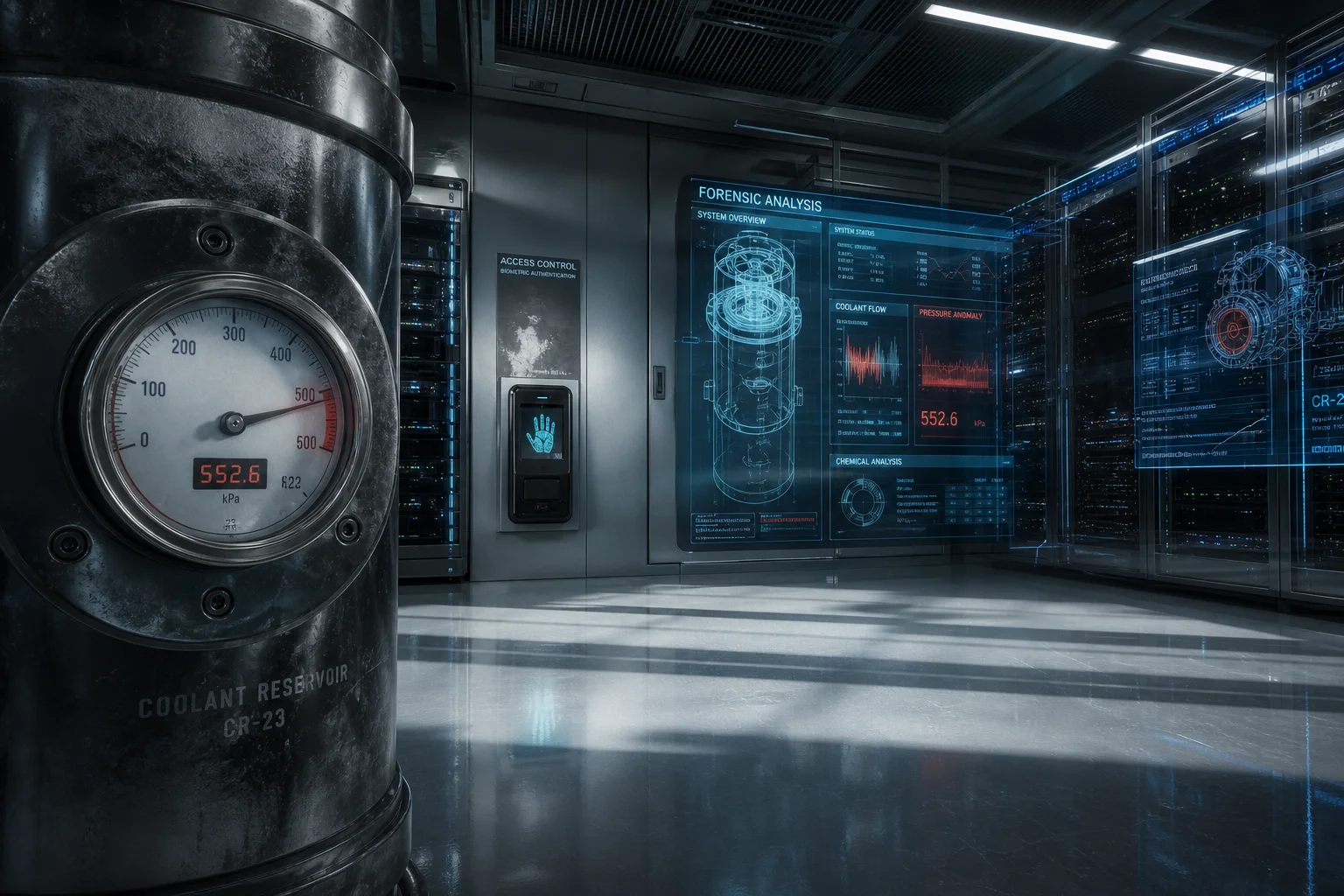
The station's sandbox is defined by a sterile, clinical lighting profile derived from integrated overhead panels. The humidity and temperature profile is regulated, producing a chilled, consistently dry atmosphere. Acoustic density is moderate, dominated by the constant, low-frequency hum of life support and data processing mainframes, punctuated by the muted clicks of terminal interfaces.
 Investigation Constraints
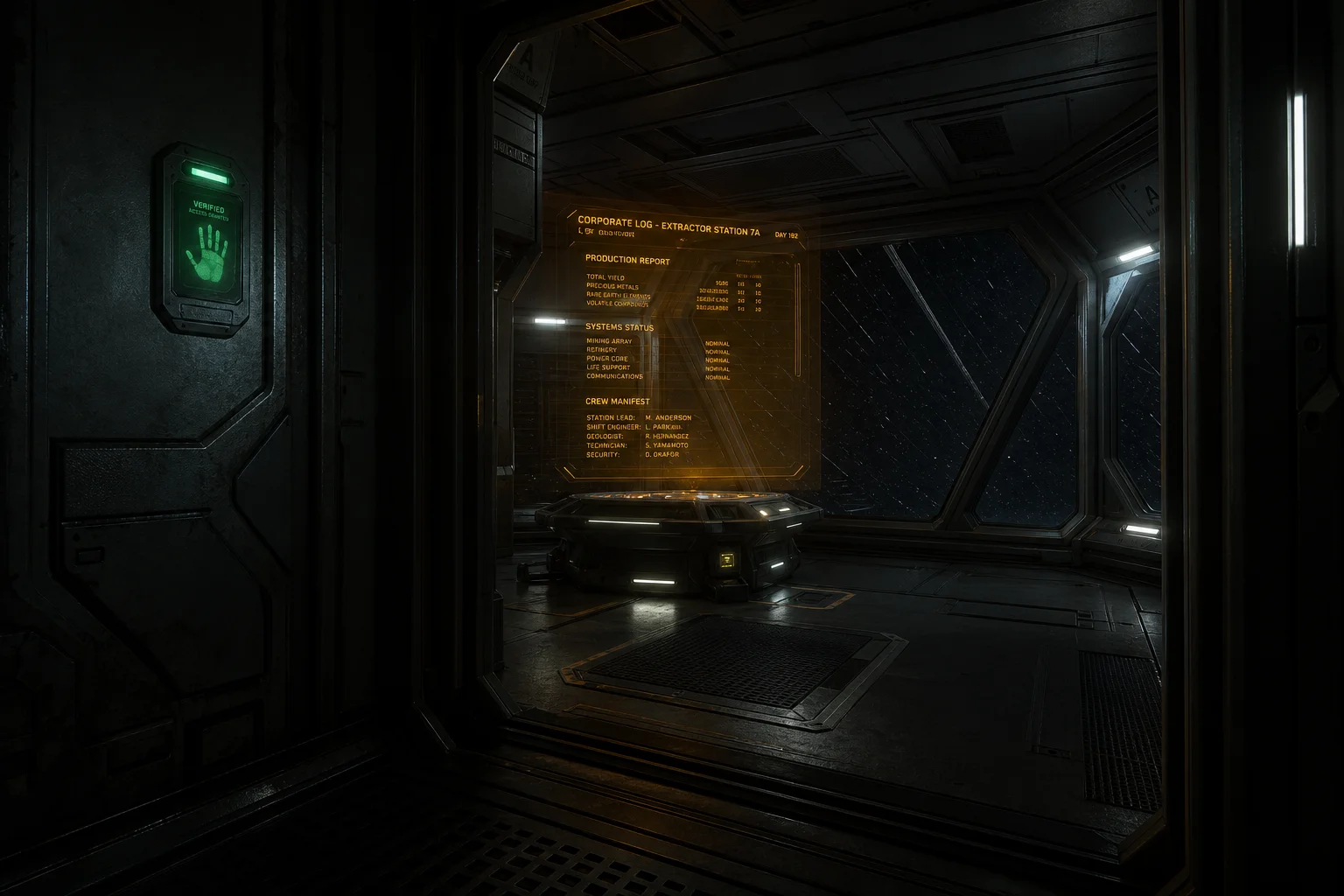
Centralized computer terminals with text-based interfaces; biometric ID scanners for access to sensitive zones; station-wide internal comm panels; automated nutrient synthesizers with physical override ports; encrypted corporate data tablets; forensic chemical analyzers; environmental sensor logs tracking air/water purity.
✦ Related Cases ✦