The Cedar Hollow Inquiry
An independent investigator is called to the isolated farming community of Cedar Hollow following the death of a resident within a local structure. The inquiry requires examining the social fabric, personal histories, and physical evidence of the community to establish the circumstances.
 Initial Crime Scene
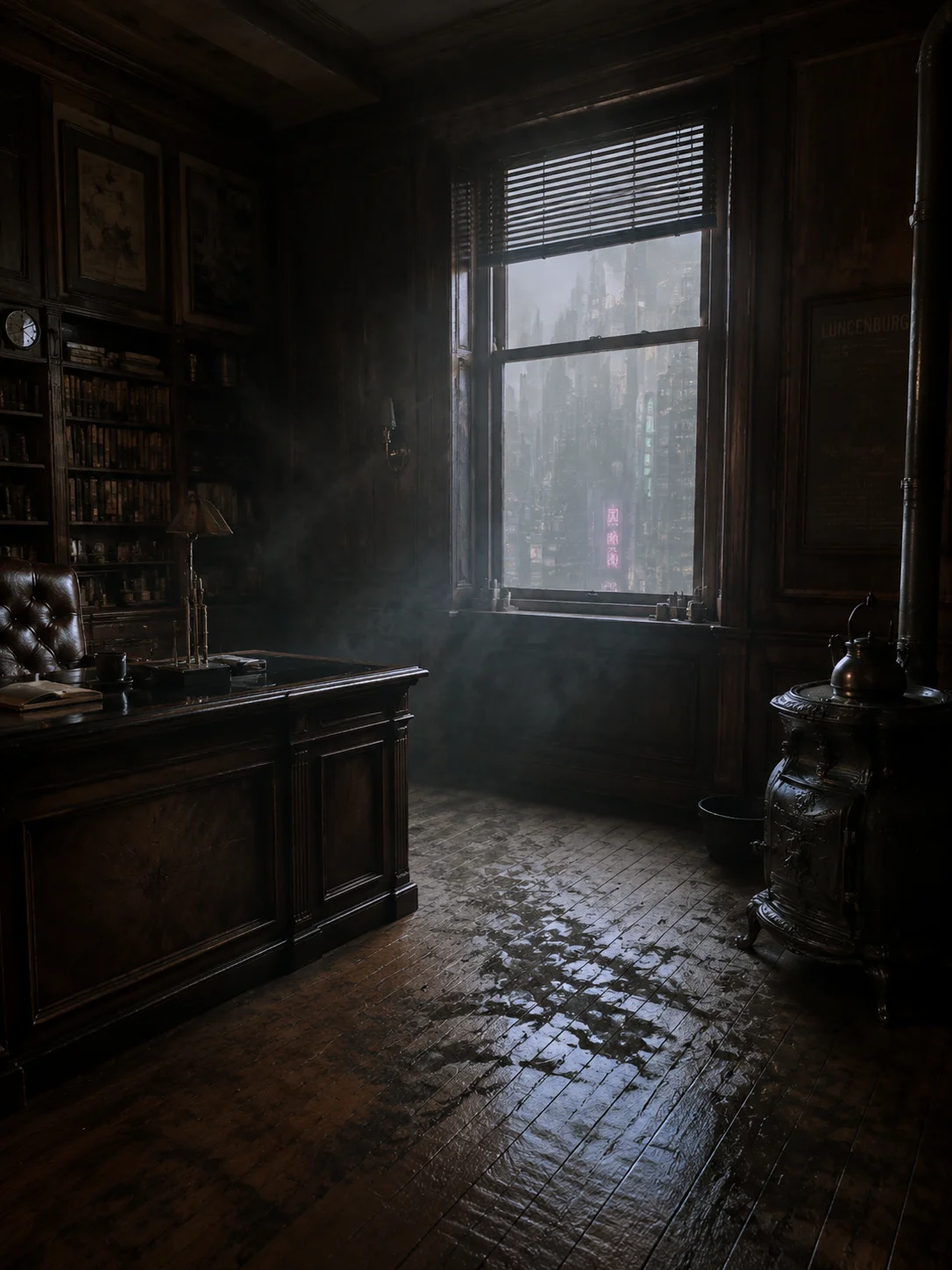
The air hits you first—a musty, damp scent of old grain and wood rot, undercut by something sharper, like beeswax and turpentine. A distant, erratic hammering echoes from the direction of the blacksmith's forge. Your eyes adjust to the dim light inside the wood-paneled study. Dust motes swirl in the beam from a single window, illuminating the hard, polished sheen of a large oak desk. Beside it, a pot-bellied stove sits cold and silent. On the floor near the window, a localized area of hardwood gleams with a faint, smeared texture, distinct from the room's dull patina.
 Crime Scene Environment
The sandbox operates under perpetual diffused daylight filtering through overcast skies, creating flat, even illumination without hard shadows. The humidity is high, clinging to surfaces and leaving a perpetual damp chill in the air. Acoustic density is low; sounds are muffled by the wooden structures and open fields, making distant noises like hammering or creaking floorboards carry with unnatural clarity.
 Investigation Constraints
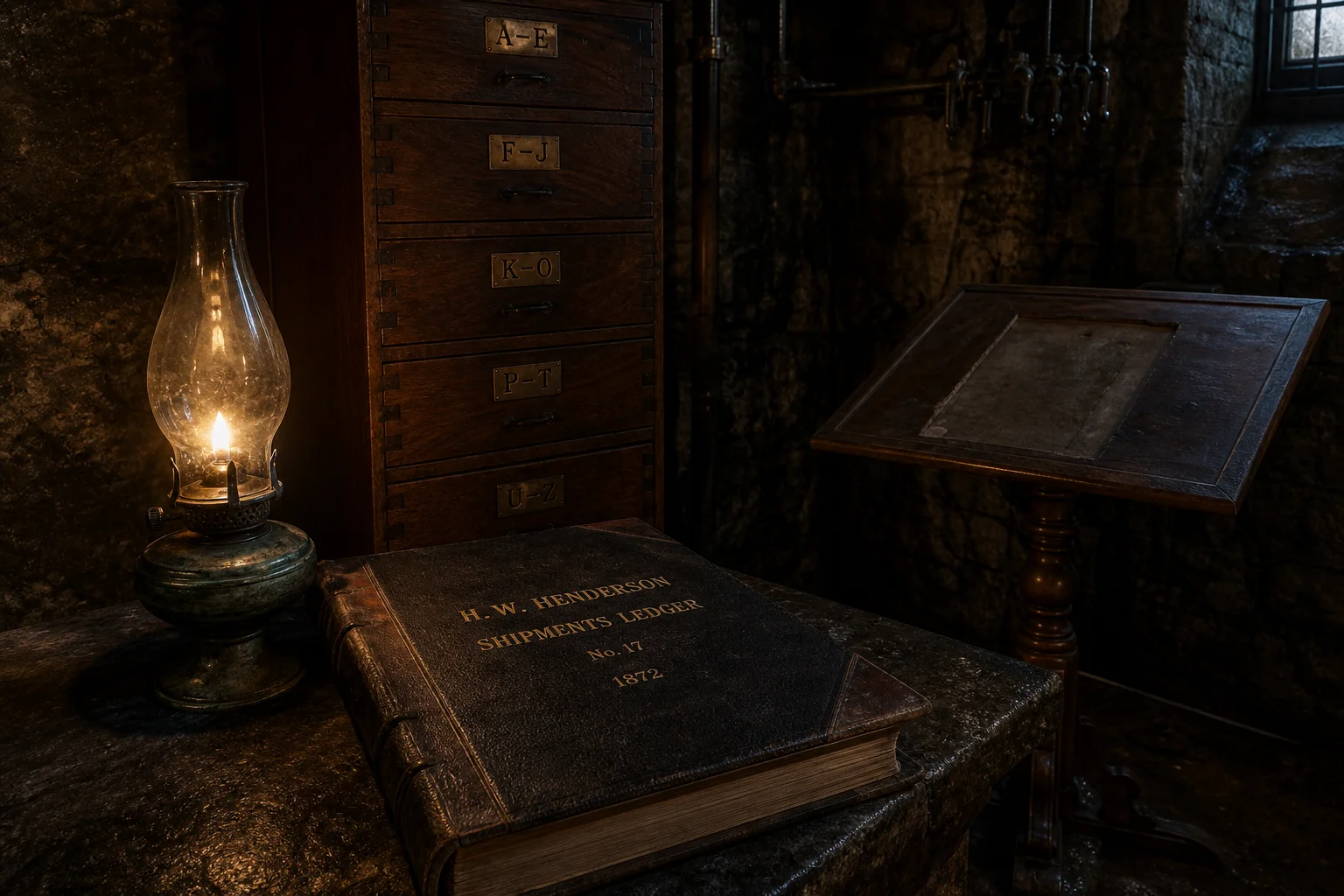
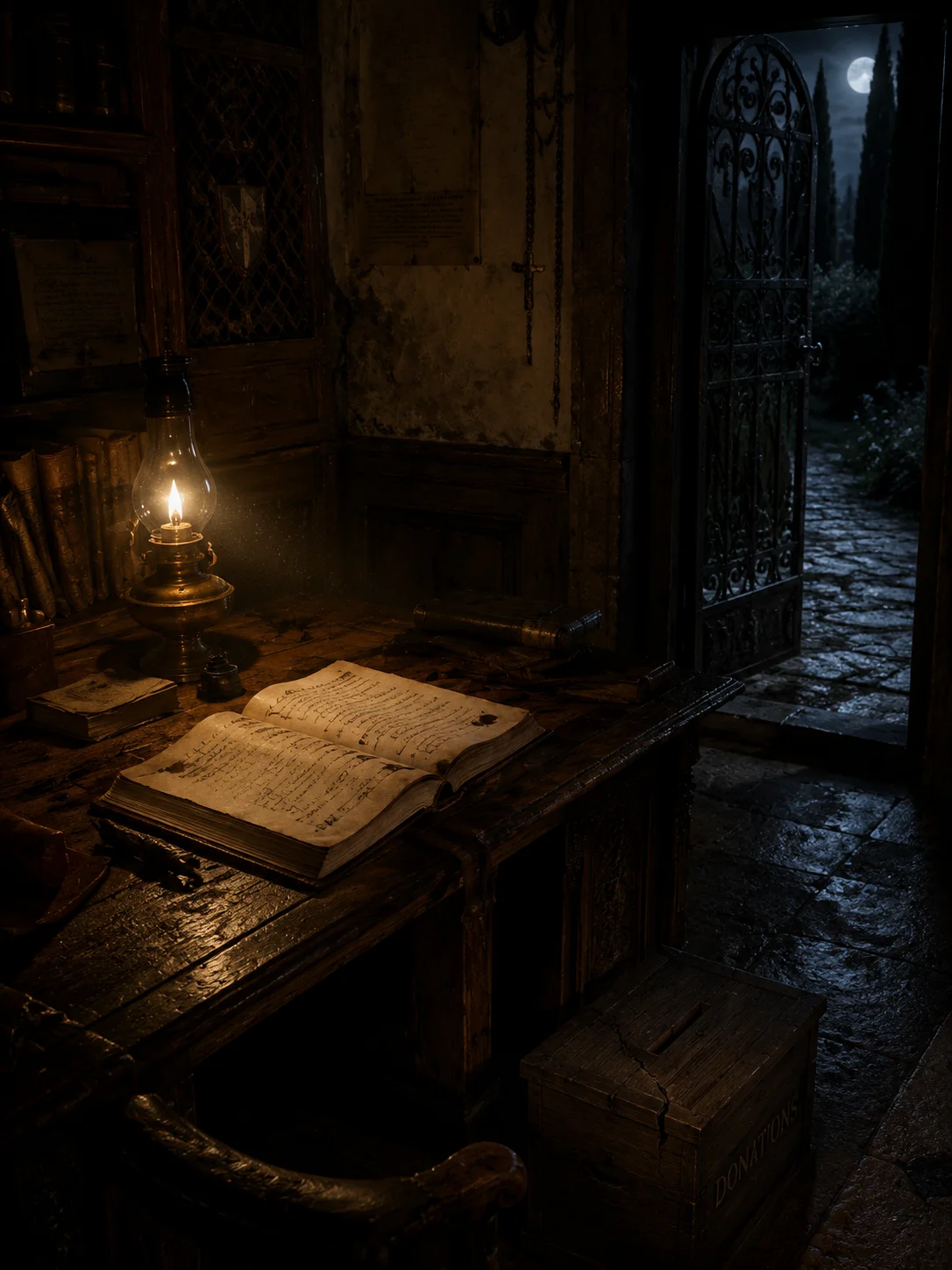
Pre-digital era. Technologies include hand-cranked telephones, handwritten ledgers, wax-sealed letters, wind-up clocks, kerosene lamps, horse-drawn carriages, mechanical locks with brass keys, manual grain scales, and basic photographic equipment for special occasions.
✦ Related Cases ✦