The Civic Shadows of Ashworth
A forensic specialist is summoned to the stagnant, gossipy village of Ashworth after the town archivist vanishes. The inquiry reveals a missing ledger and a peculiar, sun-bleached shadow in the basement records room. Initial findings involve decades-old land grants, civic records, and the quiet pressures of community life.
 Initial Crime Scene
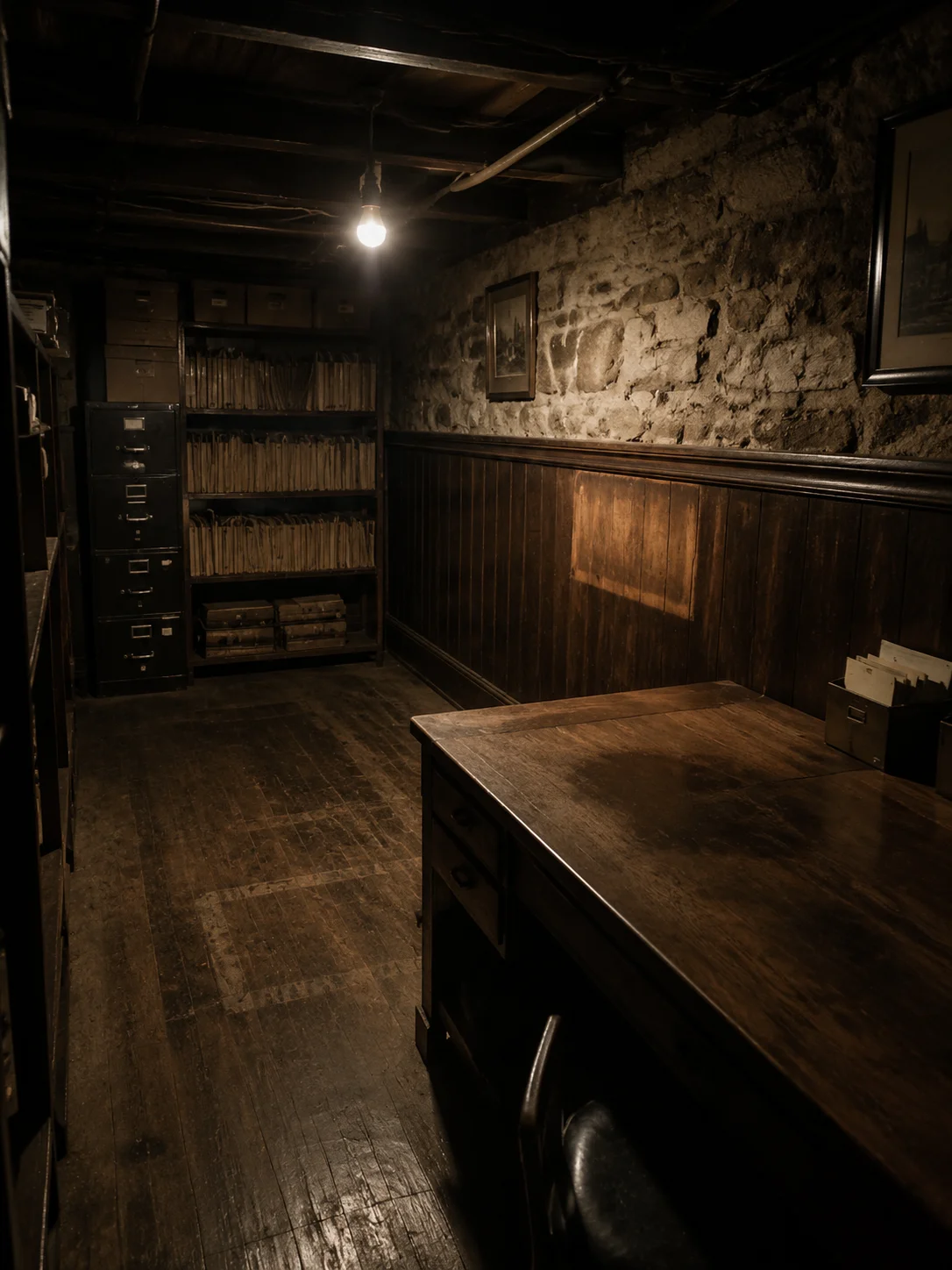
The scent of musty paper and binding glue, thick as dust, floods your senses. A faint, high-pitched hum emanates from a single, bare electrical bulb. Your gaze falls first on a perfect, rectangular, sun-bleached outline on the dark oak wainscoting, then to the faint dust outlines on the polished wood floor where heavy filing cabinets were dragged, and finally to the dark, spreading stain on an oak desk surface.
 Crime Scene Environment
The environment is a low-ceilinged, stone-walled chamber. The lighting profile is weak and localized from a single bare bulb, casting long, deep shadows. The humidity/temperature profile is cool and still, with a heavy, settled air. The acoustic density is absolute silence, hushed and perfumed with decay.
 Investigation Constraints
No digital systems. Technology is limited to mechanical typewriters, rotary telephones, carbon copy paper, wax seals, handwritten ledgers in fountain pen, coal-fired furnaces, basic electrical lighting (overhead bulbs), manual filing cabinets, and mechanical clock systems. Forensics relies on magnifying glasses, chemical reagents, and meticulous physical comparison.
✦ Related Cases ✦