The Corporate Ledger
An independent investigator enters a corporate headquarters to examine a fatal incident. The investigation reveals a web of financial discrepancies, altered security logs, and competing personal agendas among the staff.
 Initial Crime Scene
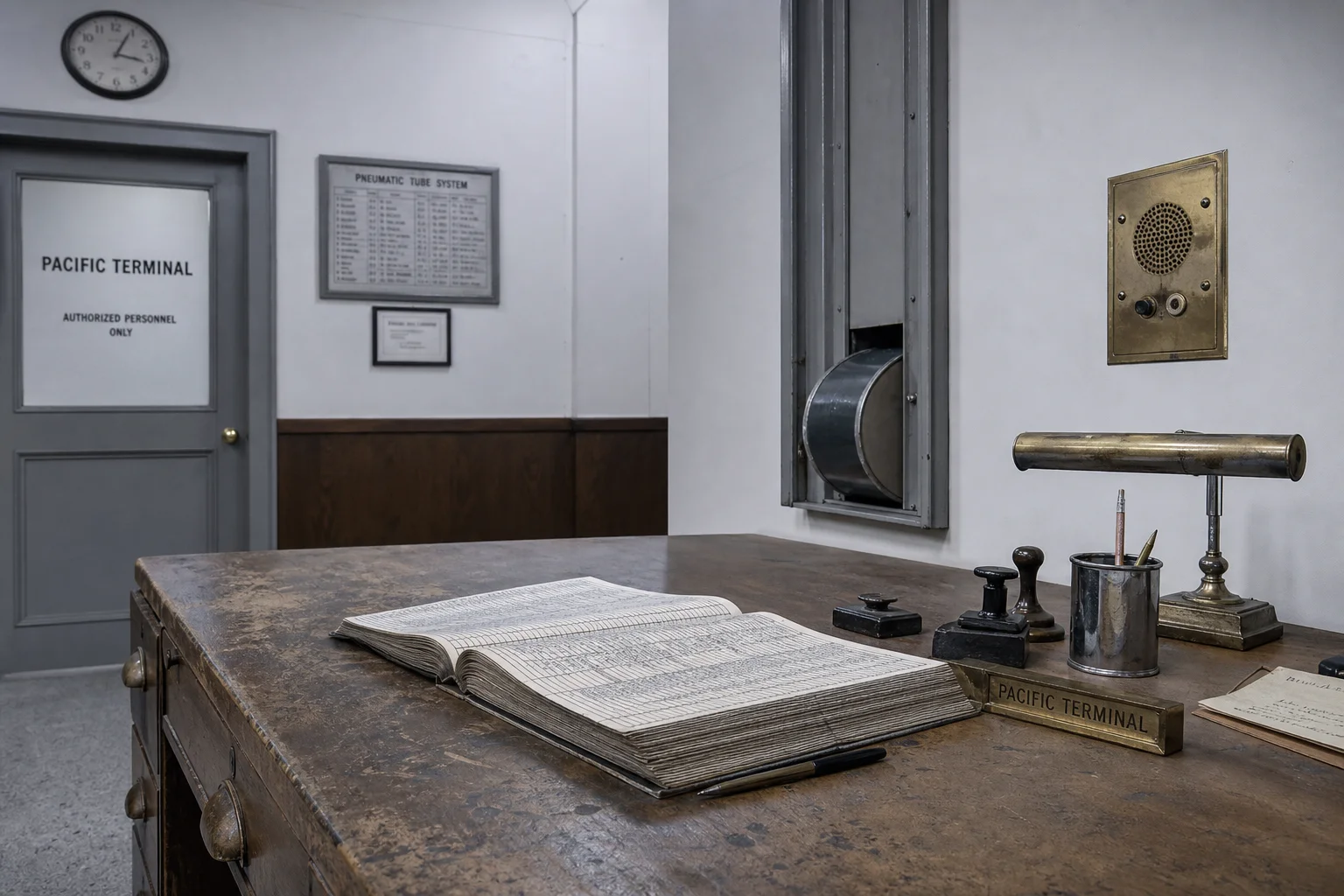
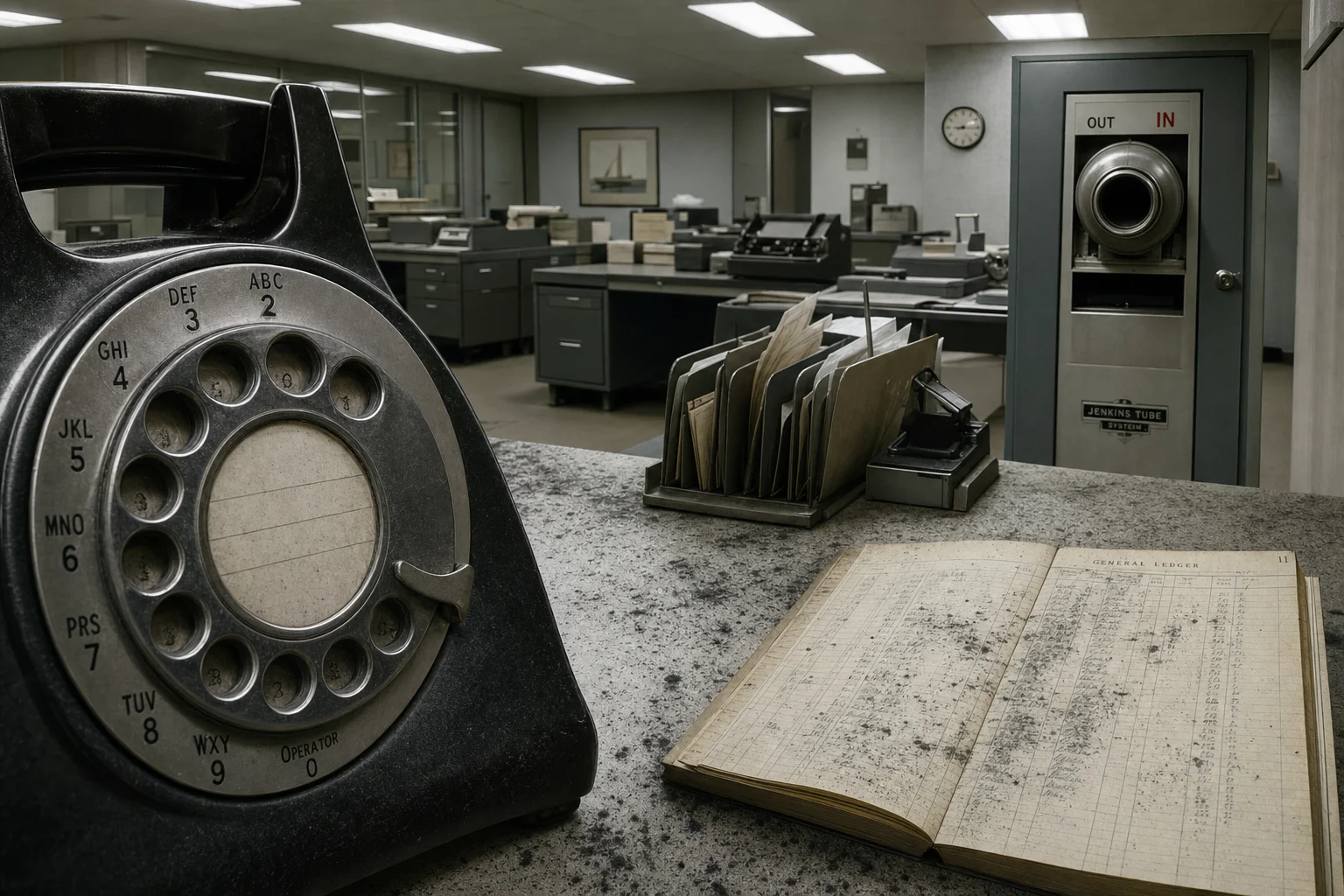
The heavy, layered scent of mimeograph fluid, stale coffee, and cigarette smoke hits you as you step across the threshold. Your ears register the constant, low hum of a mainframe cooling system vibrating up from the basement archive floor. Your eyes adjust to the flat, shadowless glare of fluorescent lights, first catching the carbon-black residue dusting every ledger page on the desks, then the identical pattern of scratches on the metal dial of a rotary phone on the nearest credenza, and finally the precise, mechanical grid of the pneumatic tube sender station at the end of the row.
 Crime Scene Environment
The environment is defined by late-stage analog corporate infrastructure. Lighting is a pervasive, shadowless fluorescent glare from overhead panels. The air carries a low acoustic density from the constant hum of basement mainframe cooling systems, punctuated by the distant click of rotary phone dials and the rustle of ledger pages. The humidity is dry, controlled by the building's central system, and the temperature is a cool, sterile 68 degrees Fahrenheit.
 Investigation Constraints
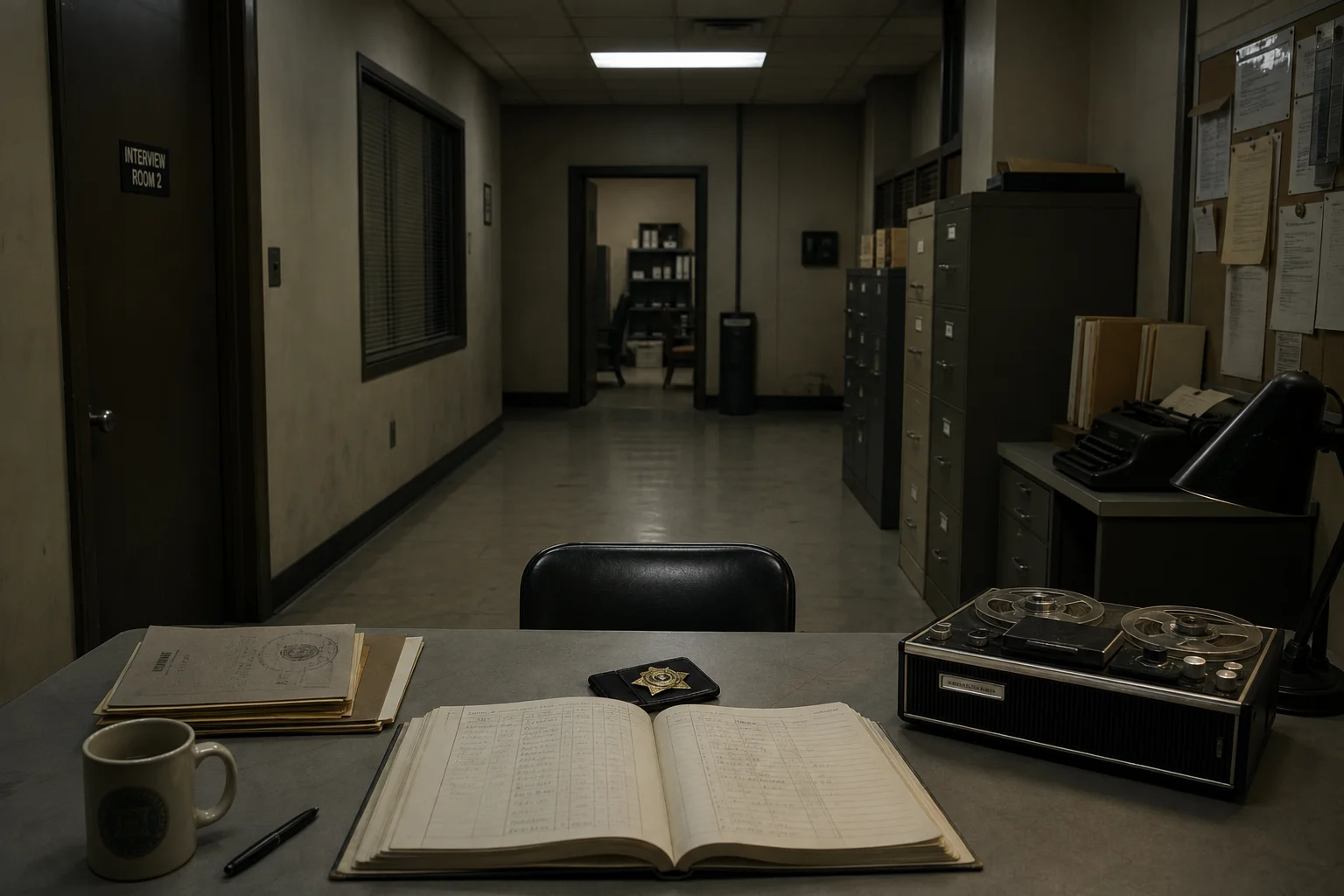
Late-stage analog corporate infrastructure. Carbon-copy ledgers, pneumatic tube message systems, early mainframe batch-processing terminals (no real-time networking), rotary dial telephones, mechanical security card-punch systems, microfilm records, locked filing cabinets with proprietary key systems, film-based security cameras with manual reel changes.
✦ Related Cases ✦