The Disordered Chart of Thornfield
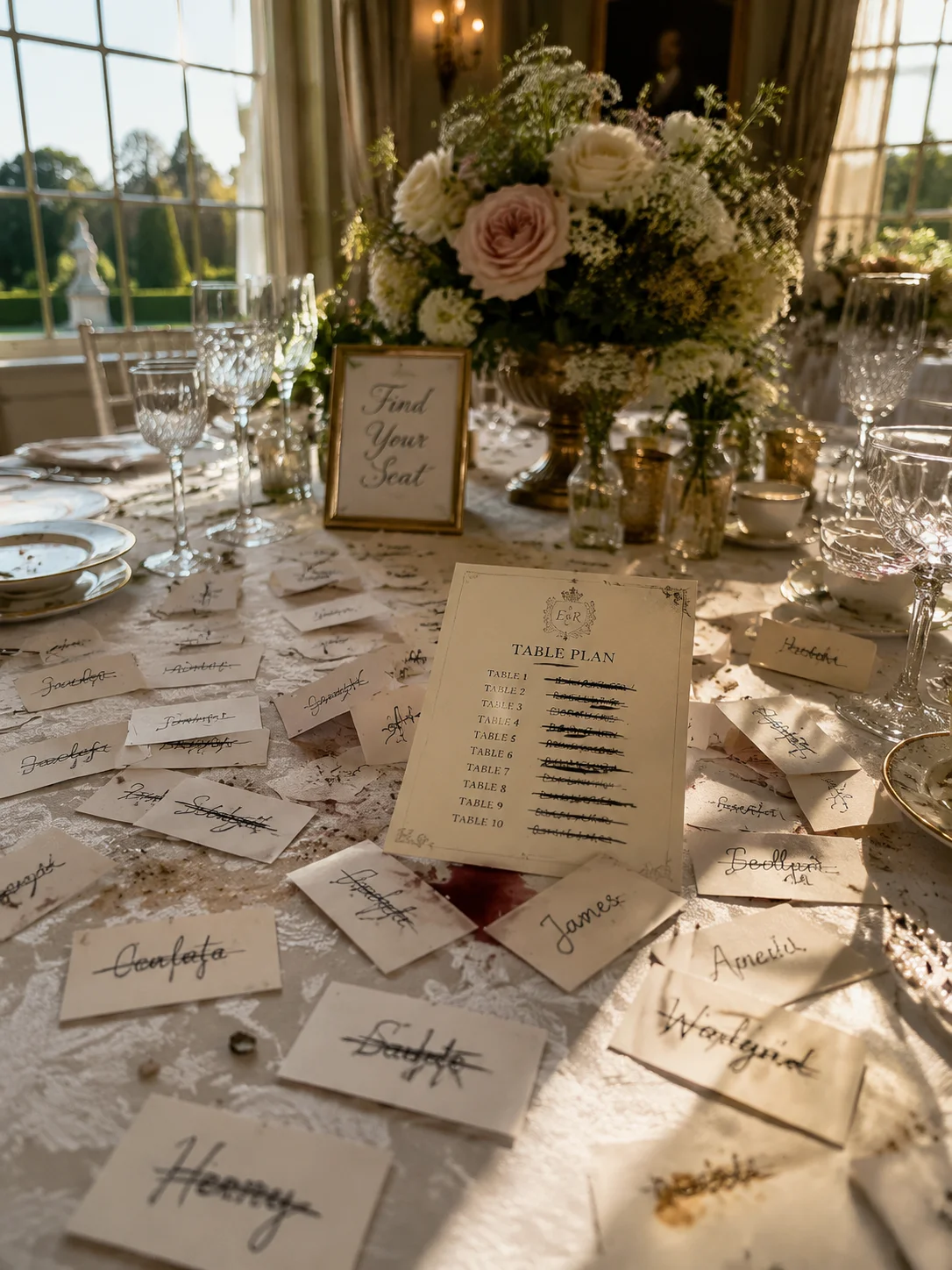
At a country wedding, the ceremonial seating chart is discovered disturbed. The event occurs within a household operating under early 20th-century domestic protocols, with interactions based on handwritten notes and verbal exchanges.
 Initial Crime Scene
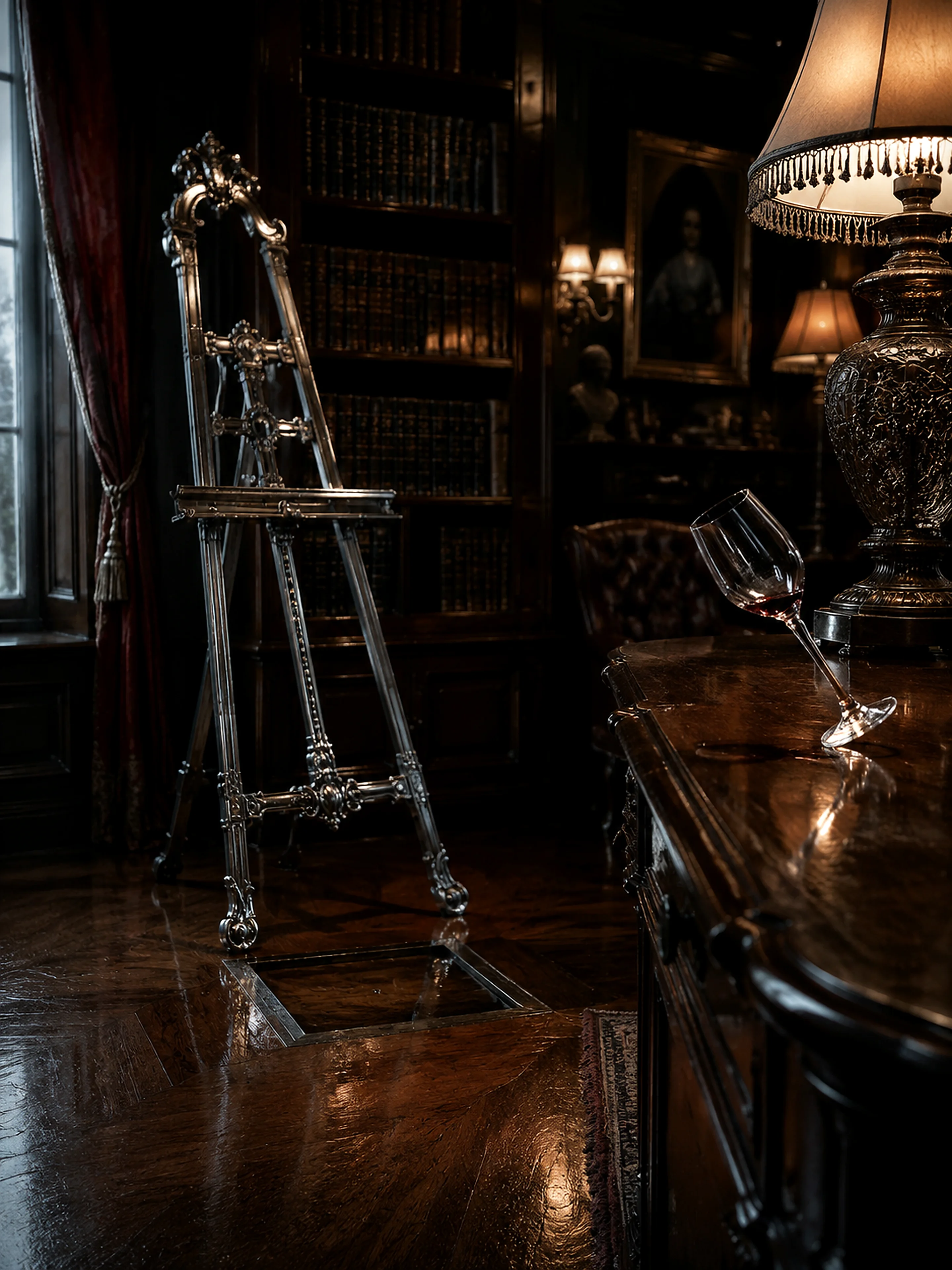
Stepping into the library, the scent of old paper and beeswax polish hangs heavy in the still air. A single, resonant thud echoes from the far wall, where a heavy silver easel stands askew. Your gaze is immediately drawn to three points: a deep, square indentation marring the polished mahogany floorboards, a perfect ring of moisture darkening the wood beneath a tilted crystal wine glass on the sideboard, and the stiff, formal arrangement of the velvet curtains by the window.
 Crime Scene Environment
The environment is defined by dim, focused lamplight from shaded fixtures, casting deep shadows in the corners. The air is cool and dry, carrying the faint, musty scent of aging documents. Acoustic density is low, dominated by the faint, persistent ticking of a grandfather clock and the occasional, muted clink of china from distant rooms, all filtered through the room's heavy furnishings.
 Investigation Constraints
Early 20th-century domestic setting. Communication is via handwritten notes, telegrams, and face-to-face conversation. Locks are mechanical (key-based), security is limited to butler service and private groundskeepers. Record-keeping involves leather-bound ledgers, guest books, and personal diaries. No digital or electronic systems exist.
✦ Related Cases ✦