The Estate's Silent Calculation
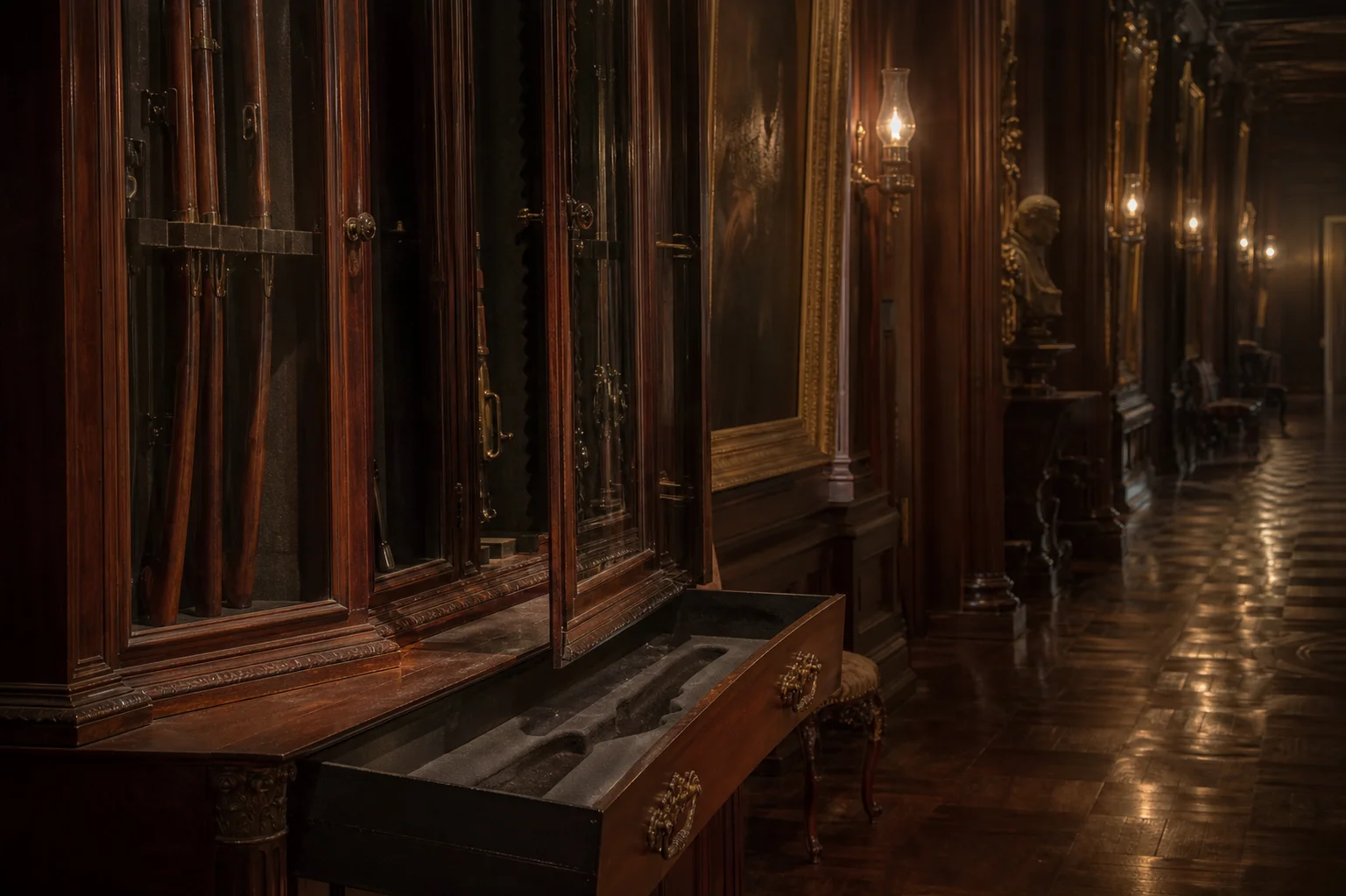
The matriarch of Thornfield Hall is discovered deceased in the portrait gallery. The household's rhythms are disrupted by the event, prompting a methodical examination of the estate's records, personal effects, and the state of its meticulously maintained rooms.
 Initial Crime Scene
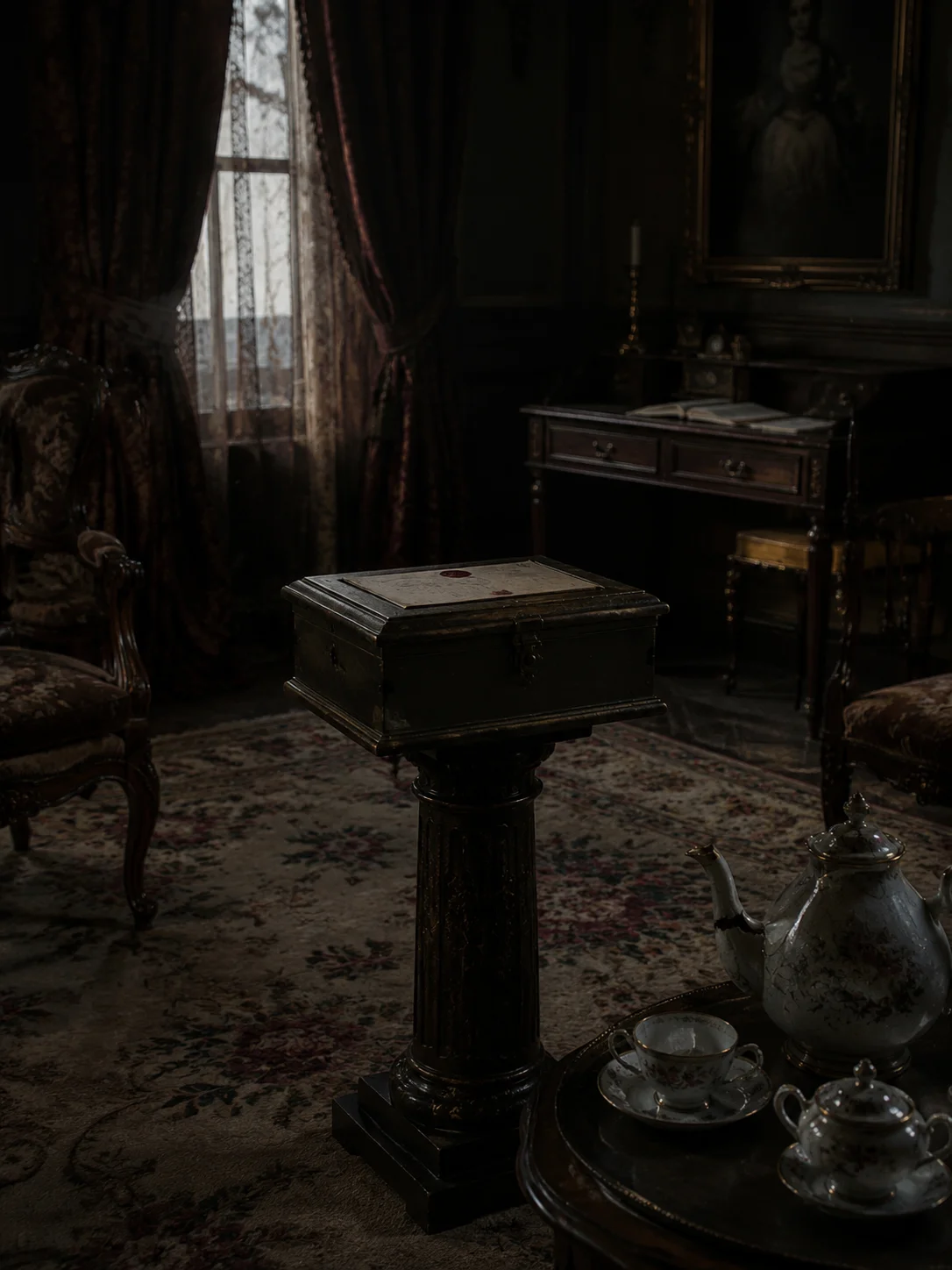
The scent of beeswax and old paper hangs in the air of the study. The precise scratch of a fountain pen nib on vellum echoes faintly from another room. Your gaze settles on a lead-lined document box on its pedestal, its wax seal slightly blurred at the edges, a hand-painted porcelain tea service with a cracked spout lying on the Aubusson carpet, and the subtle indentations in the carpet where a chair leg has been recently moved.
 Crime Scene Environment
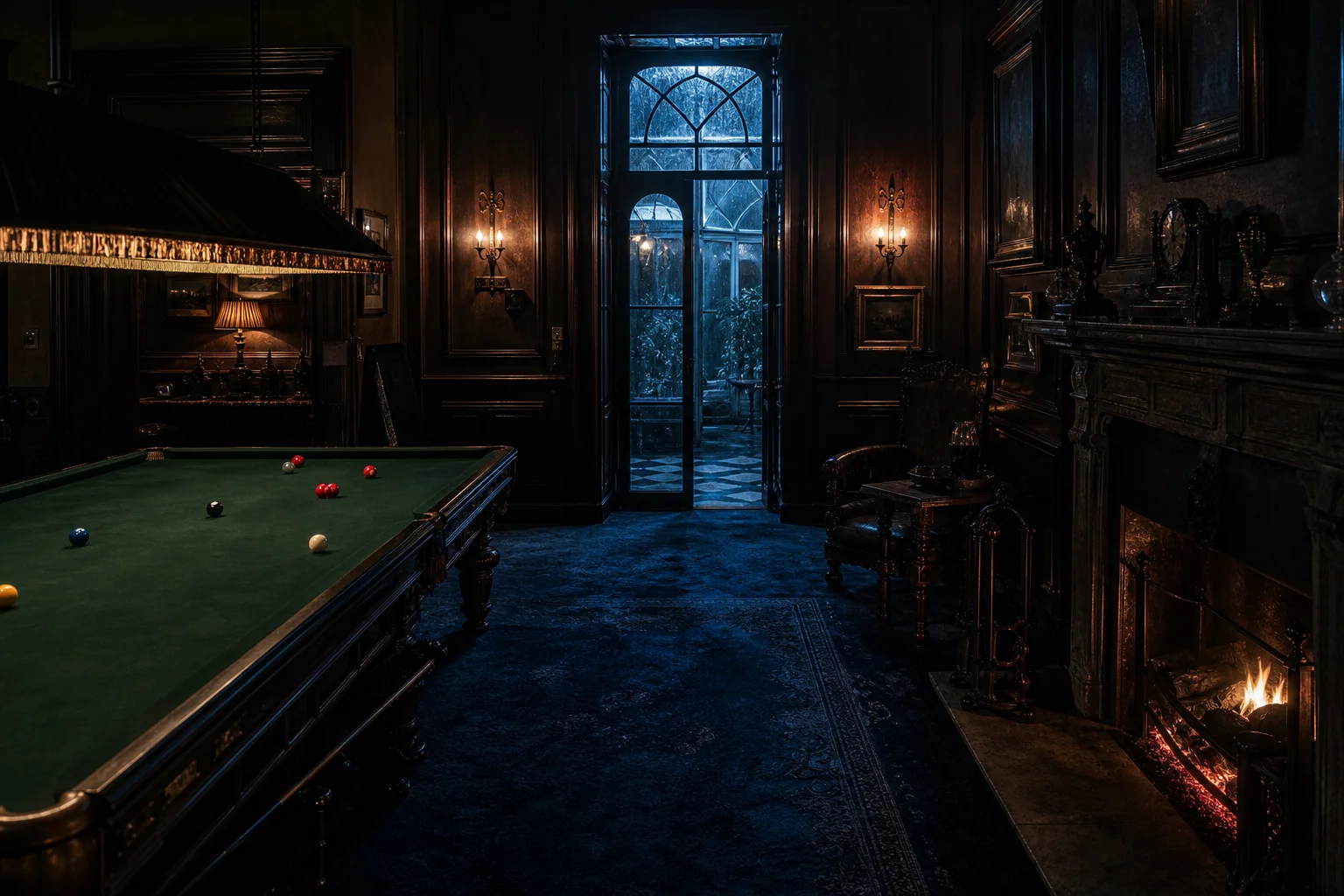
The environment is one of muted opulence under strained propriety. Lighting is low, filtered through heavy velvet curtains, creating pools of shadow. The humidity is low, carrying the dusty, musty scent of disuse alongside polished beeswax. Acoustic density is high, characterized by the faint, fussy scratch of pen nibs, the delicate click of porcelain, and the omnipresent, strained whisper of the household's silence.
 Investigation Constraints
Mid-to-late Victorian England. Communication is by handwritten letter, telegram, or in-person conversation. Security relies on physical wax seals, combination-locked strongboxes, and reticules. Data is stored in ledger books, diaries, and the memories of servants. The 'high-security medium' is a bespoke, lead-lined document box with a unique wax seal impression, used for storing the family will and critical correspondence.
✦ Related Cases ✦