The Founder's Day Ledger
During the annual Founder's Day Festival at a wealthy family's country estate, the discovery of a cryptic note precedes a fatal fall. The investigation encounters a network of guests and staff, each managing private affairs and anxieties that complicate the sequence of events.
 Initial Crime Scene
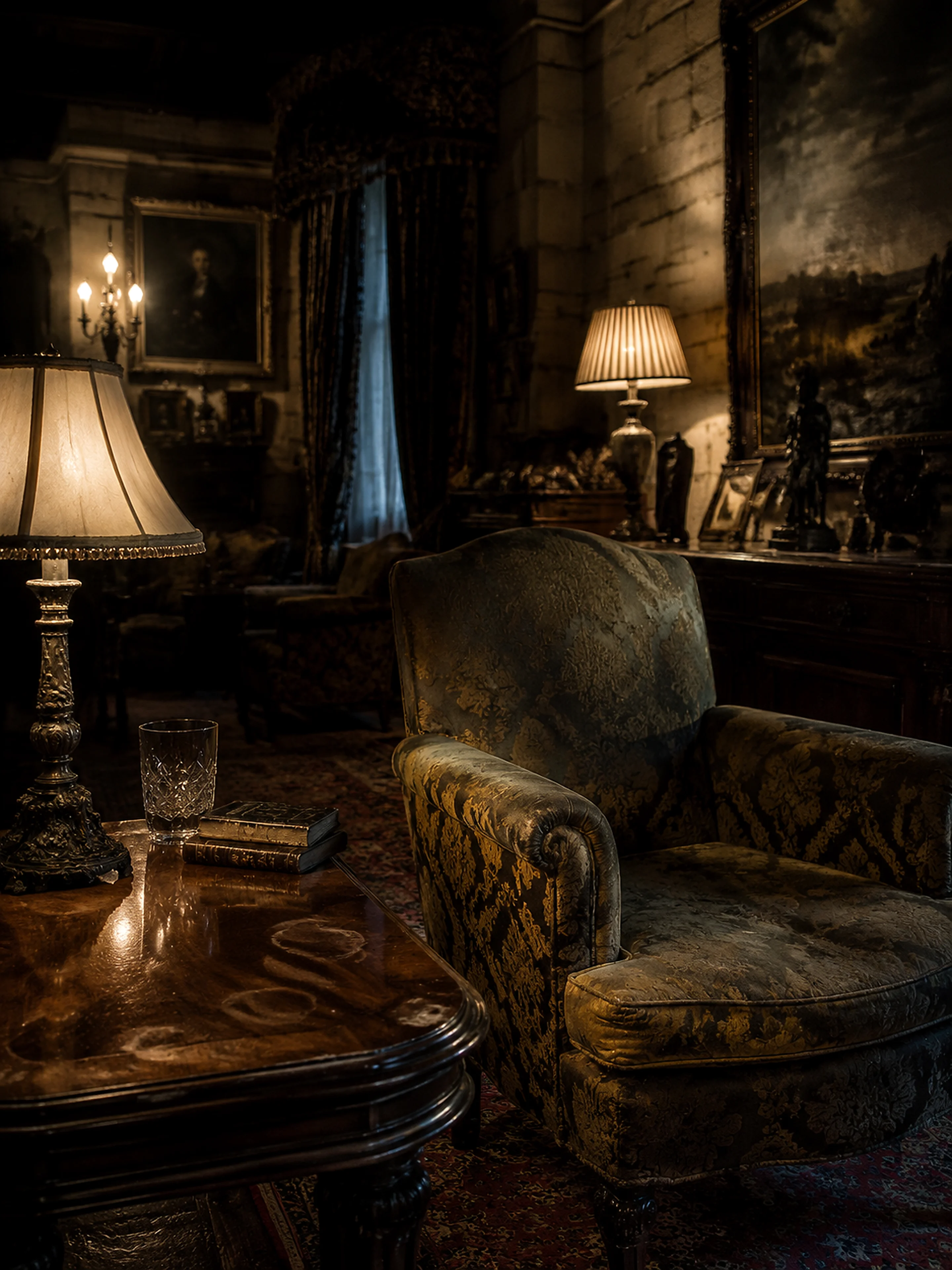
The scent of lavender and dust, heavy in seldom-used guest rooms, meets you at the threshold. A polite clock ticks from the mantel, its rhythm underscored by the faint, constant whisper of wind through old window frames. Your gaze lands on a polished mahogany side table scarred by overlapping water rings, a wide windowsill where a faint, pale rectangle of undisturbed varnish stands out against the dust, and a brocade chair whose fabric is worn smooth at the arms.
 Crime Scene Environment
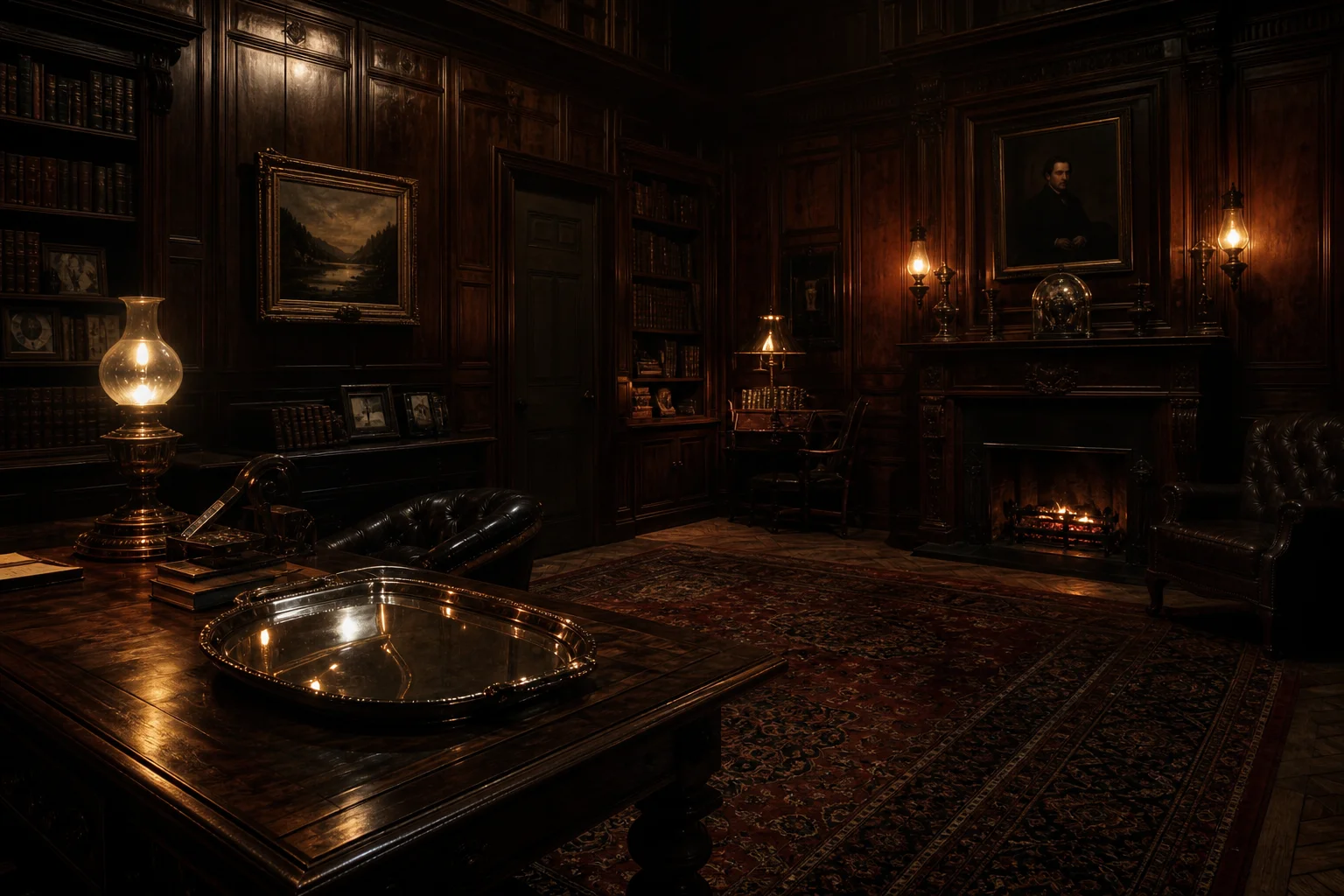
The main drawing room is lit by a mix of early electric lamps, casting a warm but inconsistent glow that leaves deep shadows in the corners. The air is cool and still, carrying a faint humidity from the stone walls and the scent of aged wood and beeswax. Acoustic density is low; sounds are absorbed by heavy curtains, thick carpets, and upholstered furniture, creating a muted, hushed atmosphere.
 Investigation Constraints
Telegrams for urgent communication, handwritten ledgers, mechanical clocks, early electric lamps (for main rooms only), sturdy brass locks with physical keys, carbon paper for letter copies, wall-mounted rotary telephones in the butler's pantry. No computers, cameras, or digital storage.
✦ Related Cases ✦