The Fractured Archive
The historian's body is found within a malfunctioning holographic reenactment. An independent forensic specialist arrives to conduct a clinical audit of the scene, the systems, and the personnel, seeking to establish a clear operational timeline from conflicting data streams.
 Initial Crime Scene
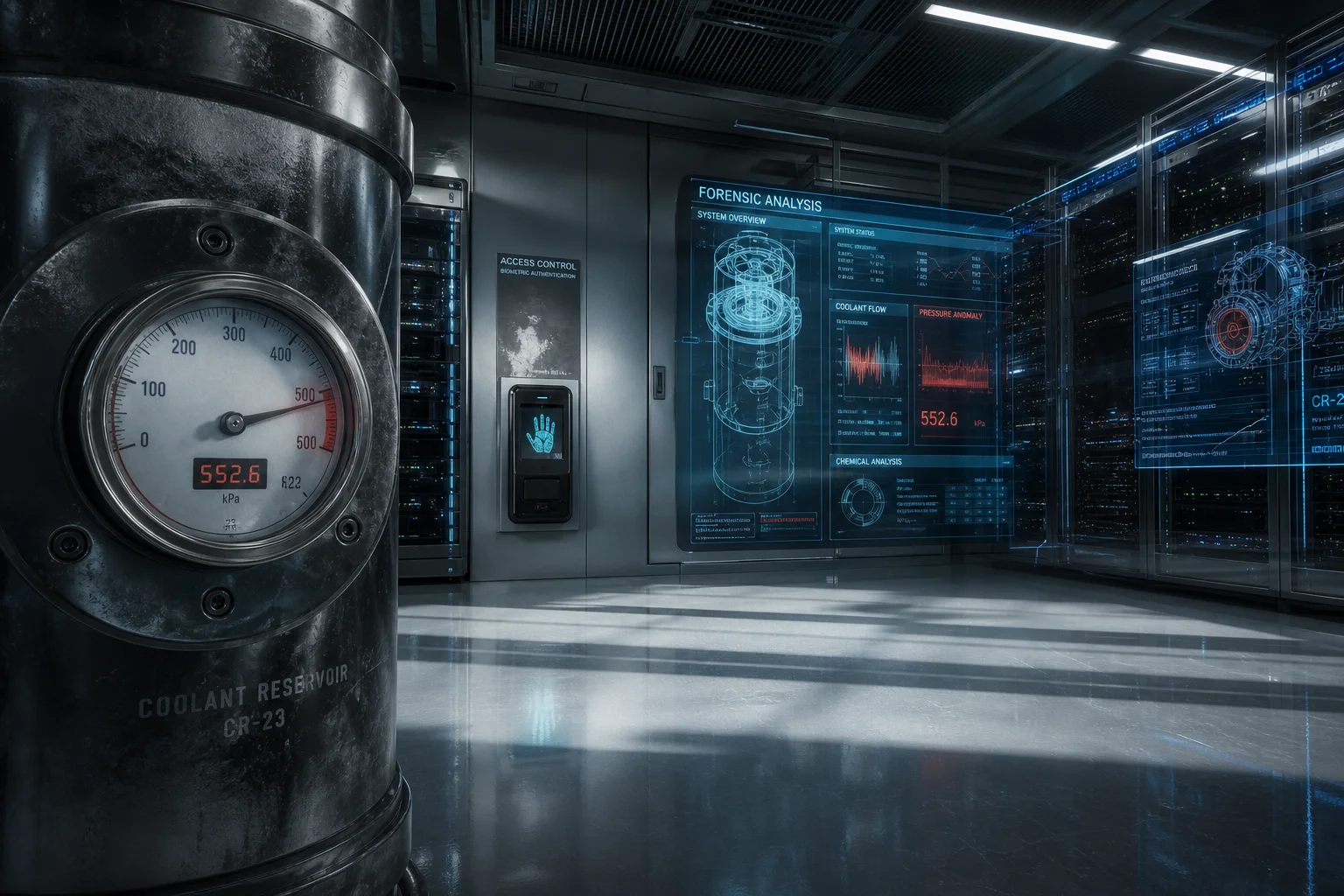
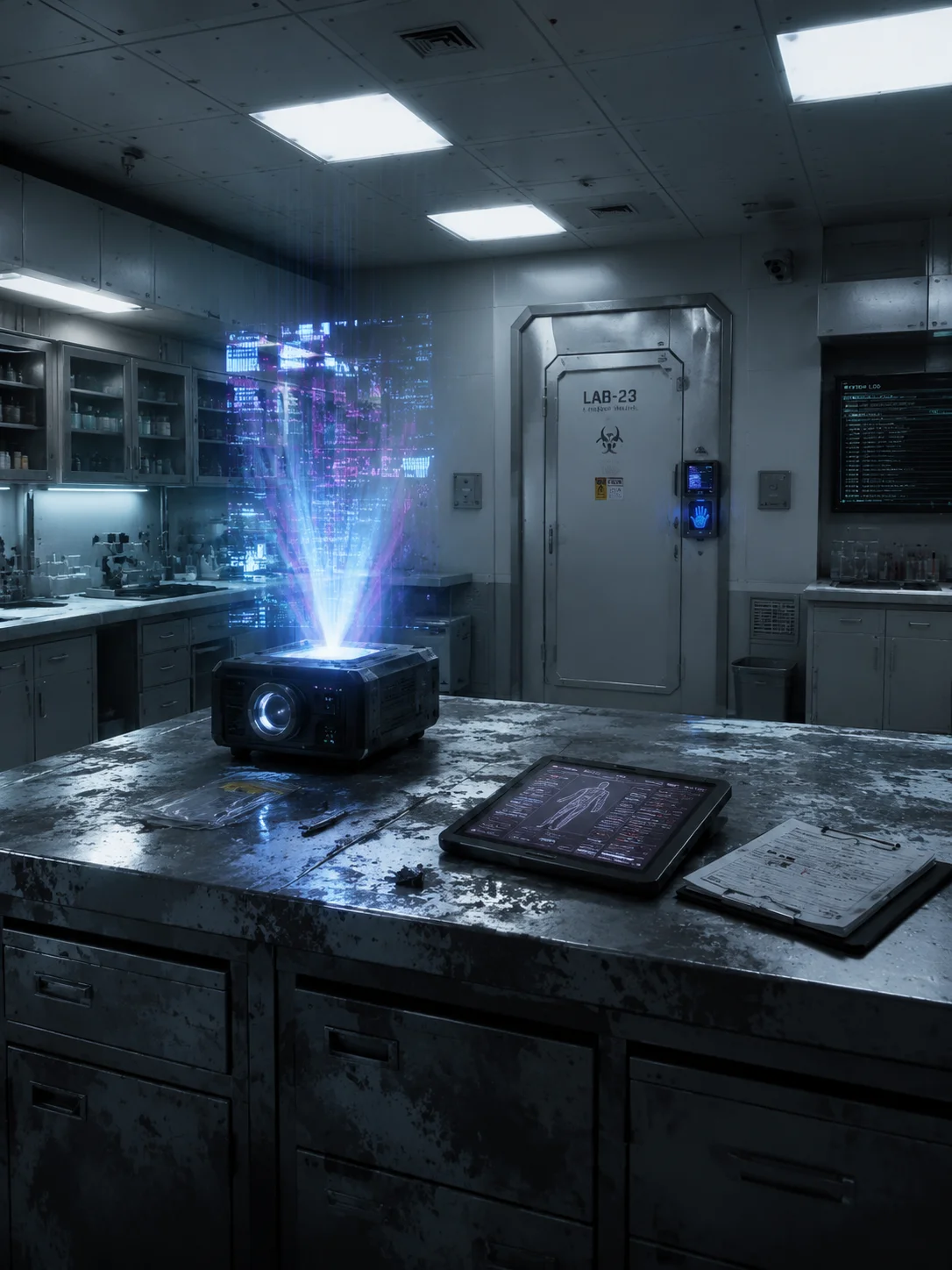
The air hits you first: a sterile, ozone-laced tang from active emitters, underscored by the low, pervasive hum of the environment's climate control system. Your gaze sweeps the room, registering three primary markers: the faint, blue standby glow of a biometric scanner at the sealed door, the irregular, mottled corrosion patterns visible on the central laboratory workbench surface, and the flickering, unstable light cast by a holographic projection emitter whose base casing is visibly dented.
 Crime Scene Environment
The sandbox operates under a constant, overhead fluorescent lighting profile that casts sharp, uniform shadows. The environment maintains a low-humidity, cool-temperature setting, with an acoustic density characterized by a steady baseline of system hums, punctuated by the intermittent hiss of pneumatic door locks and the soft clicks of data-slate interfaces.
 Investigation Constraints
Personal data-slates with encrypted local memory; corporate-grade biometric access scanners on doors and terminals; holographic projection emitters that record environmental scans for 'accuracy'; a centralized, highly-monitored company intranet for data transfer; audio-only intercoms between labs; chemical analysis scanners integrated into workbenches; no personal comm-devices—interactions are on recorded corporate lines or face-to-face.
✦ Related Cases ✦