The Genteel Silence
A weekend gathering at a remote estate is disrupted by a sudden death. The attendees, bound by longstanding social obligations and personal histories, each enact independent, private measures in the aftermath. The investigator must examine the physical environment and parse individual testimonies to reconstruct a singular sequence of events.
 Initial Crime Scene
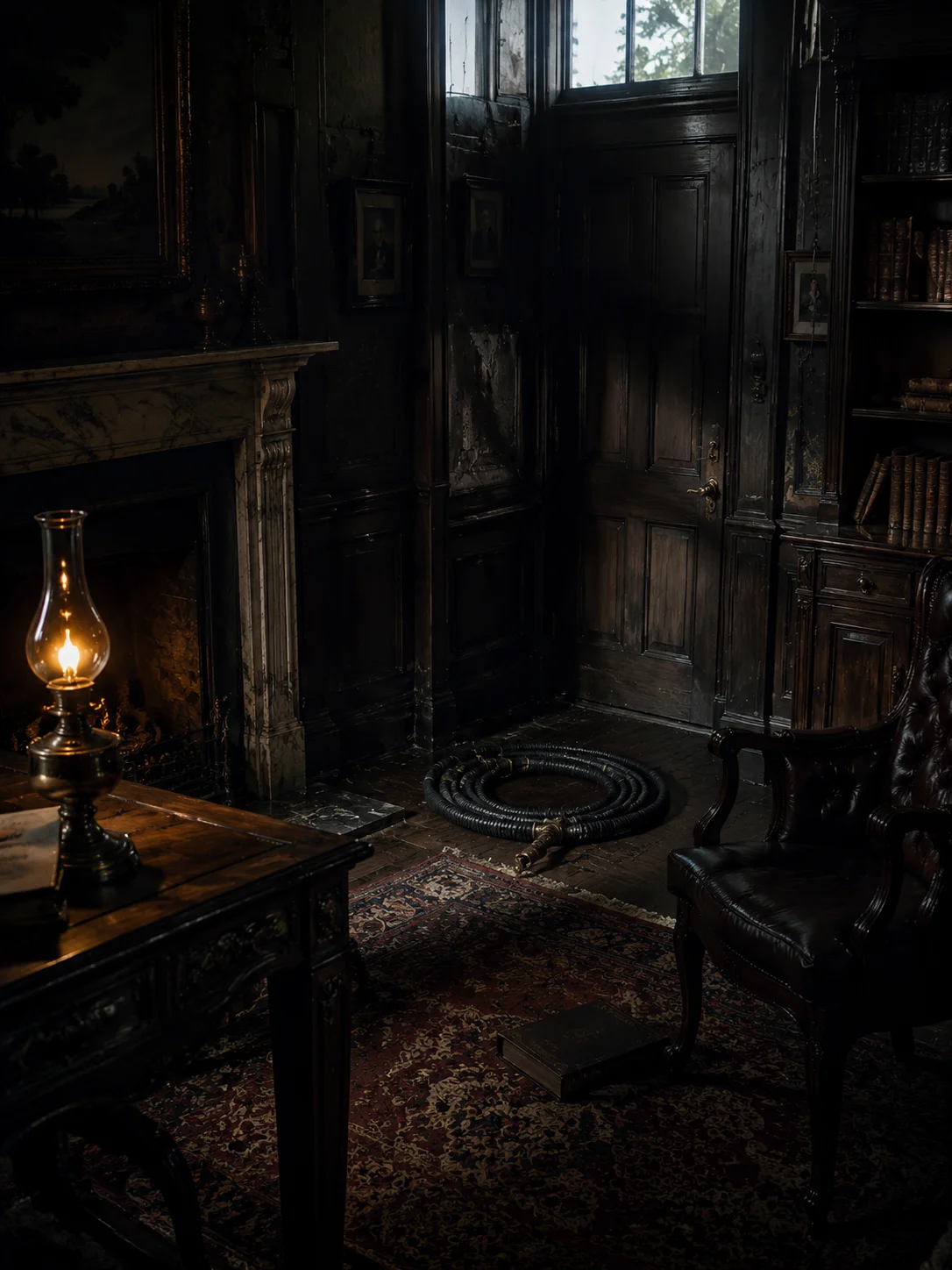
The scent of spilled port wine, sweet and stale, hangs in the air. A faint hiss comes from a gas lamp, casting long, distorted shadows across paneled walls. Your gaze lands first on the warped brass nozzle of a garden hose coiled by a door, then on a leather-bound volume displaced from a shelf, and finally on the cold marble hearth of the fireplace.
 Crime Scene Environment
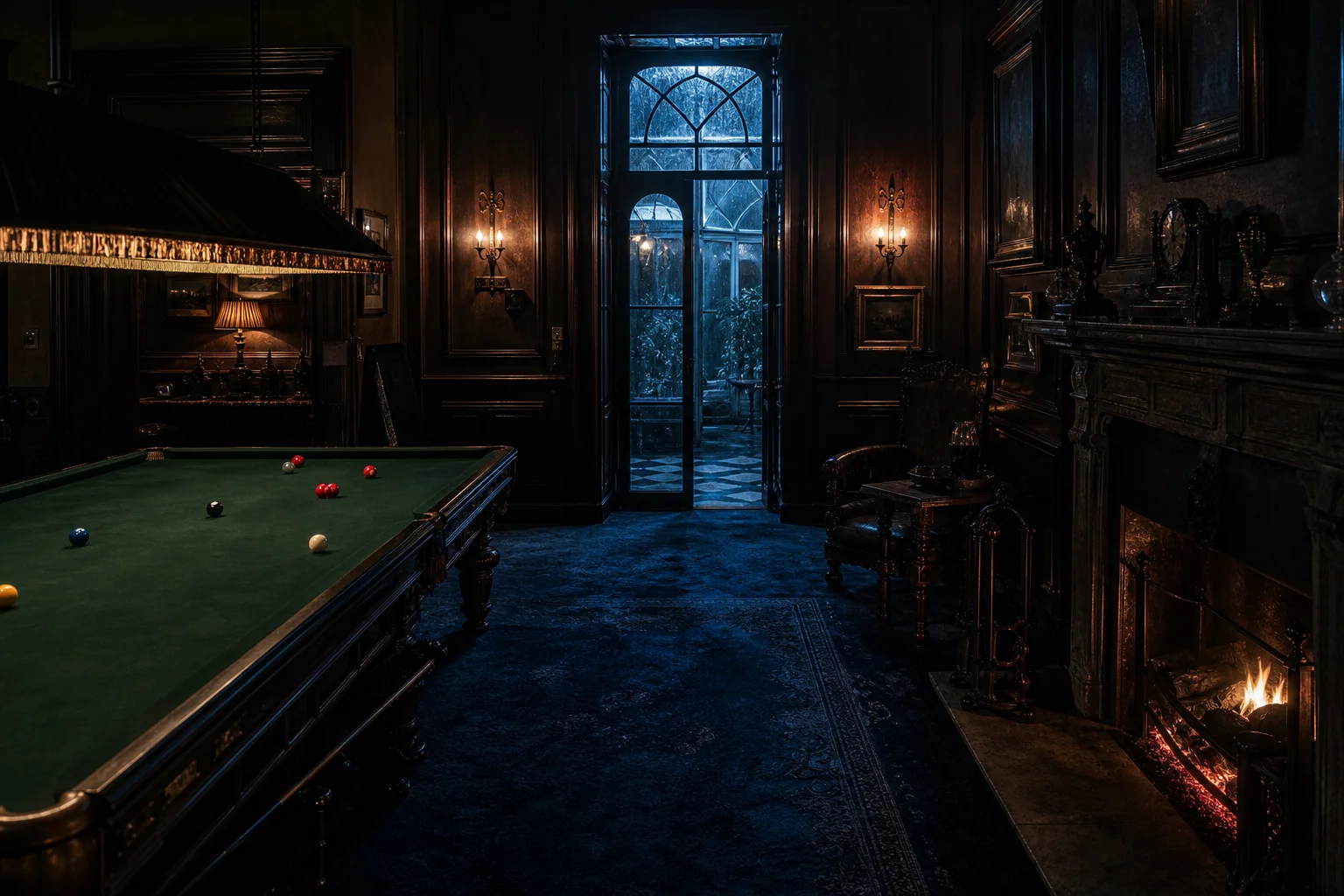
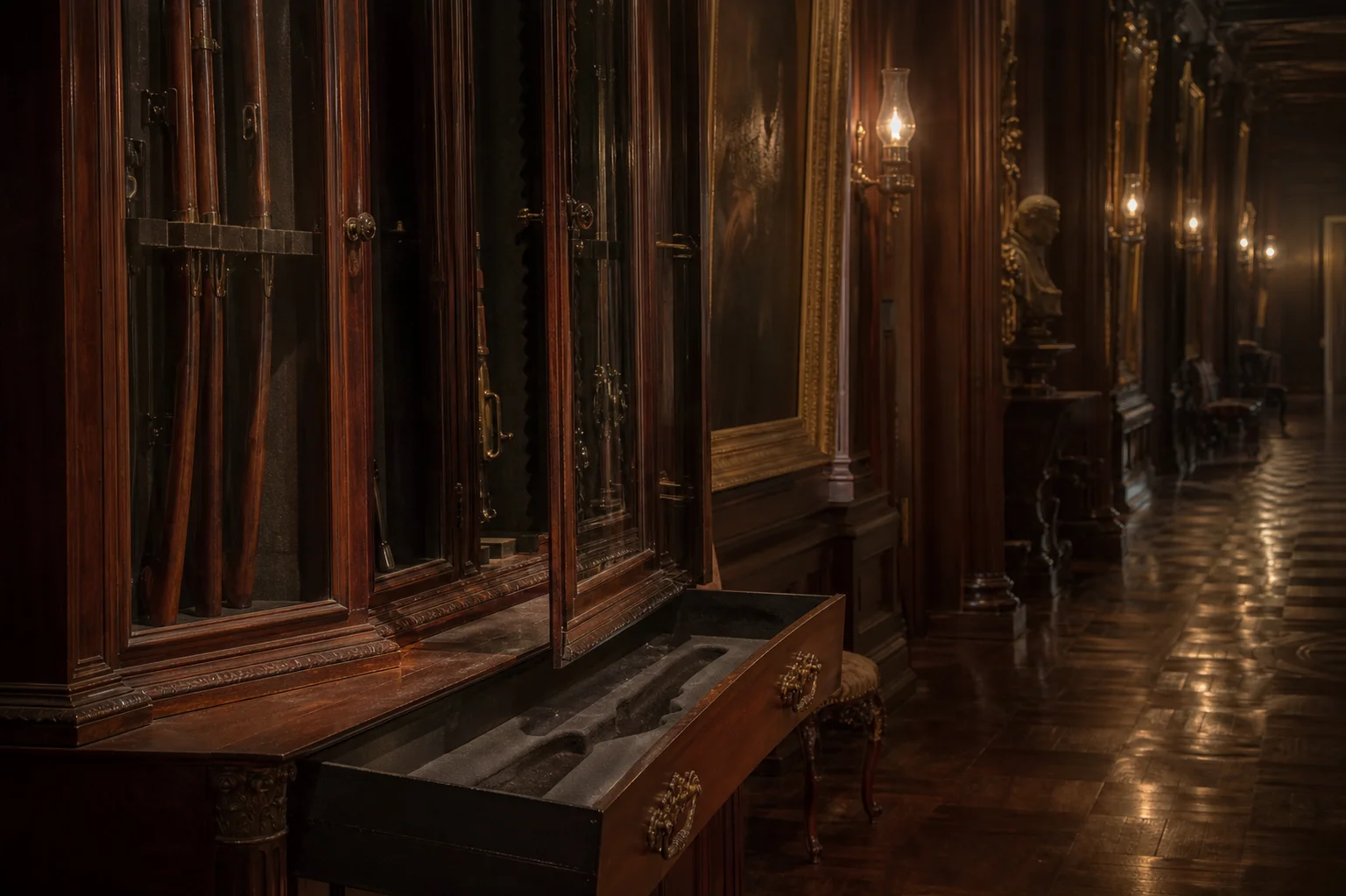
The lighting is low and localized, sourced from gas lamps and fading daylight through high windows. The air is cool and carries a notable humidity, with acoustic density characterized by stifled silence punctuated by distant, muffled household sounds. The atmosphere is defined by 'propriety' and 'lineage', rendered in 'antique' furnishings and 'genteel' decay.
 Investigation Constraints
Late Victorian/Edwardian era. Communication by handwritten letter and telegram. Locks are mechanical pin-tumbler or warded. Data is stored in leather-bound ledgers, personal diaries, and official estate documents. Forensic analysis relies on magnifying glasses, calipers, and chemical reagents.
✦ Related Cases ✦