The Glittering Paradox
A Hollywood mogul is found dead in his private screening room. The investigation enters a world of shredded documents, encrypted devices, and panicked digital activity. Everyone present holds a secret they were desperate to protect.
 Initial Crime Scene
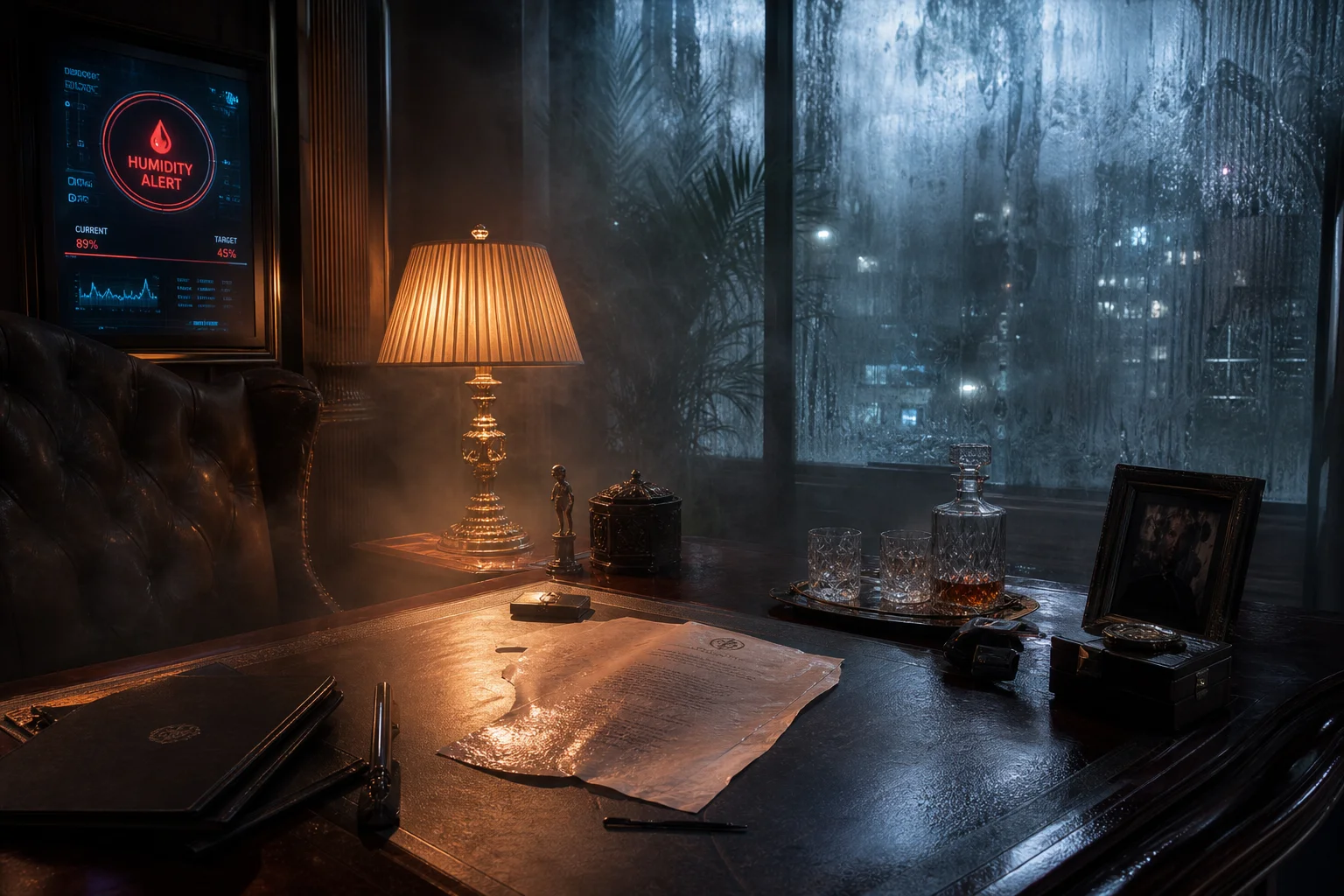
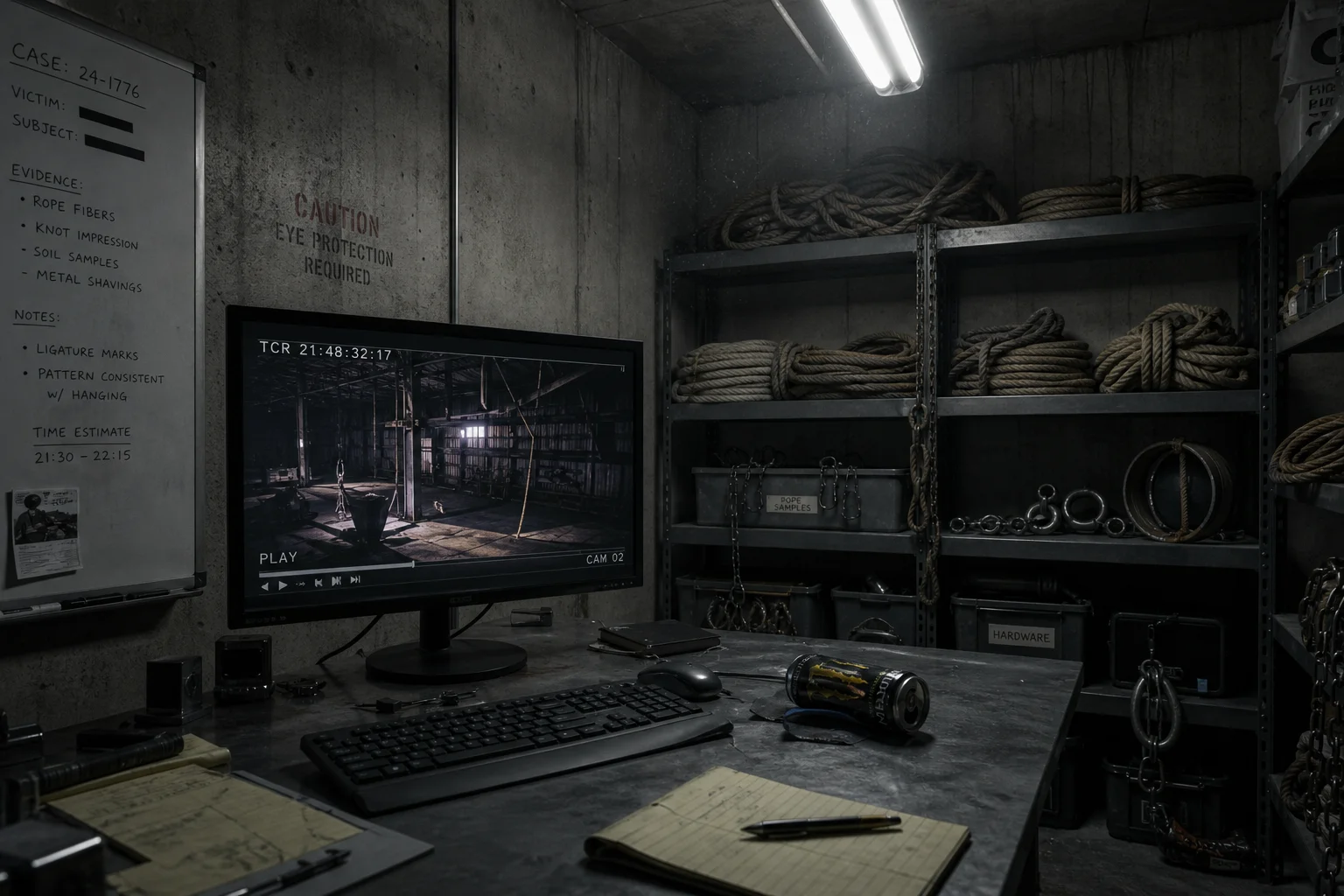
The first scent hits you as you cross the threshold: stale, expensive cologne layered with cold coffee and the faint, chemical tang of ozone from overworked electronics. A low, constant hum emanates from a bank of servers against one wall. Your eyes adjust to the dim, ambient lighting, immediately snagging on three points: the fine, dark confetti spilling from a wastebasket, the unnervingly still reflection in a massive, dark wood-paneled wall, and the faint, disturbed dust pattern on the polished marble floor in front of a massive desk.
 Crime Scene Environment
Lighting is a low, cinematic glow from recessed LEDs and active screen faces, creating deep shadows in the corners. The air is cool, dry, and heavy with the acoustic density of a soundstage—every footstep, breath, and electronic beep is unnaturally clear and close. The oppressive silence is punctuated only by the whine of technology and the faint, occasional rustle of paper or fabric.
 Investigation Constraints
Modern luxury tech: encrypted smartphones, biometric locks (fingerprint/retinal), private cloud servers for script storage, studio-grade digital editing suites, secure messaging apps with auto-delete features, GPS-enabled luxury vehicles, networked home security systems with interior cameras (often in 'private' areas), and social media analytics dashboards.
✦ Related Cases ✦