The Glycerin Pattern
An independent investigator is called to a Hollywood studio after a fatal incident on set disrupts a crucial film production. As careers, reputations, and personal secrets surface, a web of panicked alibis and defensive lies must be untangled to isolate a single, cold truth hidden in the studio's machinery.
 Initial Crime Scene
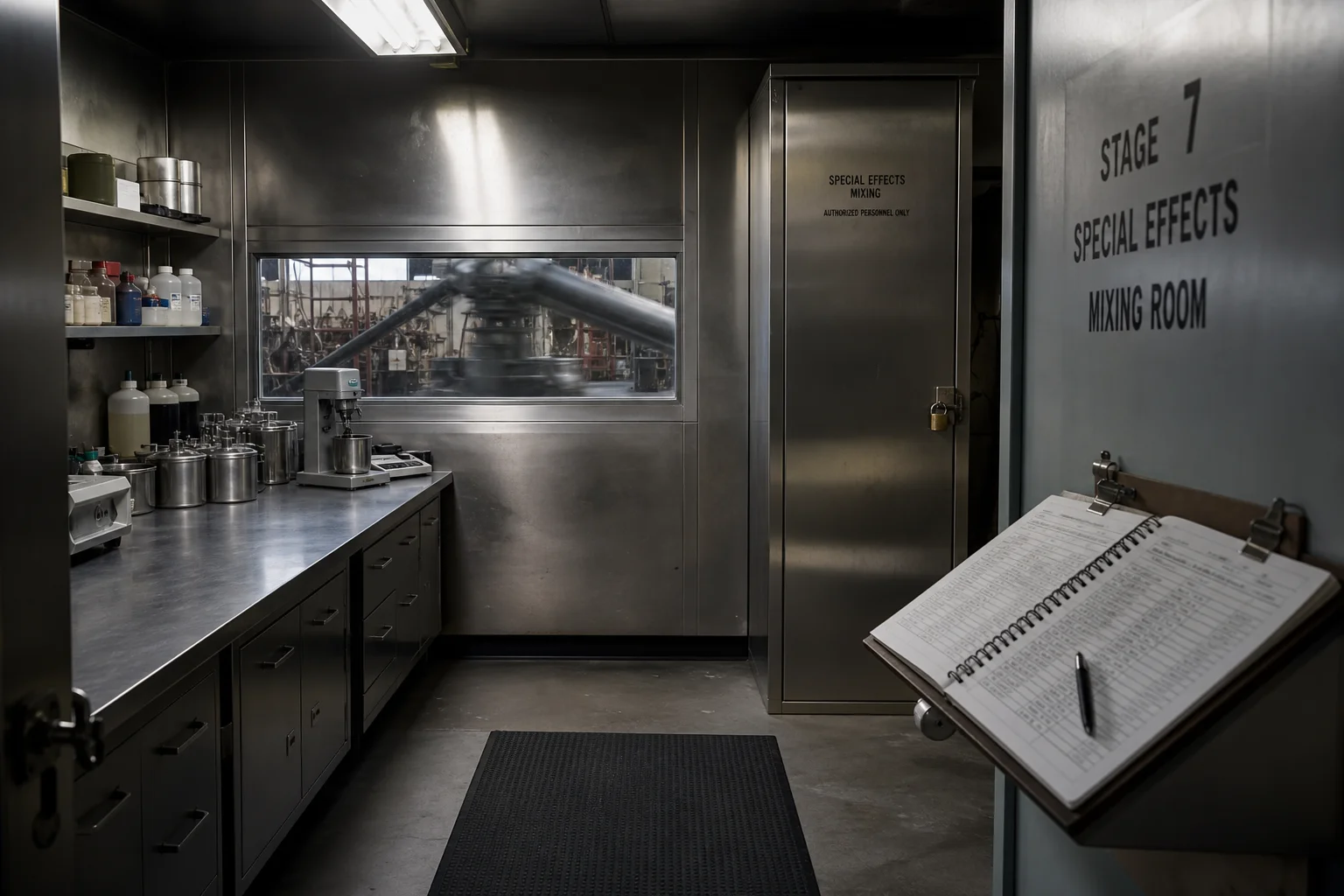
The chemical bite of glycerin and synthetic dye hangs in the stale air of the Special Effects Mixing Room, cutting through the smell of solvent and old paper. Fluorescent tubes hum overhead, casting a harsh, unforgiving light on stainless steel surfaces. A spiral-bound ledger lies open on a clipboard by the door, its neat columns listing names and times. A locked metal cabinet stands in the corner, its keyhole a dark pinprick. The silence is punctuated only by the distant, rhythmic thud of a press from another soundstage.
 Crime Scene Environment
Lighting is harsh, industrial fluorescent in workspaces and focused, warm spots in personal trailers and offices. Humidity is low, air-conditioned to preserve sets and equipment, creating a dry, temperate climate. Acoustic density is moderate; the insulated studio lot muffles external city noise, but internal sounds—a whirring shredder, a slamming drawer, a distant shouted 'Action!'—carry with sharp clarity through corridors and thin trailer walls.
 Investigation Constraints
Early 2000s Hollywood pre-streaming. Tools: Polaroid cameras, analog mixing equipment for special effects, landline telephones, fax machines, physical scripts with handwritten notes, basic email on studio computers, paparazzi film cameras. Communication: Face-to-face meetings in trailers, memos on letterhead, whispered gossip at craft services. Locks: Standard key locks on office doors, combination safes in production offices. No smartphones, no digital social media, no cloud storage.
✦ Related Cases ✦