The Harvest Ledger
During the annual Harvest Festival, the town patriarch is found deceased in his study. An independent investigator is called to document the circumstances surrounding the event, navigating the town's intricate social calendar and the precise, handwritten records that underpin its facade.
 Initial Crime Scene
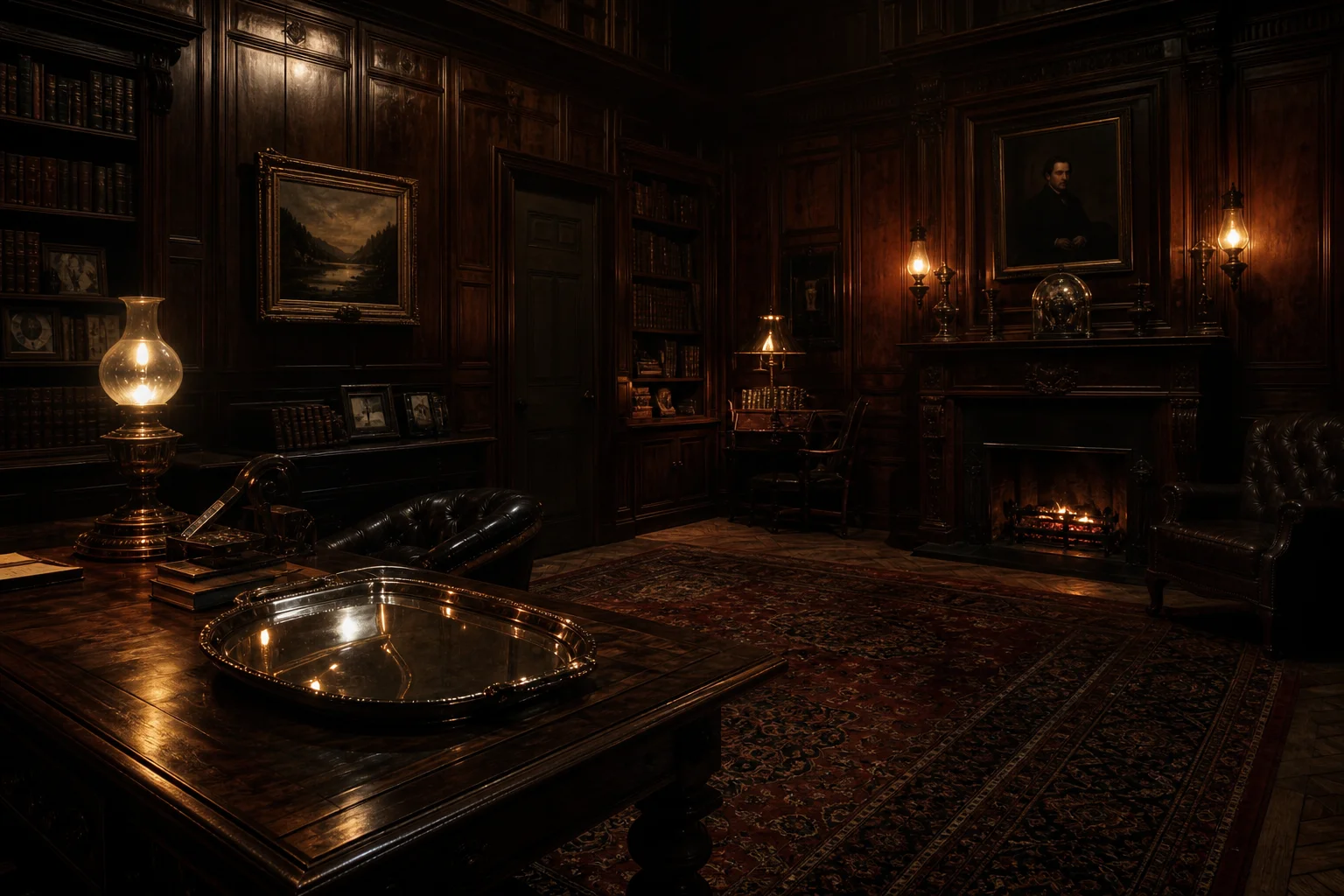
A single shaft of afternoon light cuts through the high, arched window, illuminating a slow procession of dust motes in the lavender-scented air. The faint, sharp snap of a turning diary page echoes from the adjacent reading room. Three visual markers anchor the space: the polished wood floor reflecting the light, the towering, gilt-spined bookshelves lining the walls, and the imposing mahogany desk at the center of the hall.
 Crime Scene Environment
The environment is defined by a cool, dry interior climate, with air quality stabilized by the scent of old paper and beeswax. Lighting is a mix of focused, warm lamplight at individual desks and diffuse, slanted natural light from tall windows. Acoustic density is low, characterized by amplified personal sounds like the click of a magnifying glass or the rustle of stiff fabric, against a backdrop of profound, structural stillness.
 Investigation Constraints
Handwritten ledgers, rotary telephones, mechanical door locks with skeleton keys, handwritten notes, gossiped whispers, physical mail delivery, rotary combination safes, manual film cameras.
✦ Related Cases ✦