The Harvest Table's Silent Witness
A Thanksgiving gathering at a New England estate is disrupted when the ceremonial carving knife cannot be located. Beneath the surface of familial courtesy, a network of obligations, private correspondence, and social anxieties begins to surface, suggesting the missing blade is a focal point for a series of concurrent disturbances.
 Initial Crime Scene
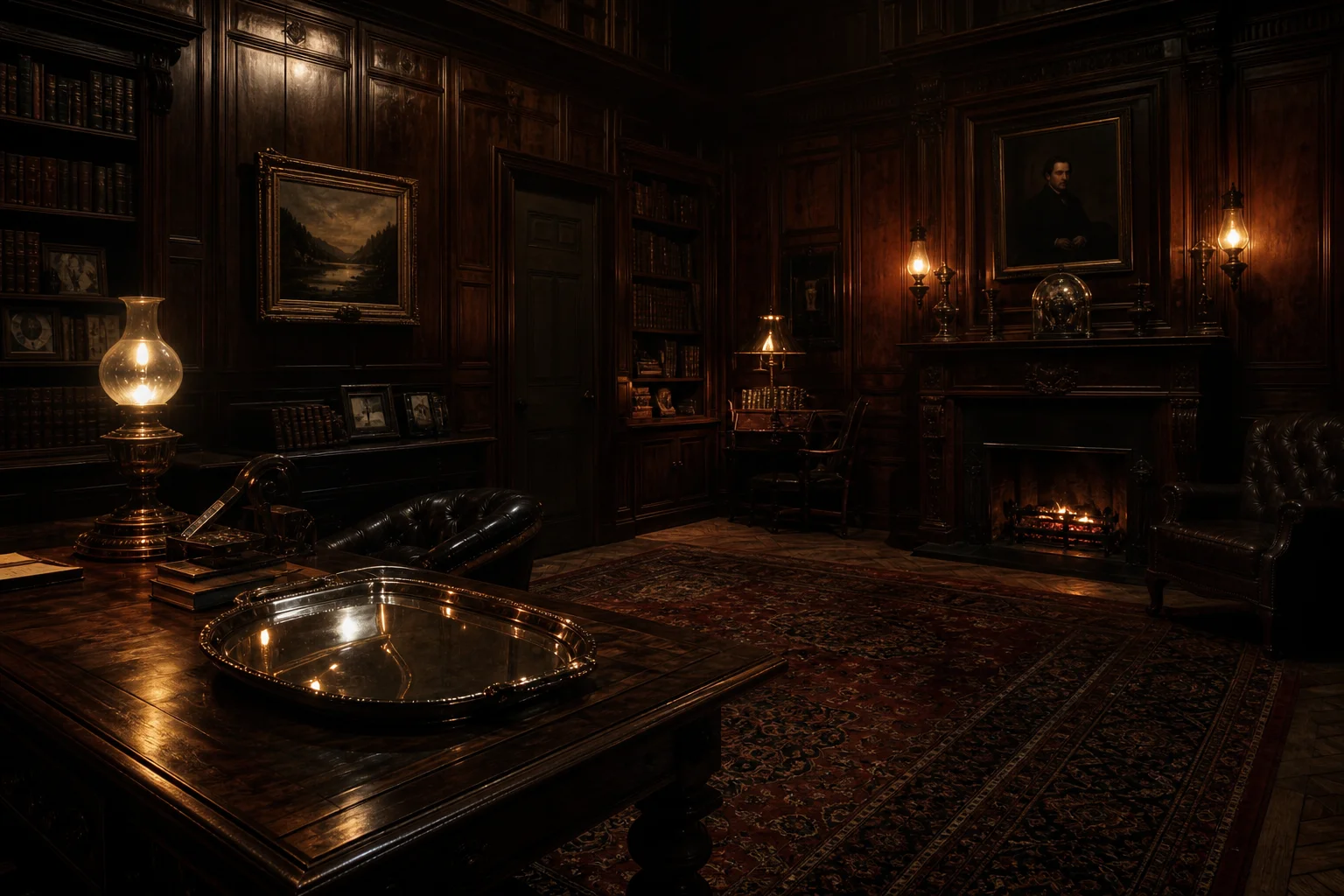
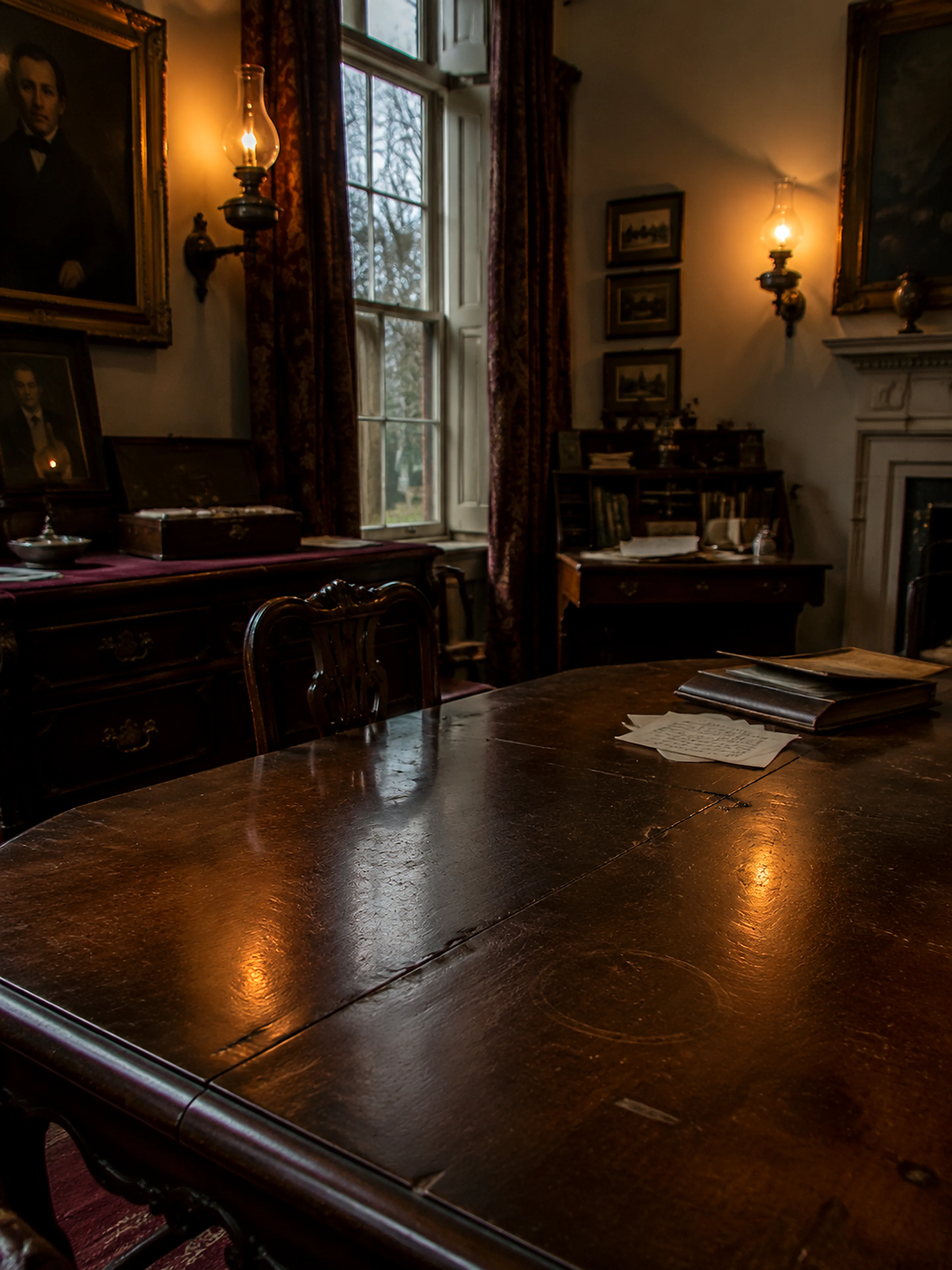
A gust of damp, cool air from the morning room meets you, carrying the musty smell of old paper and the faint mineral scent of India ink. The soft hiss of a gas lamp is audible from within. Your gaze settles on a deep scratch marring the polished surface of an heirloom dining table, a water ring staining the wood nearby, and the faint indentation left by a heavy case on the velvet-lined sideboard.
 Crime Scene Environment
The domestic envelope is characterized by soft, warm gaslight illumination casting long shadows, a subdued acoustic density punctuated by distant clock ticks and muffled voices, and a humidity profile suggesting a cool autumn evening held at bay by smoldering hearths.
 Investigation Constraints
Late Victorian-era household tools: hand-cranked telephones (party lines), gas lamps, manual typewriters, fountain pens with India ink, wax seals, mechanical pocket watches, leather-bound guest ledgers, dumbwaiter systems. No electricity, digital devices, or modern forensics.
✦ Related Cases ✦