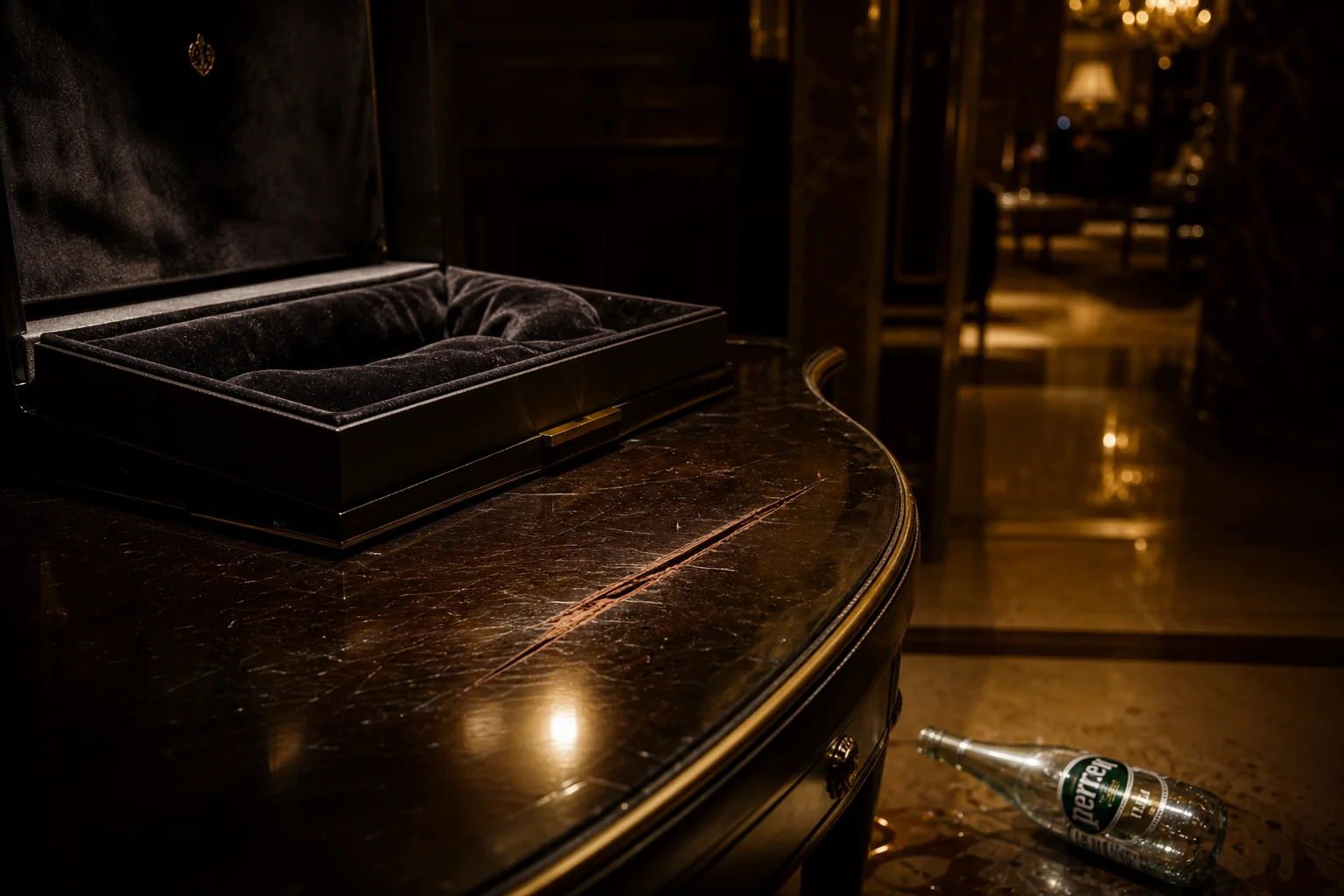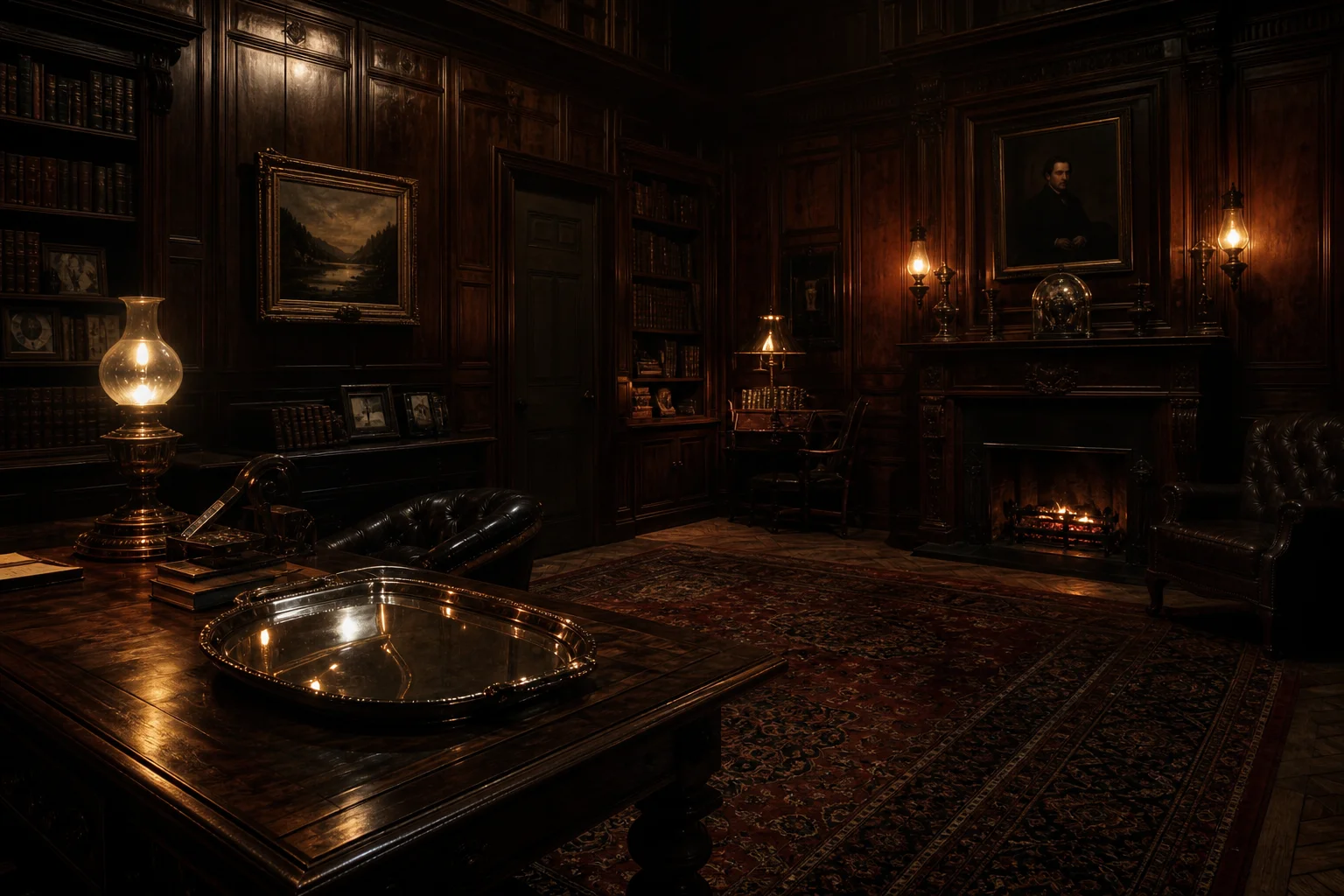
The Hunt at Ashworth Hall
During an annual gathering at a country estate, a porcelain egg from the hunt display is reported missing. The investigation examines the testimonies and timelines of the household staff and family members present that evening.
 Initial Crime Scene
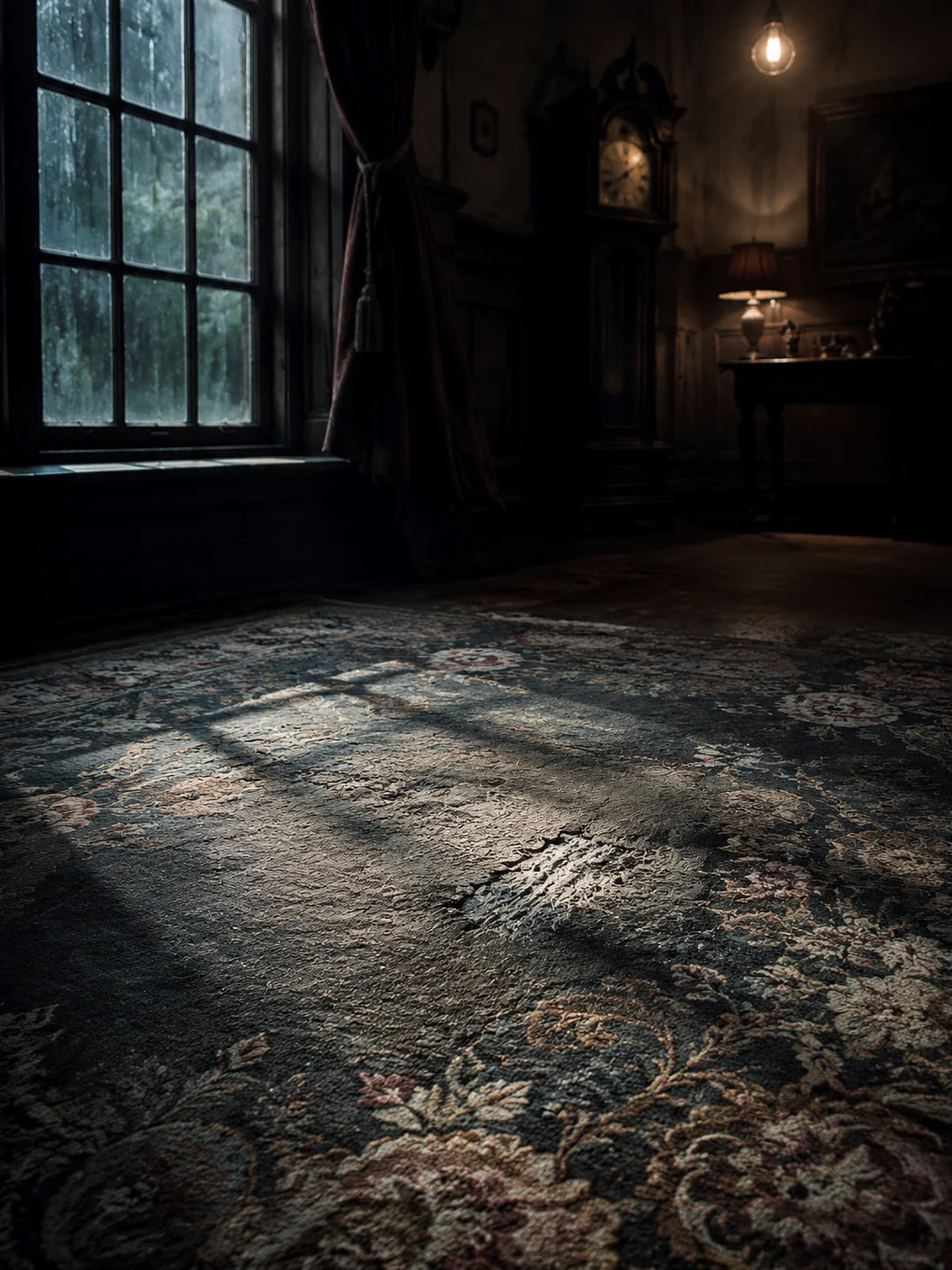
The scent of lavender polish and old paper fills the air as you step onto the weave pattern of an antique Aubusson carpet. A scuff mark mars the fabric near a leaded window, where a temperature gradient causes faint condensation on the glass. The steady, mechanical tick of a grandfather clock marks the silence.
 Crime Scene Environment
The lighting is dim, filtered through leaded windows and supplemented by bare bulbs and table lamps, casting long, sharp shadows. The air is cool and carries a persistent humidity that clings to the skin and furniture, with acoustic density defined by echoing footsteps on tile and the occasional, distant chime of the grandfather clock.
 Investigation Constraints
Early 20th century (1920s-1930s). Tools: Analog clocks, mechanical pocket watches, fountain pens, manual typewriters, handwritten ledgers, rotary telephones (rarely used for sensitive topics), early-model listening tubes between rooms, keyed door locks, window latches. Communication: Hand-delivered notes, sealed letters, whispers in corridors, public post. Computation: Mental arithmetic, paper ledgers, simple codebooks for inventories. Forensics: Magnifying glasses, powder for fingerprints (rudimentary), careful observation of soil, fabric, and wood.
✦ Related Cases ✦