The Inheritance of Dust
A weekend gathering at a country estate concludes with the patriarch discovered deceased. An independent investigator is called to examine the circumstances, observing a household where family portraits hang in silence and correspondence seals remain unbroken. The inquiry must untangle a series of personal anxieties and professional discretions to establish a factual sequence of events.
 Initial Crime Scene
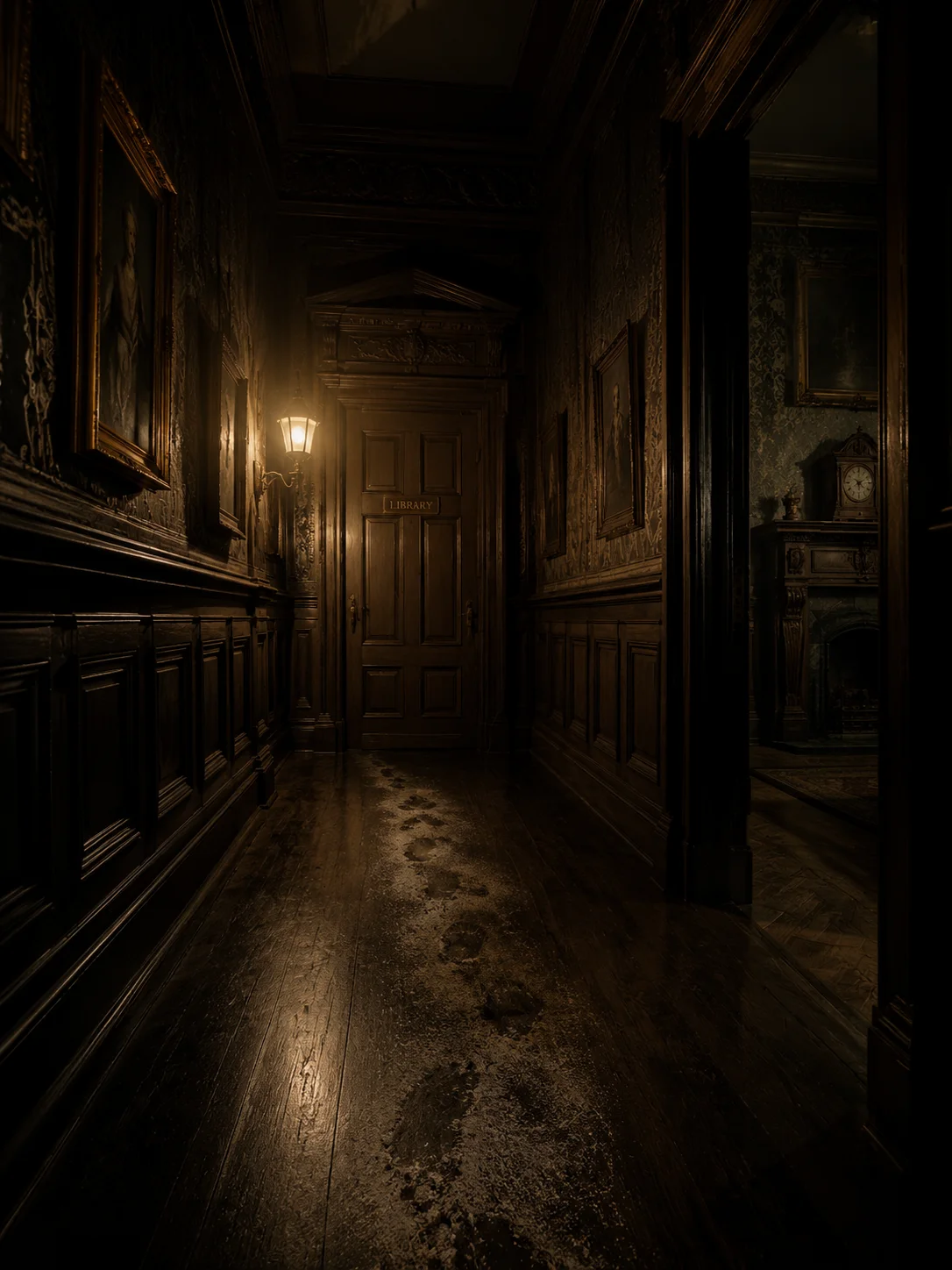
The heavy scent of beeswax and old paper presses against the threshold. A single, harsh gas jet in the corridor casts long shadows across the waxed floorboards, illuminating a path of disturbed dust leading from the library door. Your entry is marked by the silent, carved oak panels lining the vestibule and the faint, rhythmic ticking of a mantelpiece clock from an adjacent room.
 Crime Scene Environment
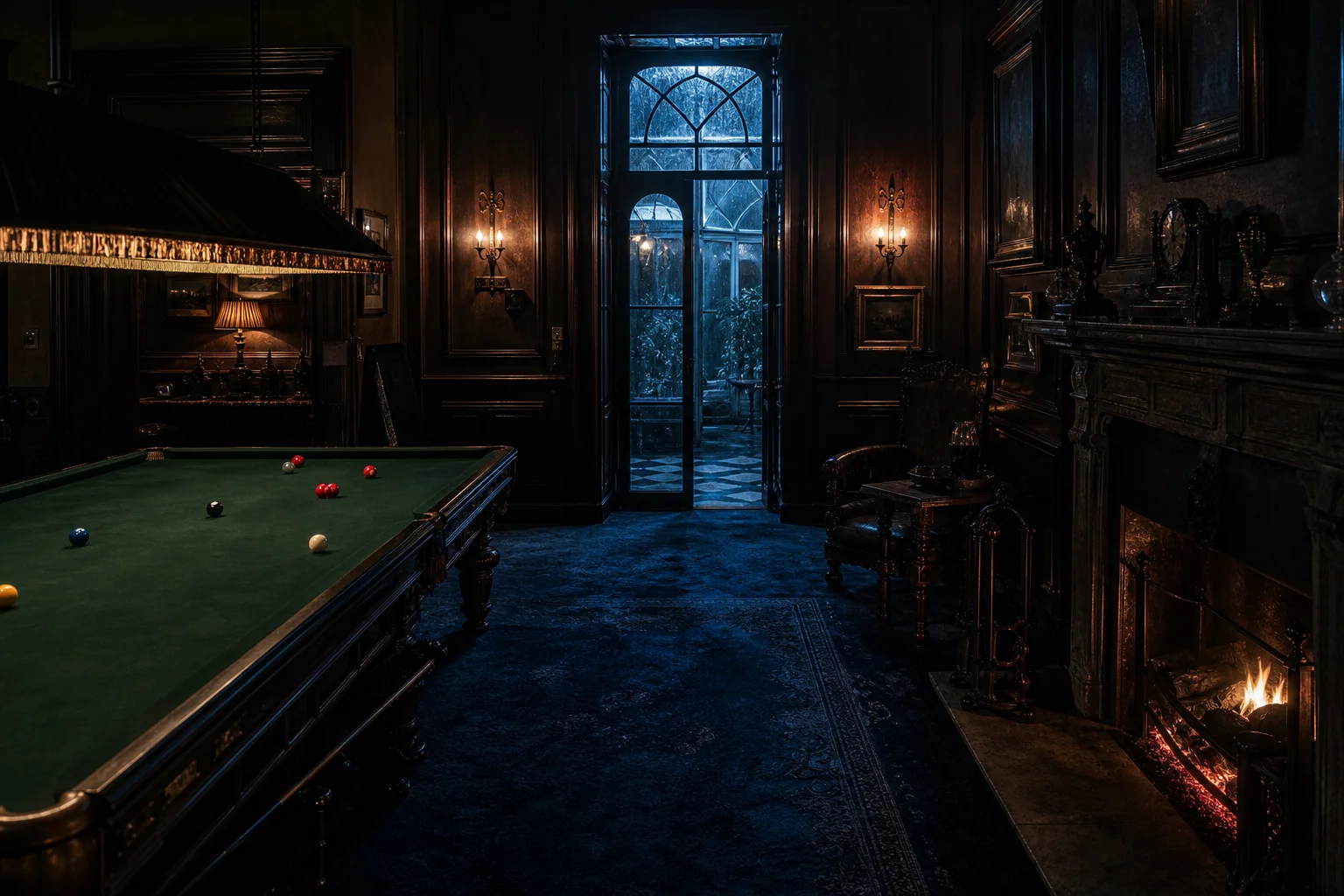
The sandbox is enveloped in a permanent twilight of gaslight and candlelight, casting deep, stationary shadows. The air is uniformly cool and carries a dry, dusty humidity with a faint, pervasive aroma of aromatic tobacco. Acoustic density is low, characterized by muffled echoes from hard surfaces and the omnipresent, stifled quiet of a house holding its breath.
 Investigation Constraints
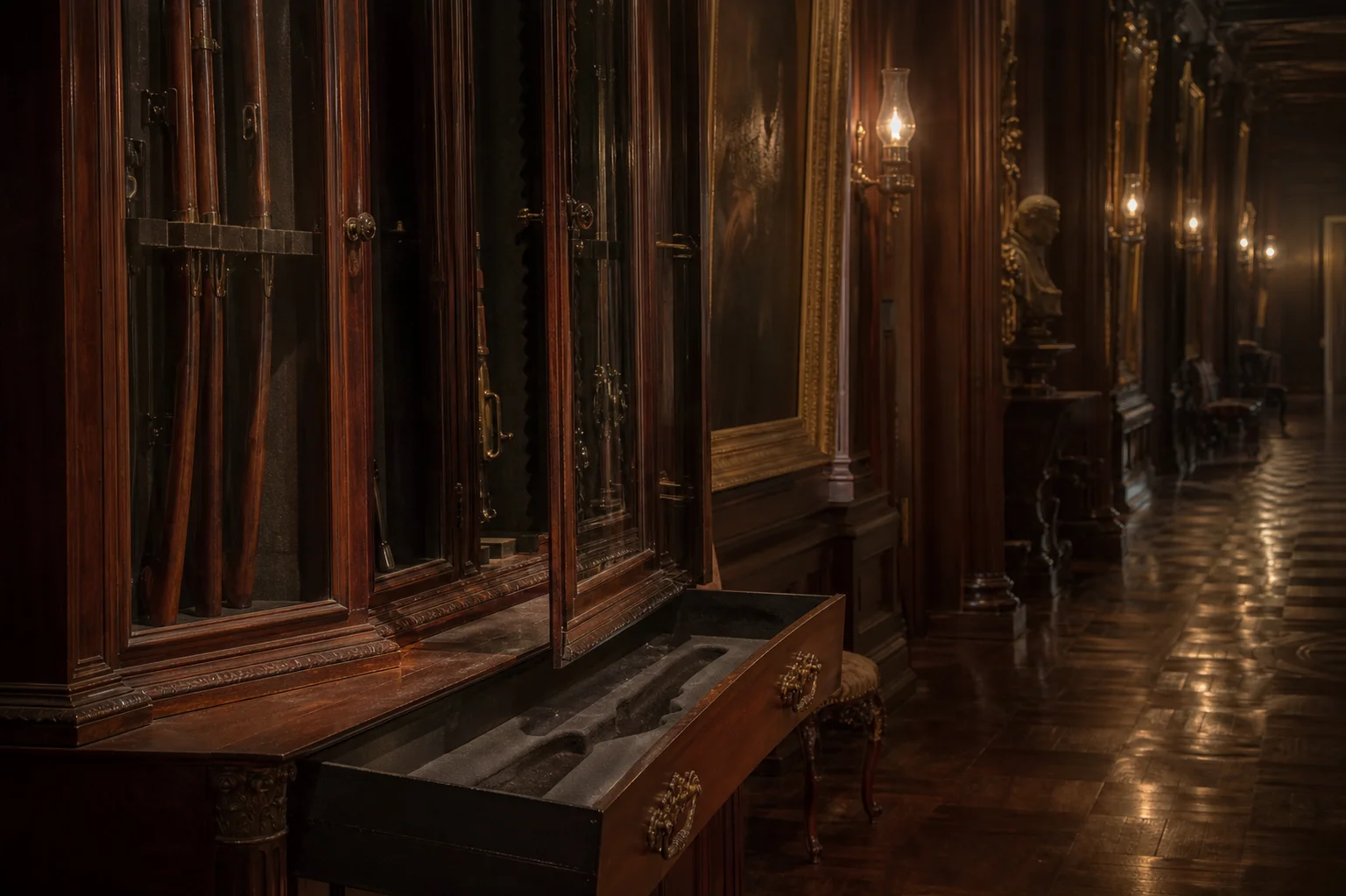
Candlelight and oil lamps for illumination; gas lighting in main halls. Communication via handwritten letters delivered by postal service or household staff. Mechanical door locks requiring physical keys. Estate ledgers, chequebooks, and notarized wills as primary financial documentation. No telephones, no electricity, no digital records.
✦ Related Cases ✦