The Last Broadcast
The death of a legendary producer in a soundproofed booth following a catastrophic live broadcast failure casts the studio into a pressure cooker of professional anxiety. Every witness carries a secret to protect a career, and every action during the night contaminates the scene, weaving a labyrinth of competing interests and ambient sound.
 Initial Crime Scene
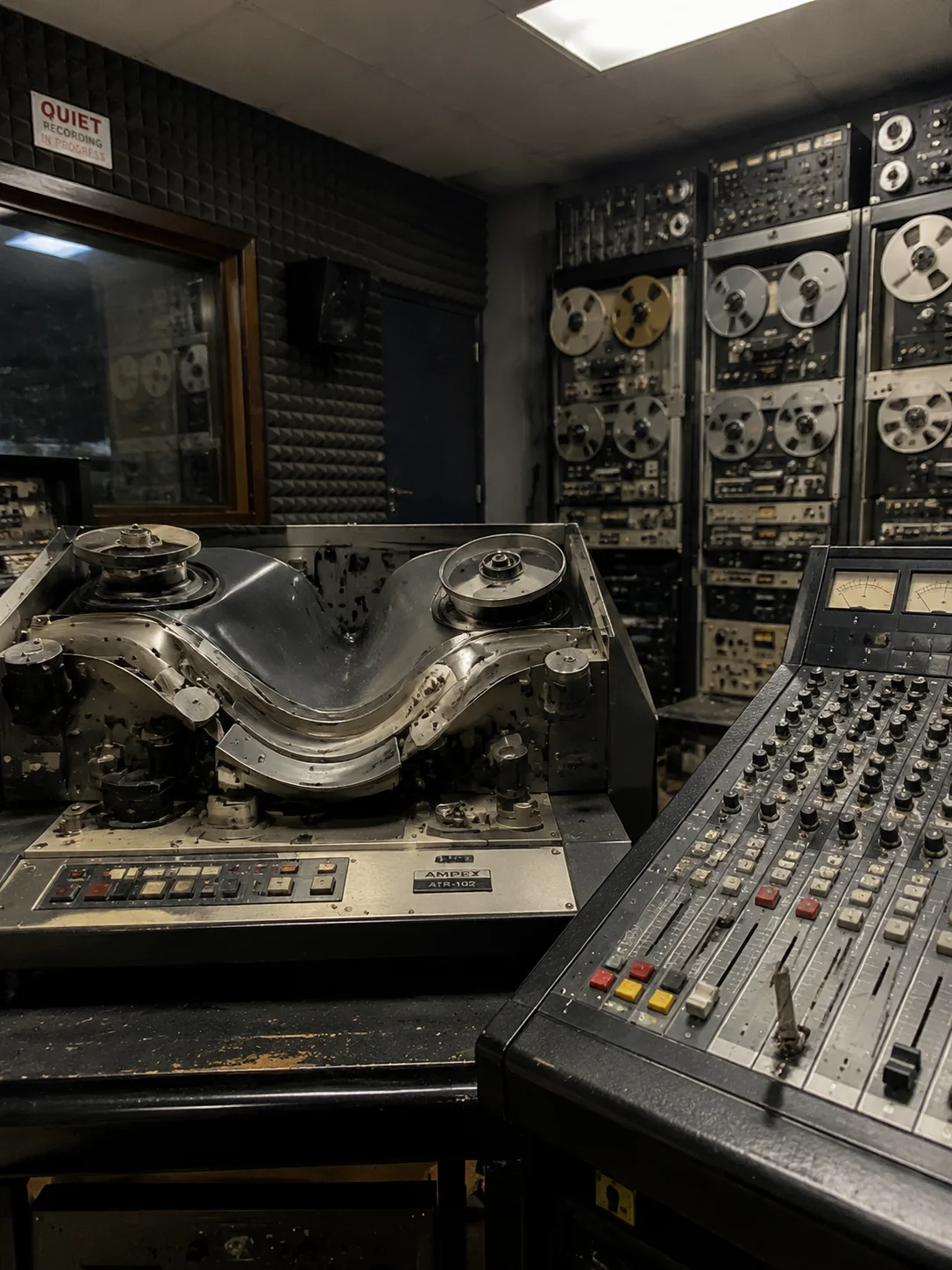
Fluorescent light hums, casting a flat glare across rows of metal tape machines. The air carries the scent of dust and hot electronics. Before you, the central 2-inch tape machine's storage cradle is permanently deformed into a severe U-shaped sag. On the adjacent analog mixing console, one fader is snapped off at its base, leaving a jagged metal stump. The room is silent except for the low, constant hum of the power supply.
 Crime Scene Environment
The environment is defined by harsh, static fluorescent lighting with minimal shadow. The air is dry, cool, and carries a persistent low-level hum from electronic equipment. Acoustic density is high, with sound muffled by soundproofing materials, creating a close, oppressive stillness.
 Investigation Constraints
1990s analog-to-digital transition era. Key technologies include: multi-track tape machines, reel-to-reel recorders, early digital audio workstations (DAWs) with floppy disk saves, analog mixing consoles with physical faders, pneumatic tube message systems within the studio complex, landline telephones, paper-based scheduling sheets, and printed cue cards. No internet, email, or mobile phones.
✦ Related Cases ✦