The Late Projection
An independent investigator arrives at a major studio lot following the discovery of a body in a private screening room. Initial accounts present a constellation of conflicting schedules, altered documents, and observable stress reactions among key personnel. The investigation focuses on untangling layered statements and preserving physical evidence to reconstruct the sequence of events.
 Initial Crime Scene
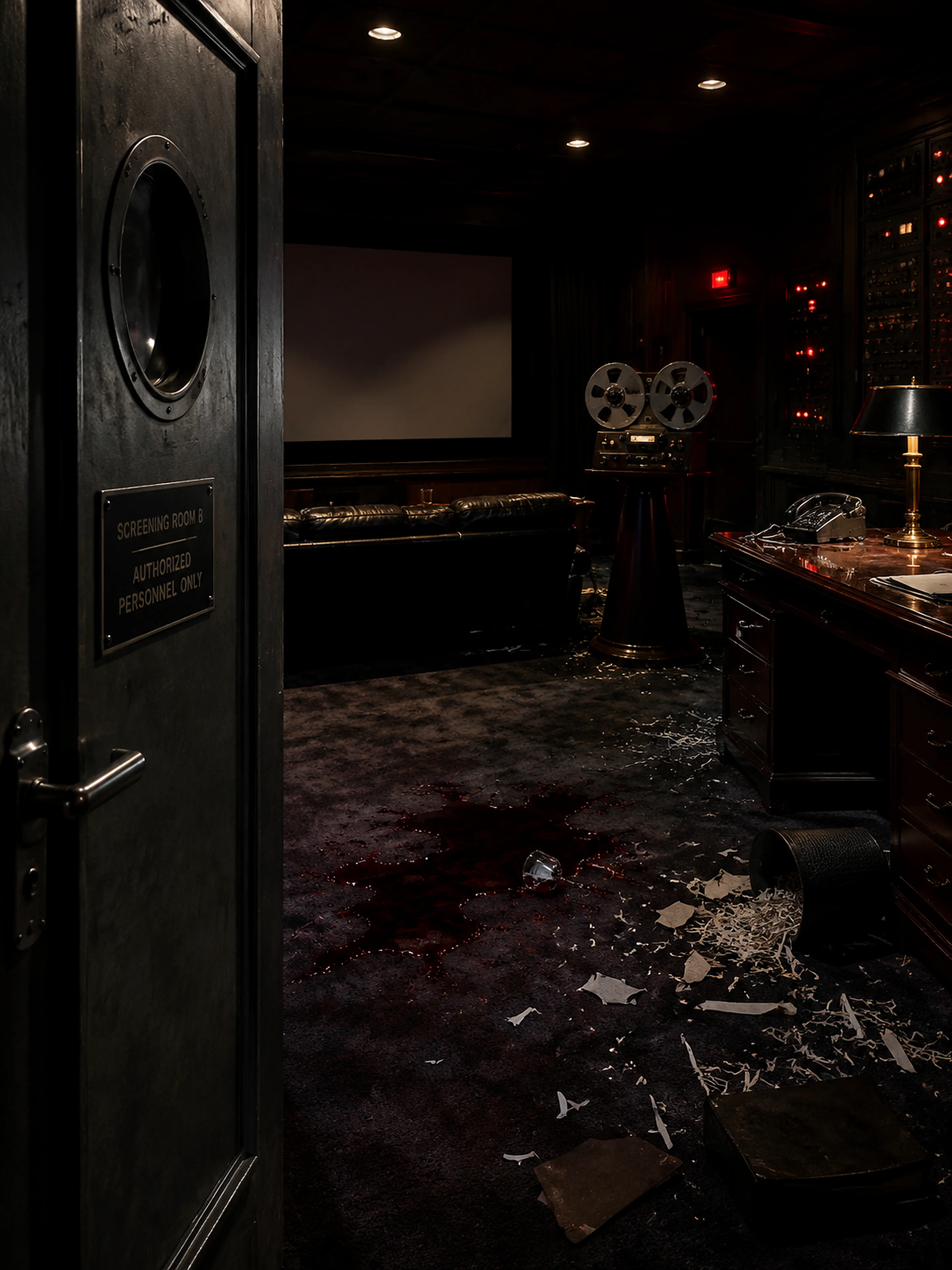
The heavy, soundproofed door of the screening room closes behind you, the click of the latch swallowed by the velvet-draped silence. The first assault is the sharp, acrid smell of spilled alcohol cutting through stale cigarette smoke and the dusty scent of old celluloid. Your eyes adjust to the gloom, picking out the glossy sheen of spilled red wine on the plush carpet, the dark, conical shape of a floor-mounted reel-to-reel recorder humming on standby, and the chaotic scatter of shredded paper from an overturned wastebasket near a polished mahogany desk.
 Crime Scene Environment
Lighting is low and artificial, dominated by the red standby light of projectors and the dim glow from switchboard panels, creating long, deep shadows. The air is cool and carries a damp, heavy humidity from the spilled liquids and close, interior spaces. Acoustic density is high; sounds are muffled by thick carpets and wall hangings, with the distant, rhythmic ticking of a wall clock and the low electrical hum of recording equipment creating a constant, oppressive undertone.
 Investigation Constraints
Landline telephones, pneumatic tube message systems within studio lots, analog film projectors and splicers, mechanical reel-to-reel audio recorders, carbon-copy paper contracts, hand-cranked filing cabinets, Polaroid cameras, paper-based call sheets and scheduling boards, vintage switchboard operators, and physical VIP badge scanners.
✦ Related Cases ✦