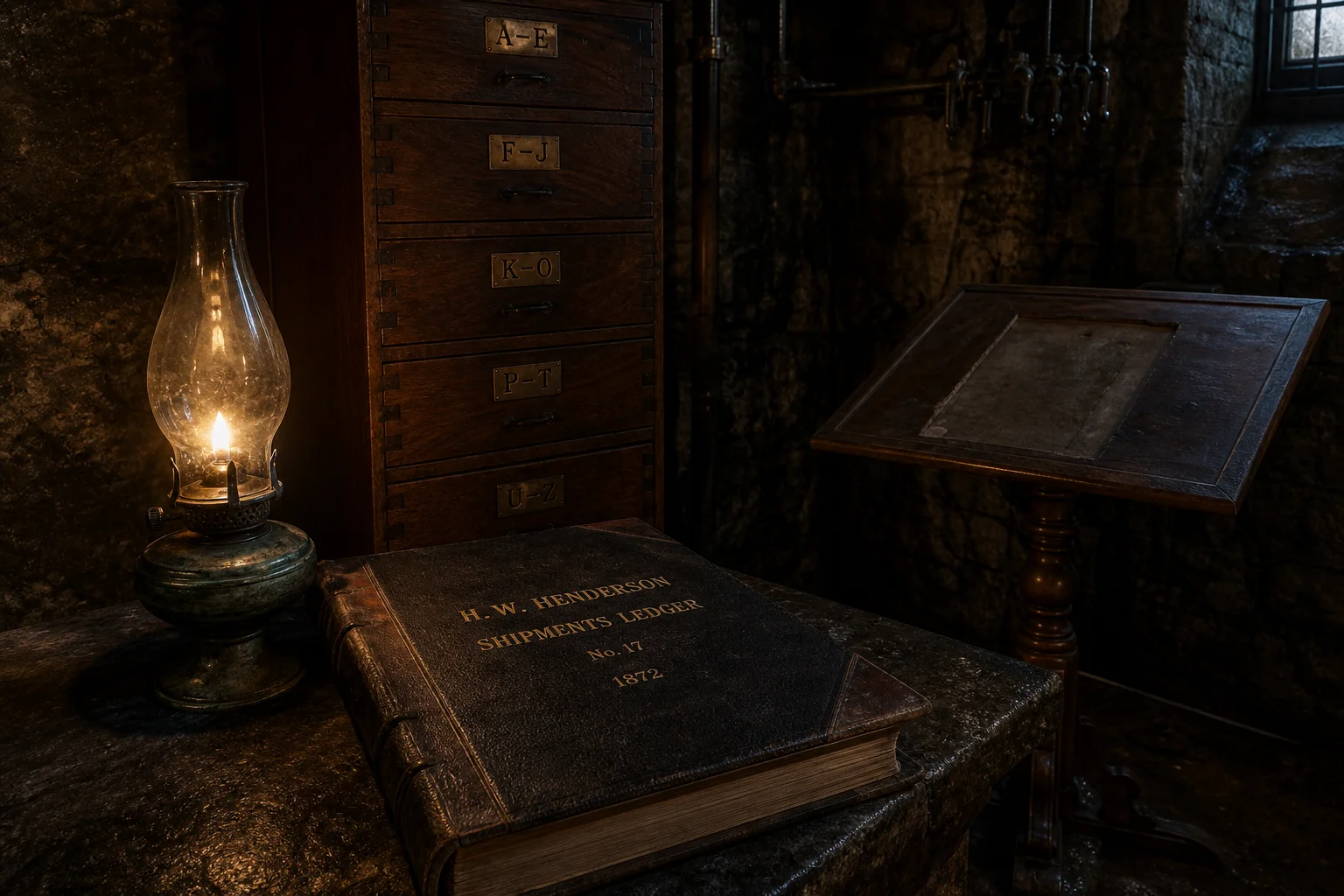
The Ledger of Cedar Lodge
In the community of Willow Creek, the absence of a key to an isolated hunting cabin prompts a careful examination of established reputations and inherited positions. An independent investigator is tasked with untangling the web of testimonies and physical traces to determine the sequence of events.
 Initial Crime Scene
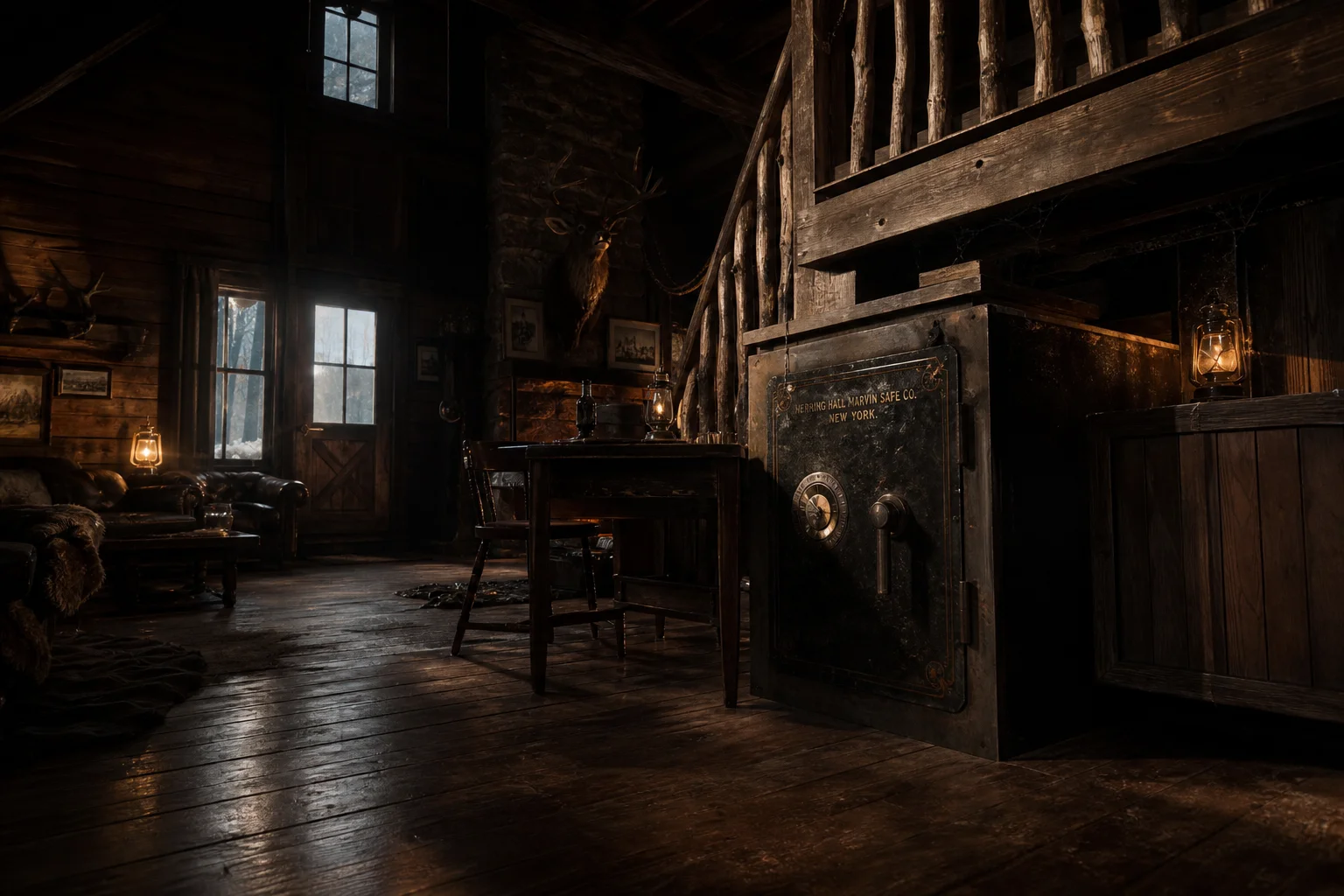
The first thing that hits you is the smell: a mix of cedar wood and old, settled dust. A heavy mechanical deadbolt on a strongbox catches the lamplight, its keyhole glinting. Above, a section of wooden railing is visibly loose from the floor. Faint scuff marks are etched into the surrounding boards.
 Crime Scene Environment
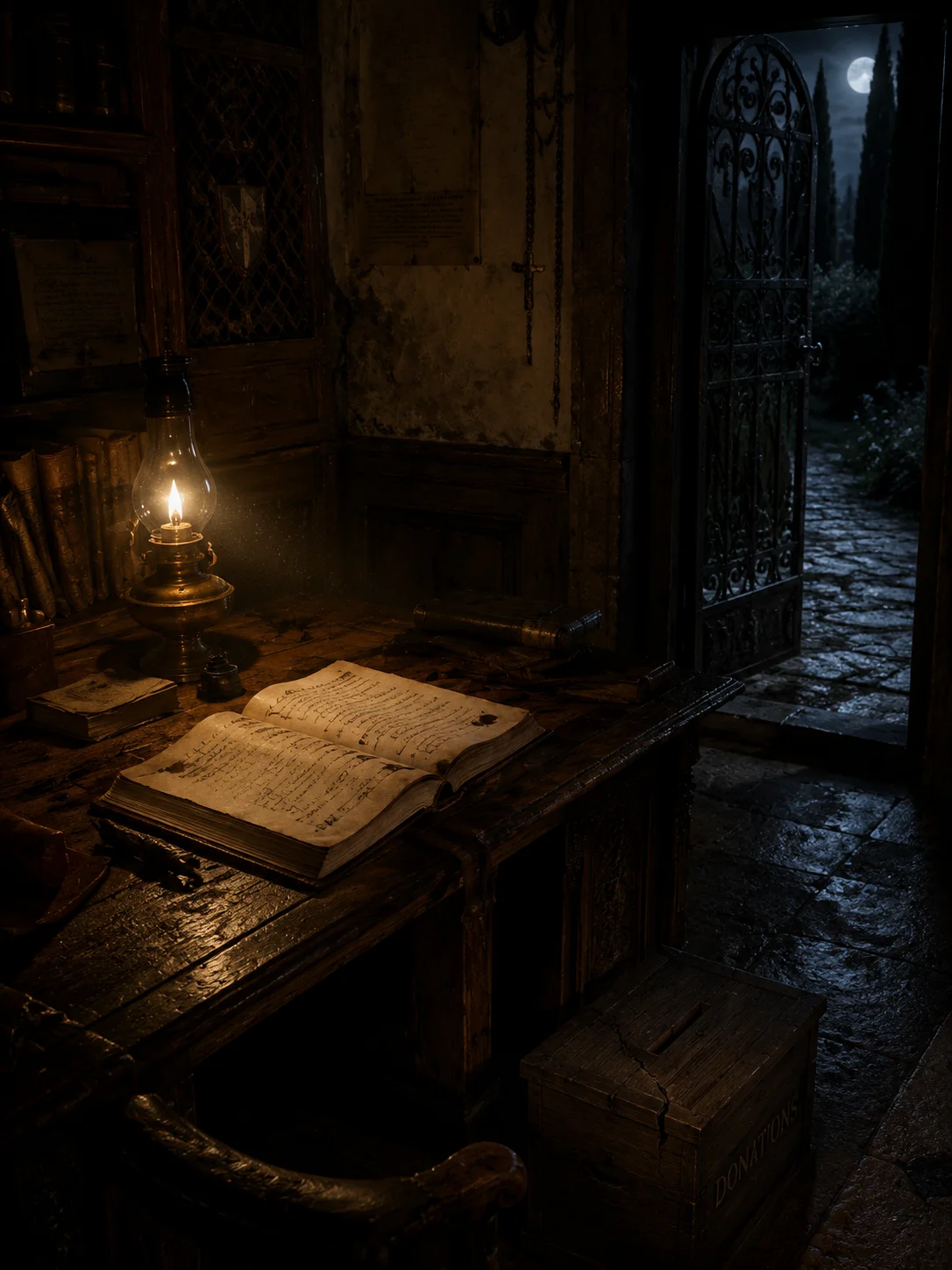
Lighting is low, provided by oil lamps and weak sunlight through tall windows, casting long shadows. The air carries a constant, faint humidity from the conservatory and the damp earth of the garden, a coolness that seeps into the wood paneling. Acoustic density is high; every sound—a dripping rafter, a shifted footstep on gravel—is amplified by the stillness and the enclosed, paneled rooms.
 Investigation Constraints
All technology is pre-digital, mechanical, and analog. Locks are heavy-duty, tamper-evident mechanical deadbolts or padlocks with unique, registered keys. Communication is via handwritten letters, party-line telephones, and local newspaper gossip. Data is stored in handwritten ledgers, diaries, and official town hall record books. Forensic analysis involves ink testing, paper fiber comparison, and mechanical lock examination.
✦ Related Cases ✦