The Ledger's Final Entry
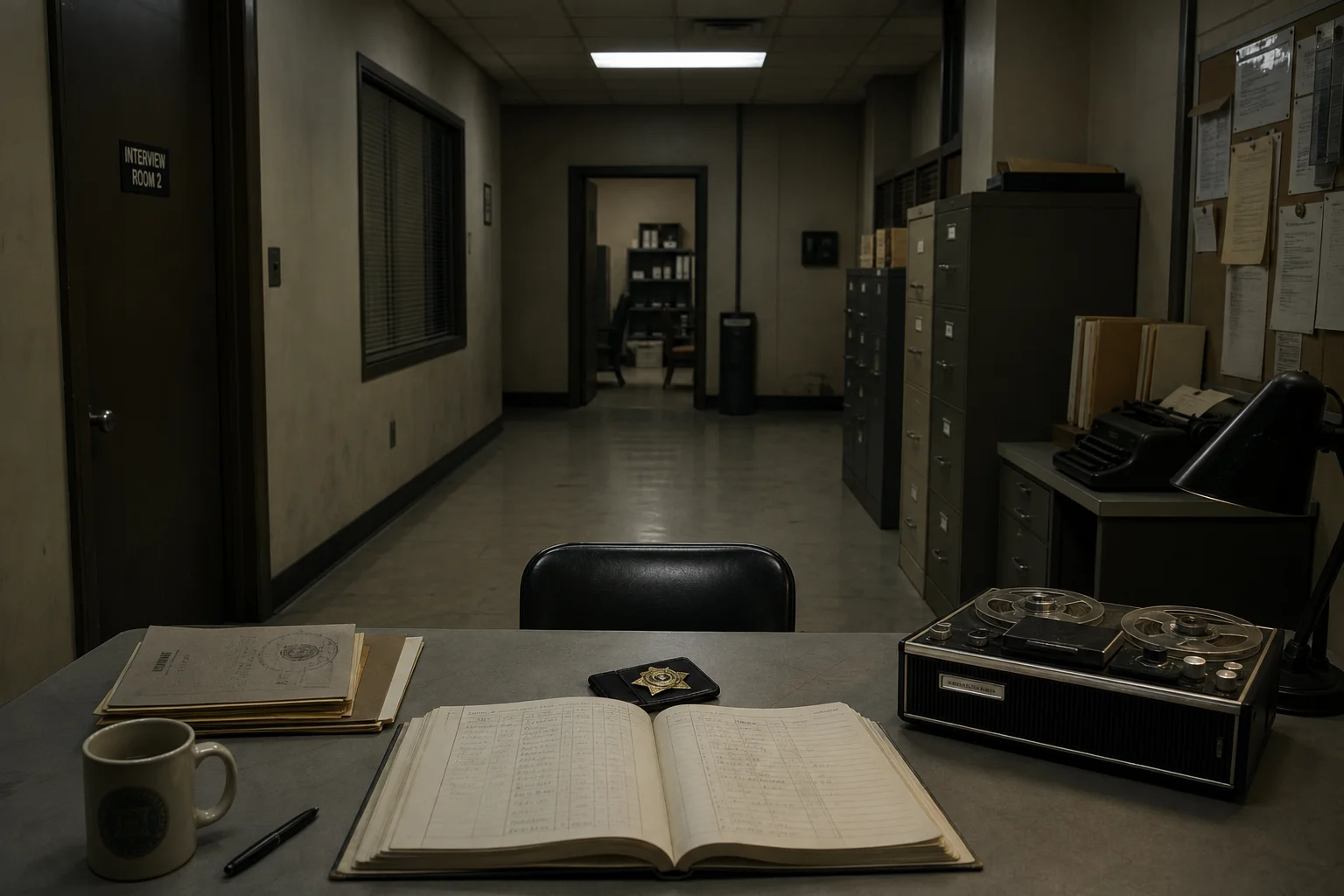
In a precinct where records are kept on paper and secrets on carbon copies, the death of an officer triggers a cascade of procedural irregularities. Internal Affairs dispatches a specialist to untangle a web of misfiled evidence, contradictory timestamps, and institutional silence.
 Initial Crime Scene
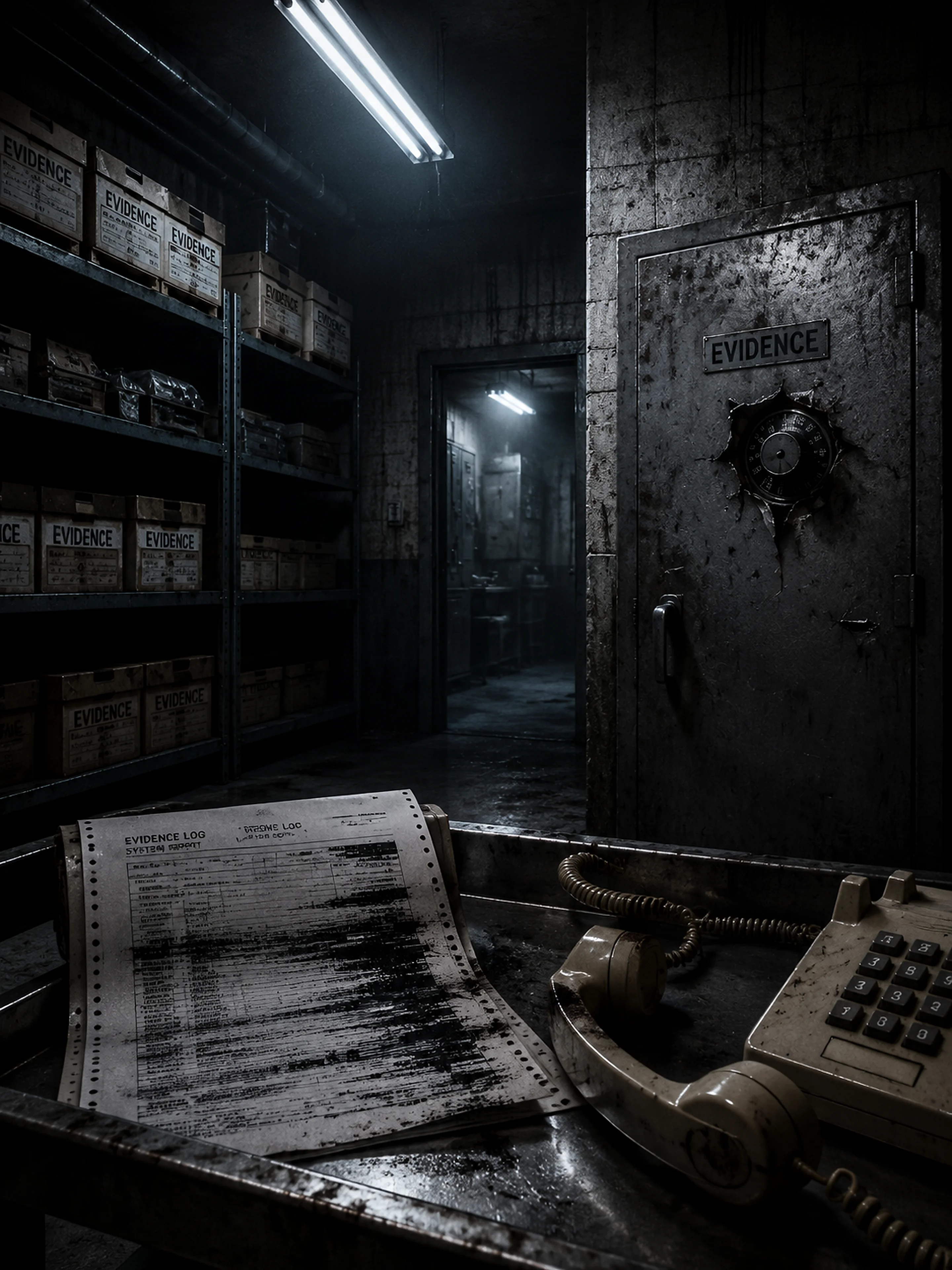
The first thing that hits you is the smell: a sharp blend of mimeograph ink, cold concrete dust, and the faint, sweet odor of stale coffee from a tipped-over cup. Under the low, flickering hum of a fluorescent tube, your eyes adjust to the concrete chamber. You register three immediate environmental markers: the dented and scratched evidence locker door, its combination dial mangled; a corrupted dot-matrix printout curling from a tray on a steel table; and the off-the-hook receiver of a landline phone, its dial tone a low, static-laced drone that fills the silence.
 Crime Scene Environment
The sandbox is defined by an analog, institutional decay. The lighting profile is a cold, fluorescent-lit glare that creates long shadows and leaves deep corners in near-total darkness. The humidity and temperature profile is a consistent, damp chill, with the air holding a gritty texture from suspended paper dust and concrete particulate. The acoustic density is a layered static-laced hum: the constant whir of terminal cooling fans, the distant drip of a pipe, and the ever-present, low drone of dial tones from abandoned landlines.
 Investigation Constraints
Analog and early digital hybrid: 1990s-era personal computers with dial-up modems, paper-heavy police bureaucracy, landline telephones with answering machines, dot-matrix printers, basic networked database terminals (green-screen CRTs) at the precinct, manual surveillance logs, film cameras, paper checkbooks, and physical evidence bags. No smartphones or wireless internet.
✦ Related Cases ✦