The Letter in the Tube
An investigative audit begins at a privatized federal penitentiary following the interception of contraband. Institutional records show a cascade of system anomalies, overridden protocols, and conflicting personal logs around a specific time window.
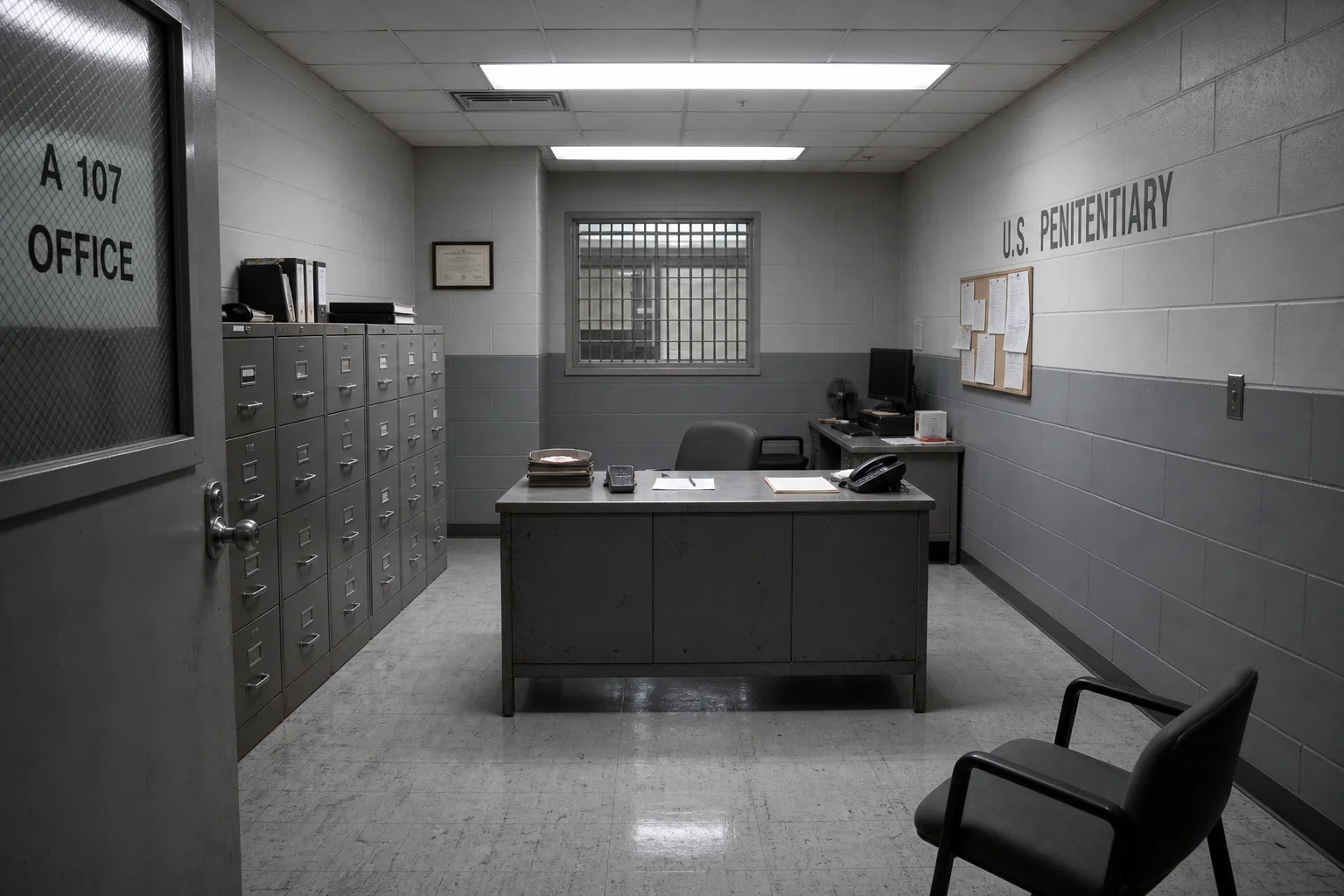
 Initial Crime Scene
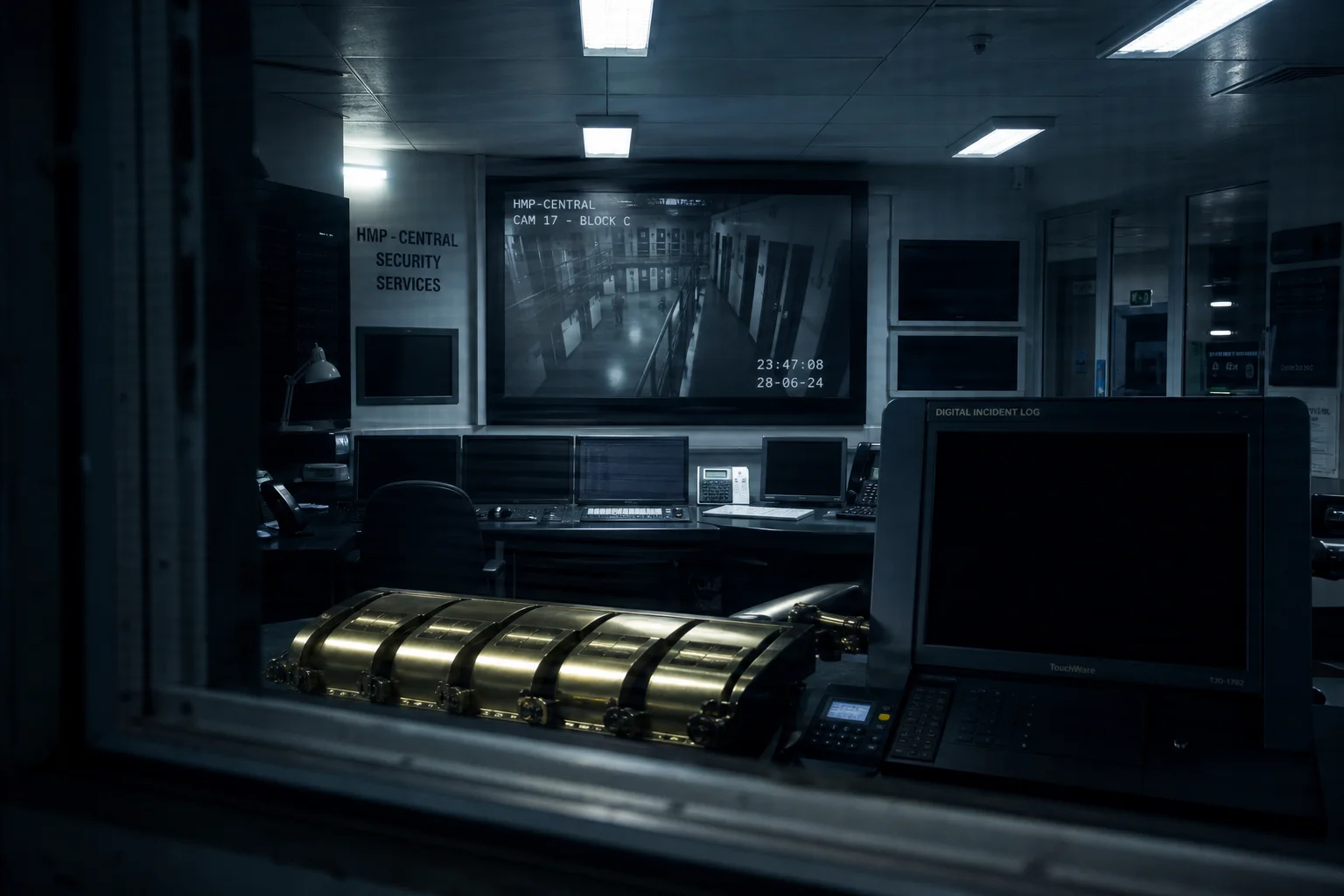
The sterile scent of industrial disinfectant clashes with the faint, lingering ozone of the pneumatic tube system. A low, constant hum vibrates through the floor. Your eyes adjust to the dim light filtering through a window, revealing the degraded, flickering timestamp overlays of the central CCTV monitor, the glint of a brass tube rack, and the dark, empty screen of a digital incident terminal.
 Crime Scene Environment
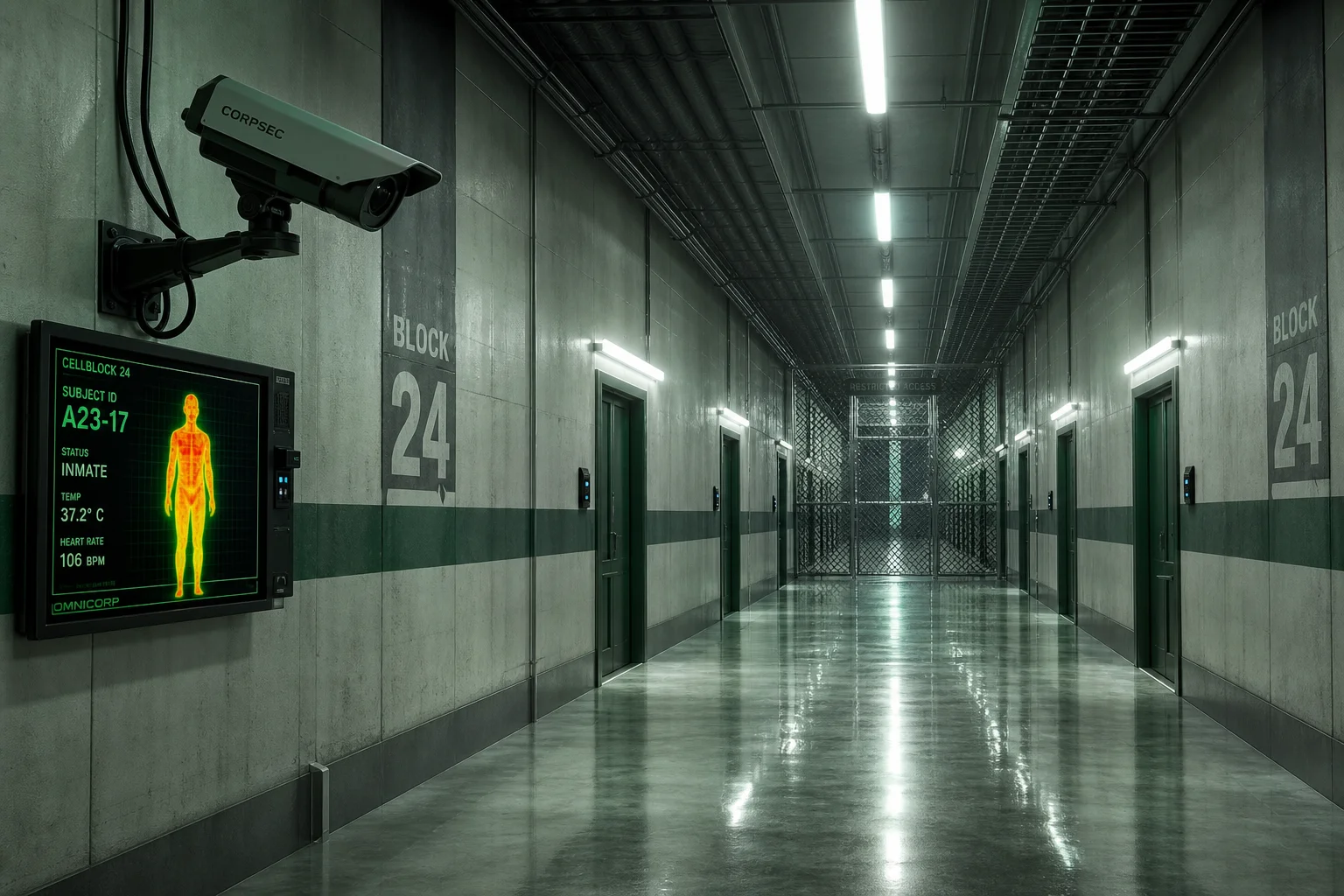
The lighting is a sterile mix of cold fluorescent panels and the dim, static glow of inactive monitors. The air is cool, dry, and carries the acoustic density of a pressurized system—a low thrum punctuated by the distant, muffled sounds of institutional life. All surfaces are slick, corporate, and appear sterilized.
 Investigation Constraints
Bar-coded inmate wristbands, electronic key-card access with log timestamps, CCTV with limited motion-activated recording and 24-hour overwrite, biometric scanners at high-security checkpoints, pneumatic tube message system for internal mail, handheld RFID scanners for inventory, digital incident reporting terminals, encrypted radio channels for guards, biometric safe in the Warden's office.
✦ Related Cases ✦