The Lineage Ledger
An independent investigator is called to a small town to locate foundational land deeds that have vanished from the sealed basement vault of the Town Hall. The inquiry must untangle the feuds of established families, the duties of a harried archivist, and a collection of accidentally displaced personal heirlooms to establish the factual record.
 Initial Crime Scene
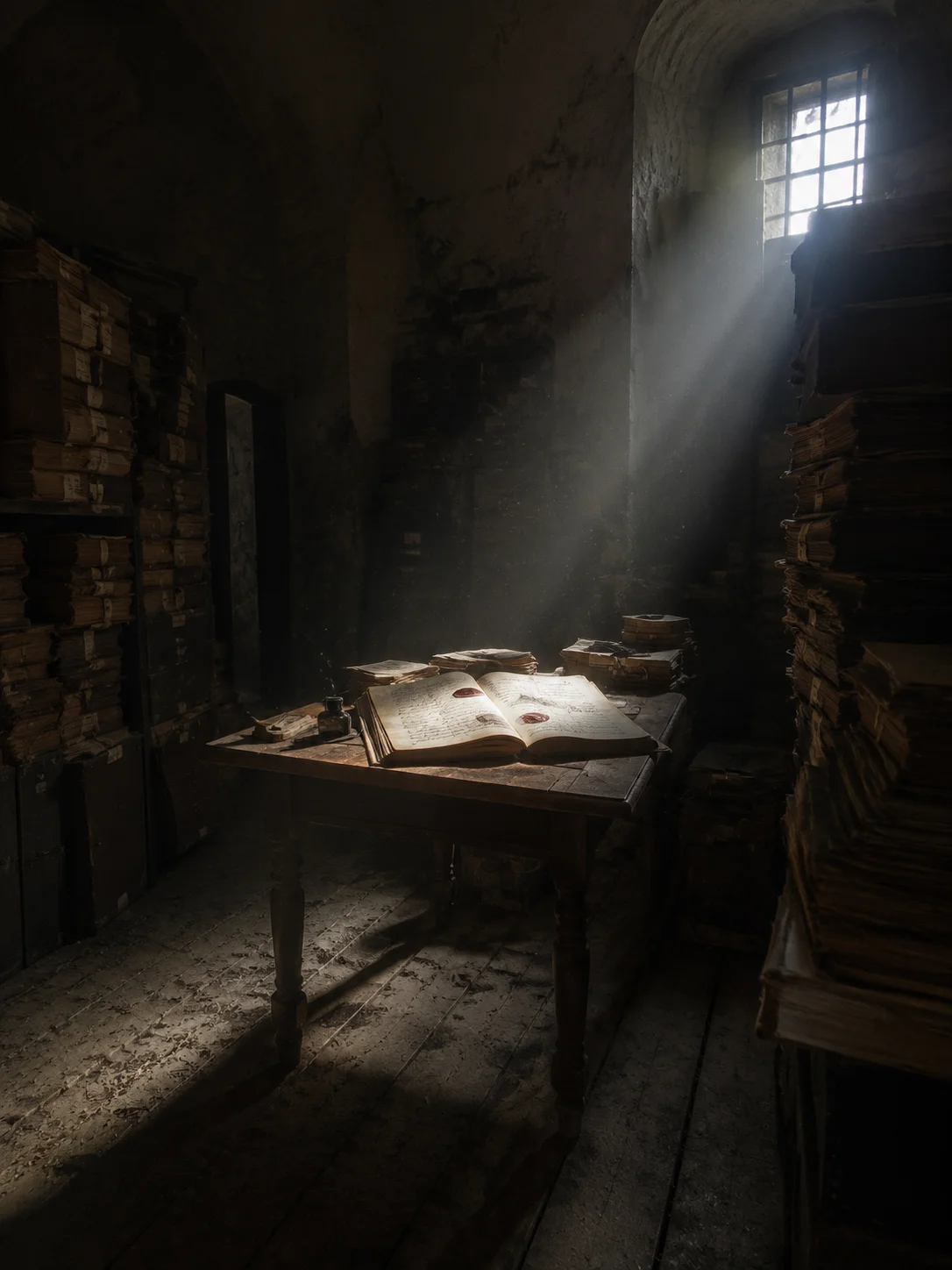
The scent of old beeswax and ink hits first, layered over the faint, iron tang of the basement vault's open door. A single shaft of late-afternoon light cuts across the room, illuminating swirling dust motes. Your boots disturb a pattern of frantic footwork in the dust on the floorboards. A mismatched wax seal, its color a deep burgundy against the usual grey, lies on the open ledger on the central table.
 Crime Scene Environment
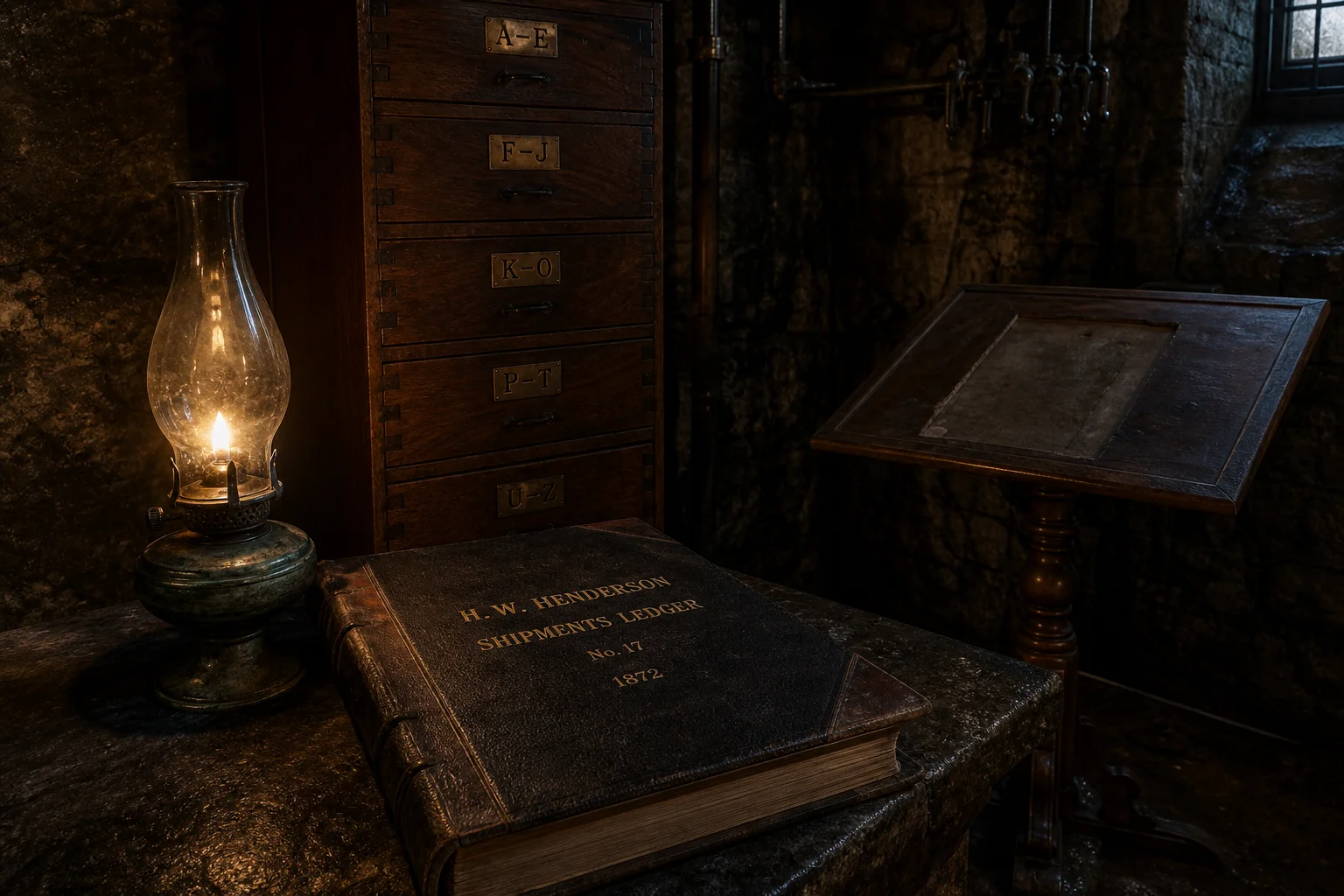
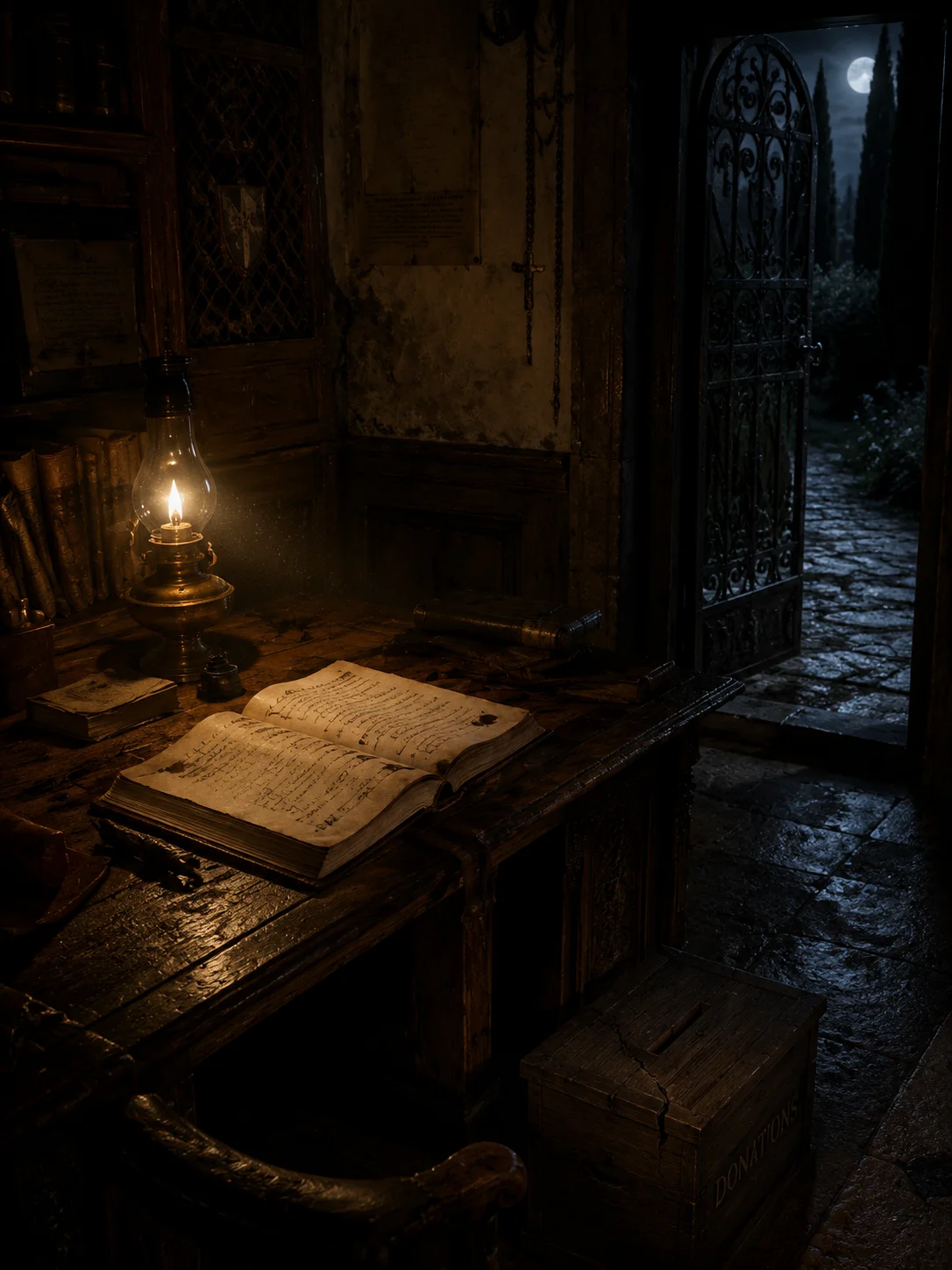
The environment is defined by perpetual low light from high, narrow windows, creating long, deep shadows. The air carries a constant humidity, cool and heavy, which makes paper and leather bindings feel cool to the touch. Acoustic density is low; sounds are muffled by the stacks of documents, punctuated only by the occasional creak of settling wood or the distant, muffled ring of a rotary telephone.
 Investigation Constraints
Handwritten ledgers, typewritten documents, carbon paper copies, iron key locks, wax seals, pneumatic tube messaging within the town hall, rotary telephones in private homes, manual card catalog systems.
✦ Related Cases ✦