The Midnight Ledger
A respected physician is found deceased in his locked vehicle behind a local diner. A single receipt becomes the focal point of an investigation into a labyrinth of long-held social shame, financial desperation, and accidental evidence contamination, stemming from ordinary people's panicked attempts to protect their reputations.
 Initial Crime Scene
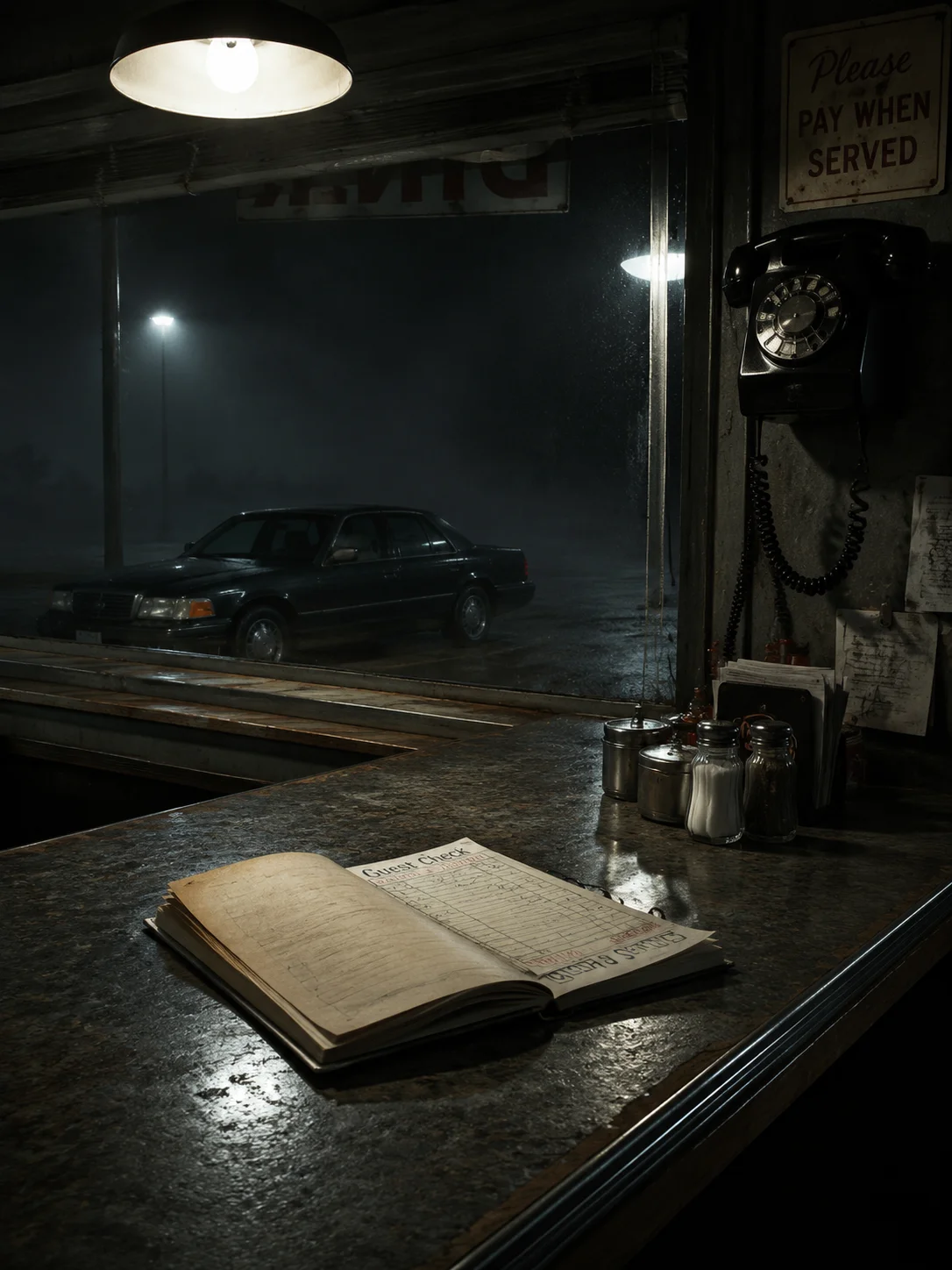
The cold, polished glass of the diner counter reflects a single, harsh overhead light. The air carries the greasy smell of old fryer oil and the faint, sharp scent of pine cleaner. A rotary phone on the wall sits silent, its coiled cord tangled. On the counter, a carbon-copy receipt book lies open, its pages crisp. Through the window, the fog-cloaked shape of a black Ford sedan is visible under a distant streetlamp.
 Crime Scene Environment
A small-town enclave under a perpetual dim light from overcast skies and single streetlamps. The air is cool and perpetually damp, carrying the scents of old wood, damp earth, and stale coffee. Sound is muffled by fog and the pervasive quiet, broken only by the distant chime of a clock or the creak of a floorboard. Acoustic density is low, favoring hushed tones and the rustle of paper.
 Investigation Constraints
Rotary dial telephones, paper ledgers, handwritten prescriptions, mechanical cash registers, carbon copy receipt books, rotary dial combination safes, manual typewriters, carbon paper, and physical mail delivery. Communication is by landline, post, or face-to-face. Record-keeping is exclusively on paper.
✦ Related Cases ✦