The Midnight Matter
A New Year's Eve gala at the Sterling mansion concludes with the host's death following the midnight toast. The investigator enters a scene of frozen timepieces and scattered personal effects, tasked with reconstructing events from a fractured collection of physical traces and contradictory statements.
 Initial Crime Scene
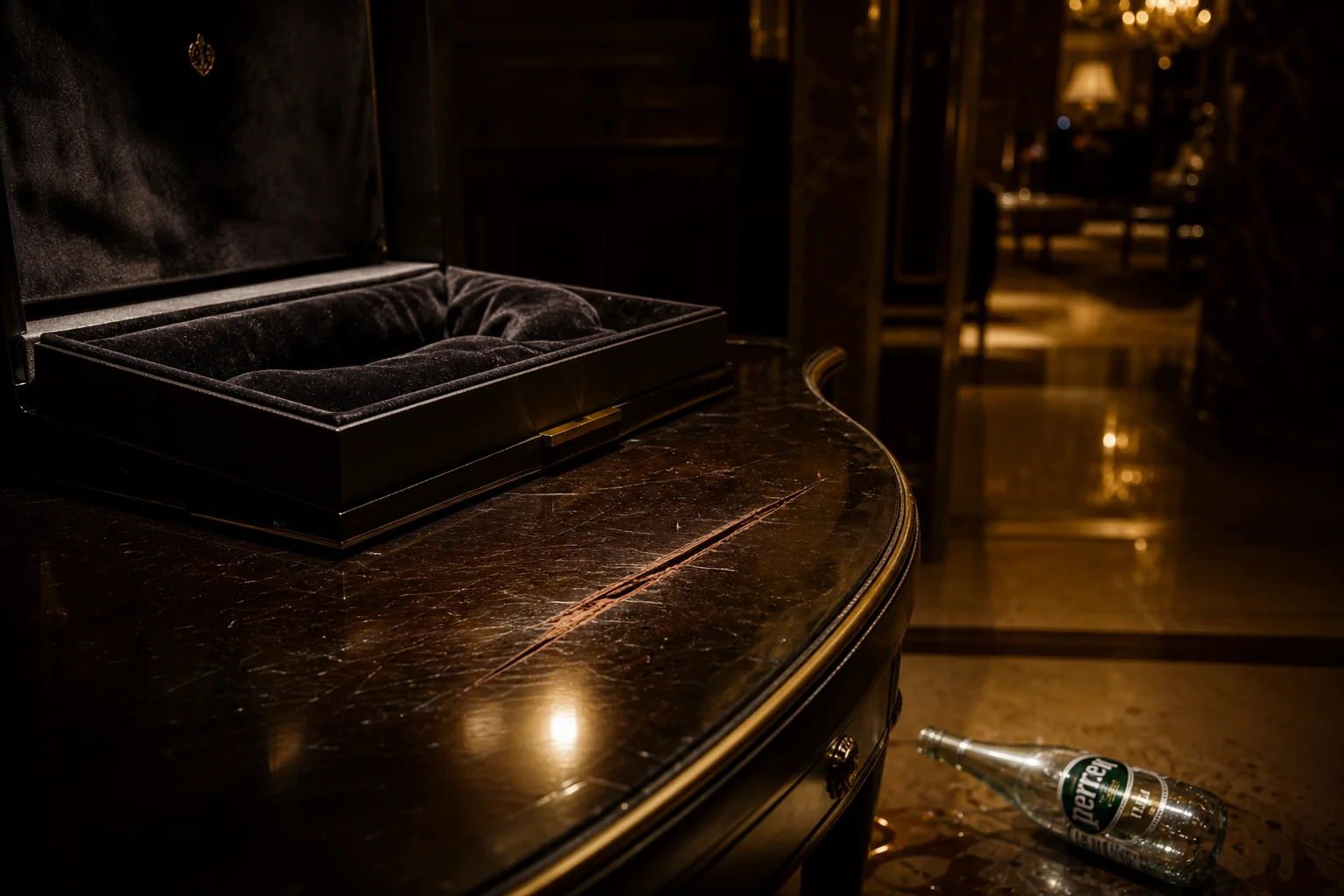
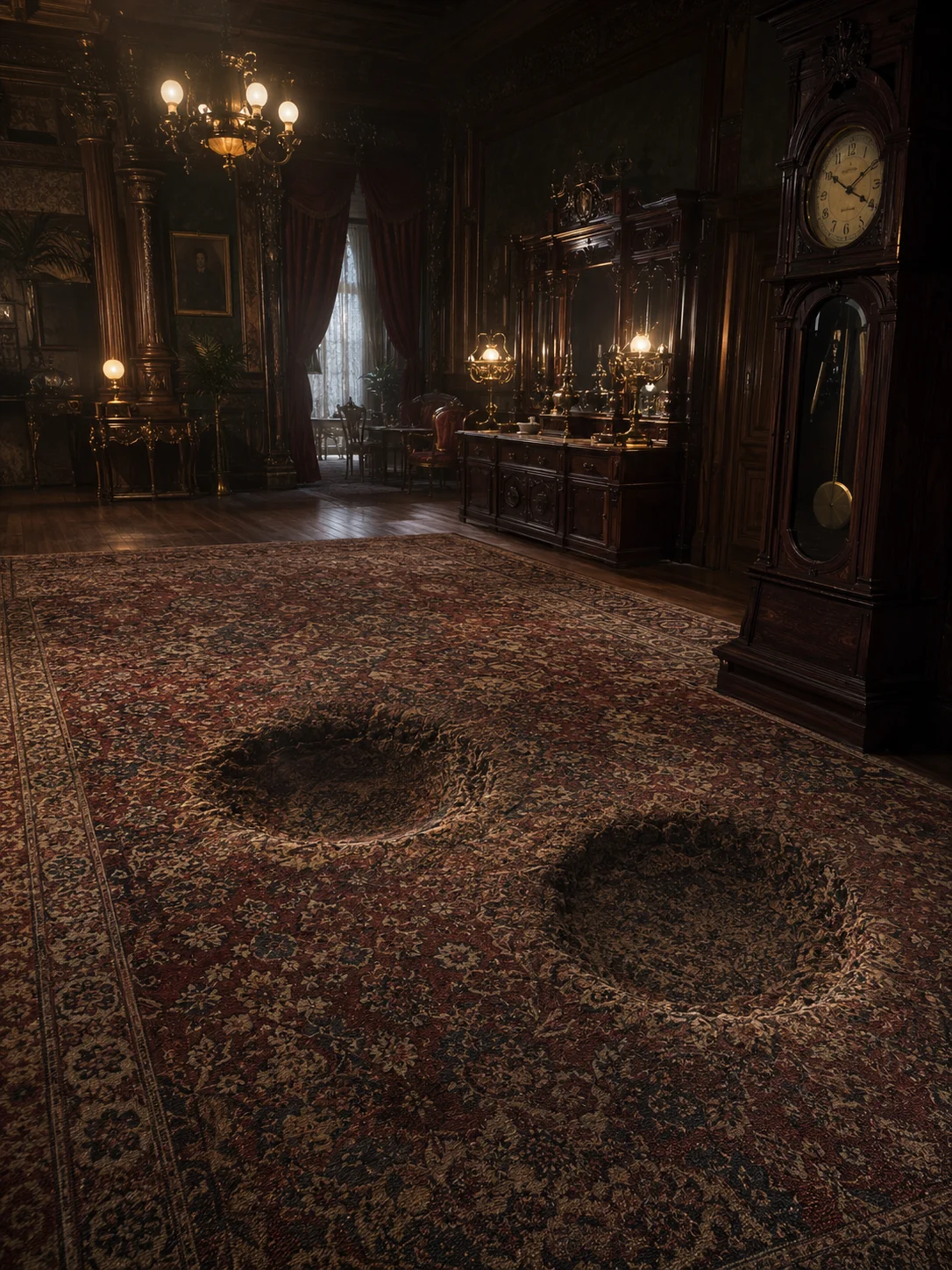
The scent of antifreeze cuts through the funereal perfume of lilies. Your first step onto the Persian rug meets a resistance—a pair of deep, circular indentations in the pile. The grandfather clock's walnut casing presents a warped, shallow indentation near its lower glass panel, its brass pendulum still. From a gas lamp in a brass fixture, light glints off the polished mahogany of a sideboard across the hall.
 Crime Scene Environment
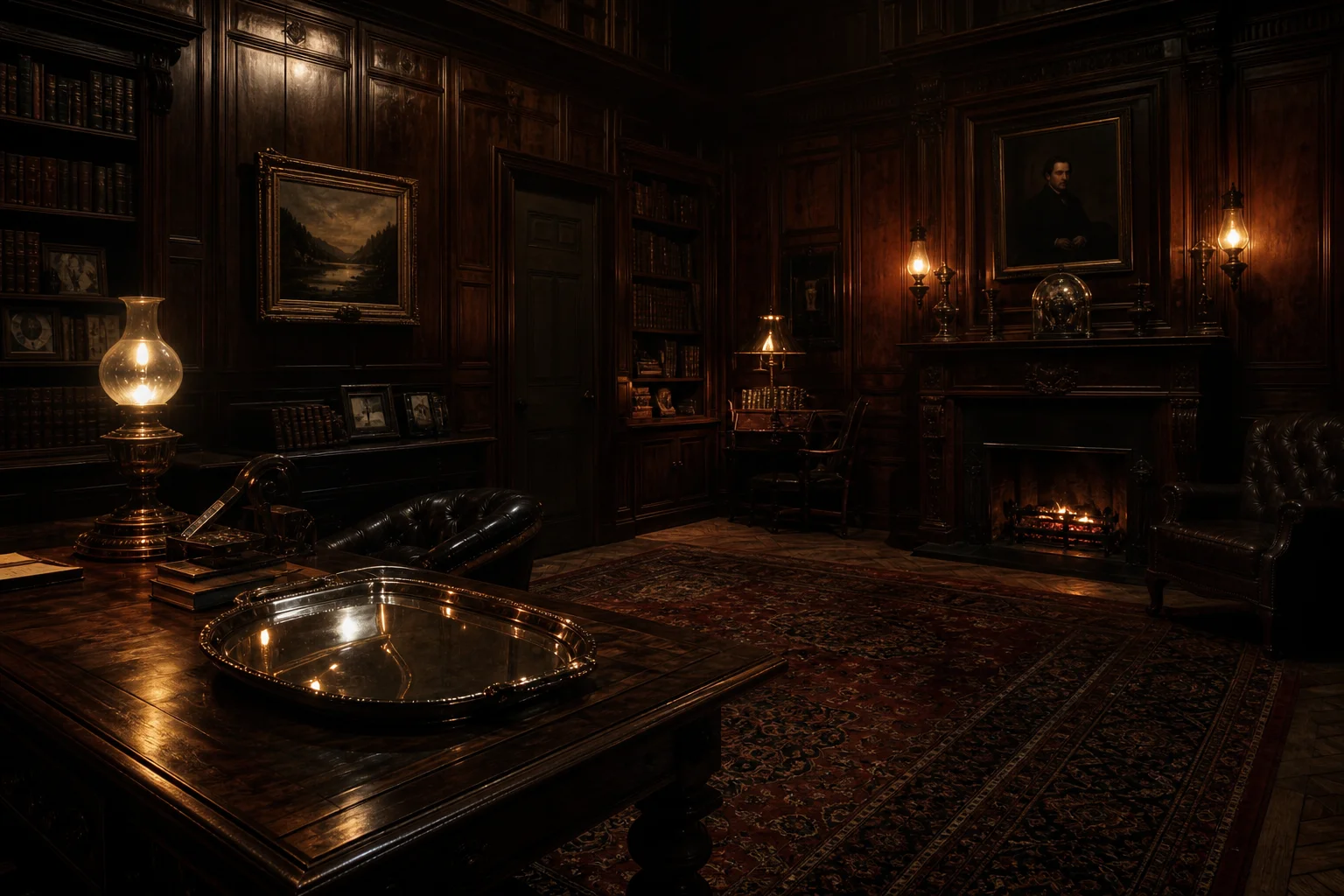
The lighting is a warm, uneven glow from gas lamps in brass fixtures, casting long, soft shadows. The air is dry and cool, carrying the distinct acoustic density of a large, high-ceilinged space where sounds—like a distant door click or a muttered phrase—carry with a faint, echoing quality.
 Investigation Constraints
Early 20th century domestic technology: mechanical clocks with winding keys, rotary telephones, handwritten ledgers, manual printing presses, physical guest books, antique safeboxes with combination dials, gas lamps, coal furnaces, horse-drawn carriages, and early automobiles.
✦ Related Cases ✦