The Neon Canopy
In a rain-soaked metropolis stratified by corporate power, a data courier's body is discovered within a municipal waste compactor. The investigation spans automated systems, encrypted logs, and personal data trails, requiring the untangling of multiple layers of professional and personal activity to reconstruct the final sequence of events.
 Initial Crime Scene
A faint ozone smell from the building's environmental vents stings your nostrils as you step onto the penthouse balcony. The only sound is the distant, steady hum of the city's undergrid. Your eyes register the cold gleam of the chrome-plated railing, the dark, shattered screen of a data-slate lying on the polycarbonate floor, and a small, metallic object caught in the drainage grate.
 Crime Scene Environment
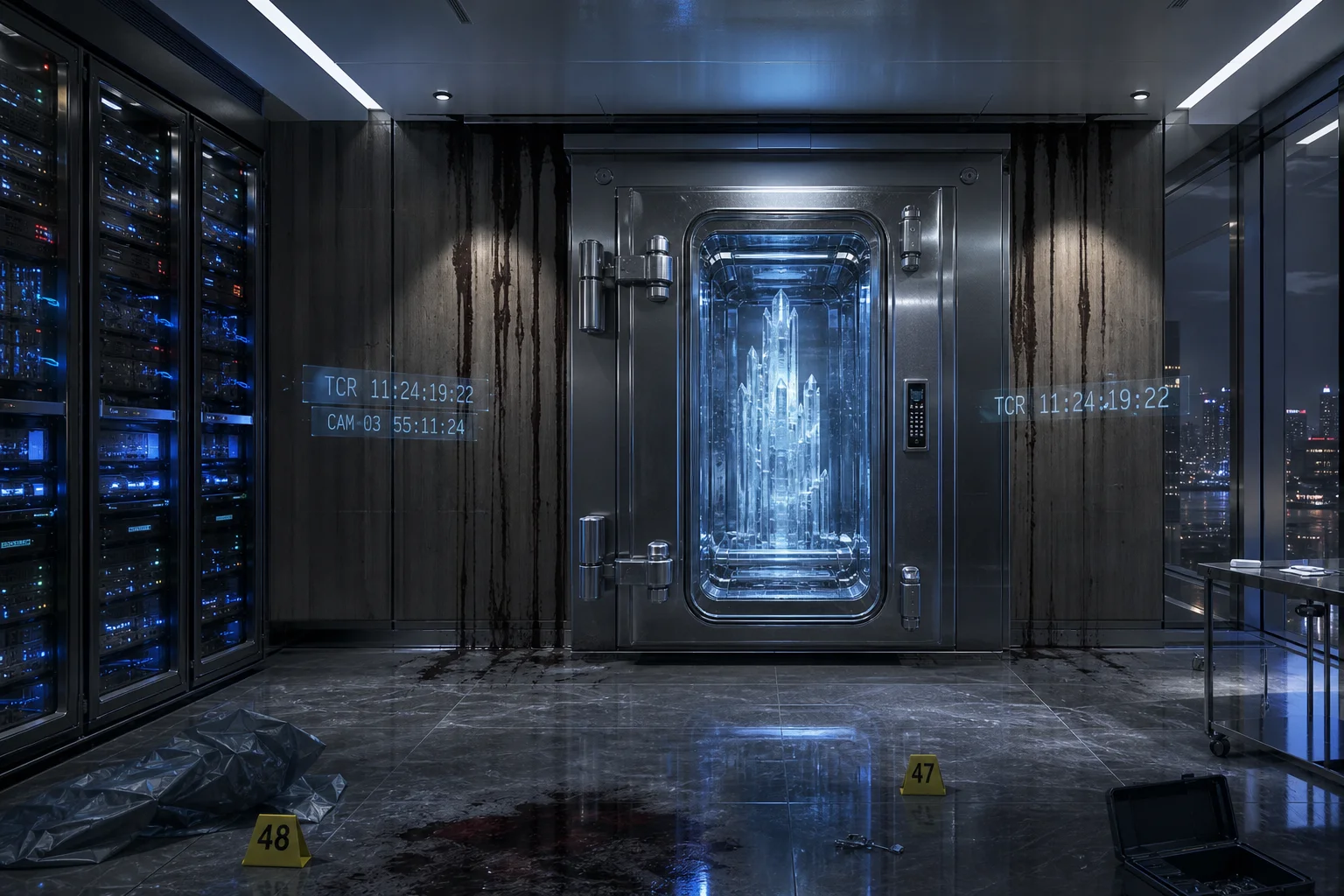
The sandbox is defined by sterile, recessed lighting casting sharp, synthetic shadows. The air carries a persistent ozone-tinged chill and low humidity, while acoustic density is muted, dominated by the static-hiss of distant systems and the occasional, hollow echo of one's own movement within corporate and municipal spaces.
 Investigation Constraints
Neural-link data chips (standard corporate courier implant), municipal surveillance drones with basic motion-recording (no audio), automated garbage collection drones with mandatory payload scanners and GPS telemetry, corporate intranet terminals (local network only, no global internet), biometric keycards, encrypted handheld data slates, basic forensic molecular scanners, retrofitted analogue security cameras in lower-level districts.
✦ Related Cases ✦