The Perfumed Envelope
A silver-screen icon is found deceased in a wood-paneled studio office. An independent forensic specialist is called to the scene. Initial observations reveal a constellation of personal artifacts—perfumed handkerchiefs, defaced scripts, and contradictory schedules—set against a backdrop of pervasive industry anxiety. The task is to reconstruct a coherent timeline from the physical and testimonial fragments.
 Initial Crime Scene
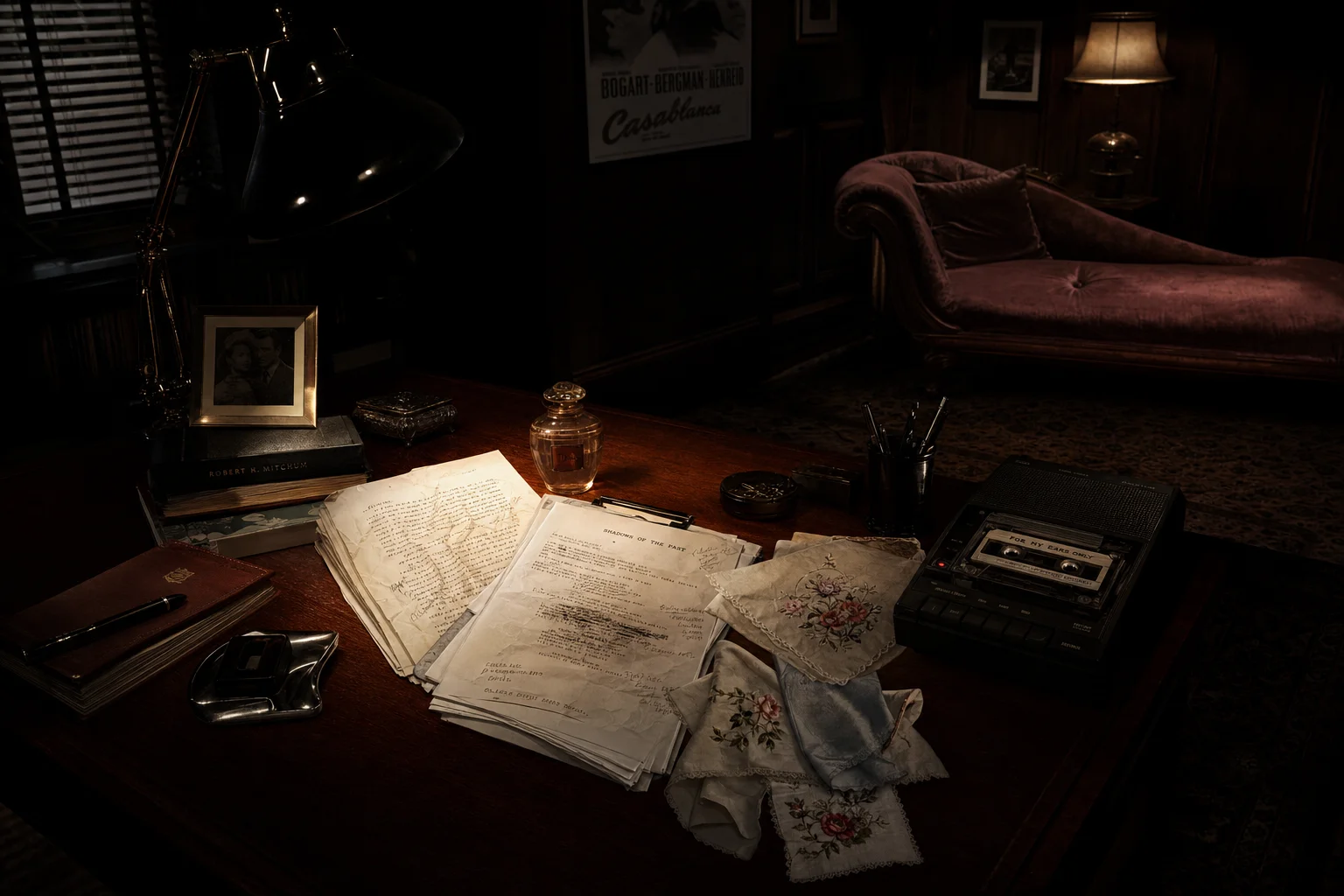
The door opens onto a haze of heavy floral perfume and the dry, sweet scent of old paper. A single desk lamp casts a hard circle of light onto a mahogany surface, leaving the rest of the room in deep shadow. The velvet cushions of a chaise lounge show a clear, central indentation. An analog answering machine sits silent on the desk, its cassette tape visibly spliced with a lumpy seam of adhesive.
 Crime Scene Environment
The primary environment is a wood-paneled study, characterized by low, warm incandescent lighting that creates deep pools of shadow. The acoustic density is low, emphasizing the silence between the soft hum of distant city traffic and the occasional creak of old wood. The air is cool and carries a consistent, low humidity, underscored by the layered scents of aged leather, paper dust, and a pervasive, cloying floral perfume.
 Investigation Constraints
Landline telephones, physical filing cabinets with key locks, analog answering machines with cassette tapes, Polaroid cameras, typewriters, printed press releases, paparazzi telephoto lenses, pay phones, and physical contract binders with wax seals.
✦ Related Cases ✦