The Port's Ledger
A deceased foreman is found at the port. The investigation navigates a landscape of professional roles and routine dock operations, where each individual's account and paperwork form a complex, overlapping record.
 Initial Crime Scene
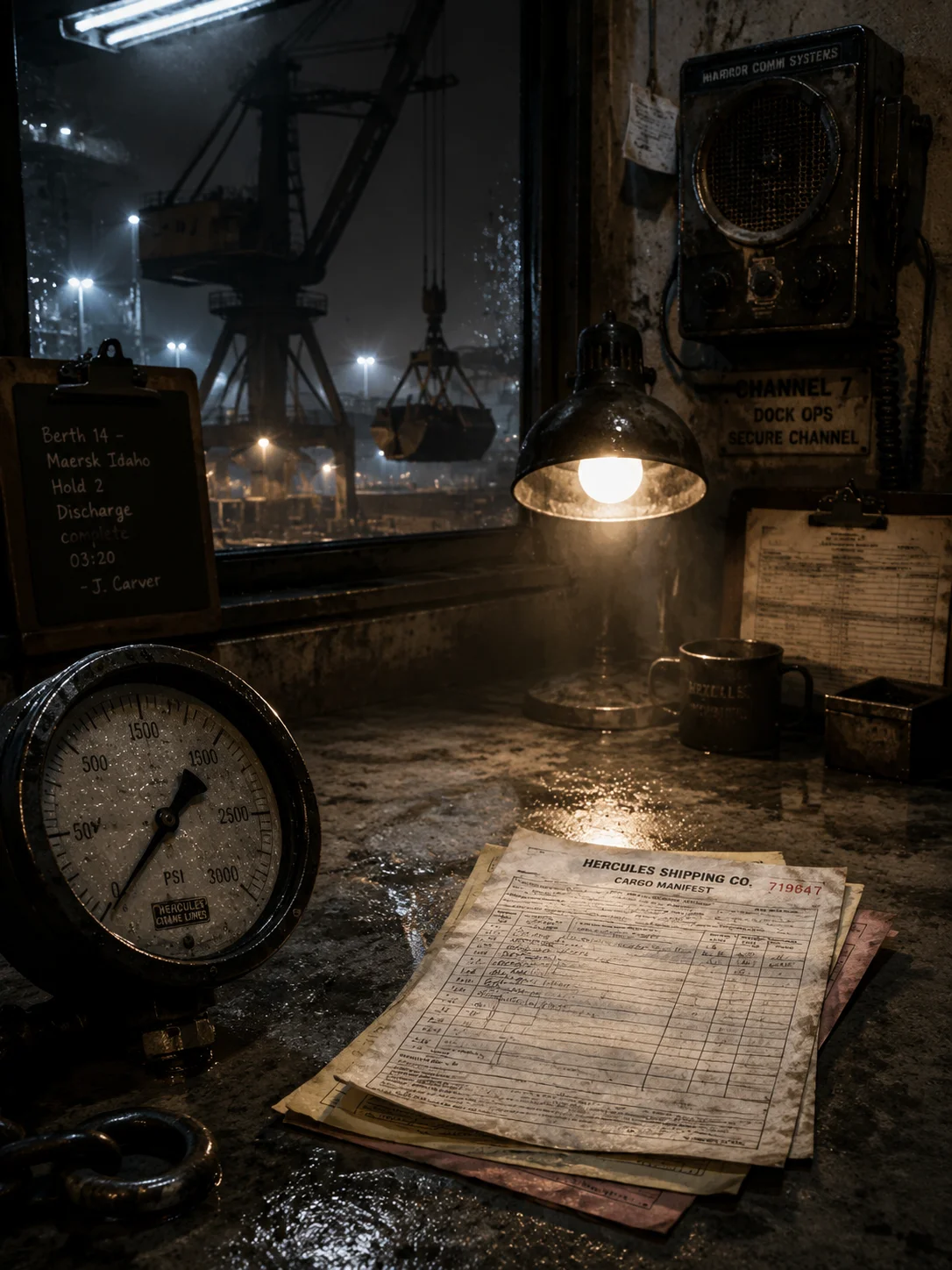
The smell of ozone from sparking wires and diesel fumes hits first, a sharp chemical tang over damp concrete. Static-laced radio chatter crackles from a wall-mounted speaker. Your gaze catches on carbon-copy manifests with mismatched top and bottom sheets on a desk, the flickering halogen light overhead, and the heavy mechanical pressure gauge on a nearby crane line.
 Crime Scene Environment
The sandbox operates under a persistent flickering halogen and cold fluorescent hum lighting profile. The humidity and temperature profile is damp and cool, with condensation forming on metal surfaces. The acoustic density is high, characterized by echoing cargo hold sounds, the thud of rubber stamps, and intermittent static from police-band radios.
 Investigation Constraints
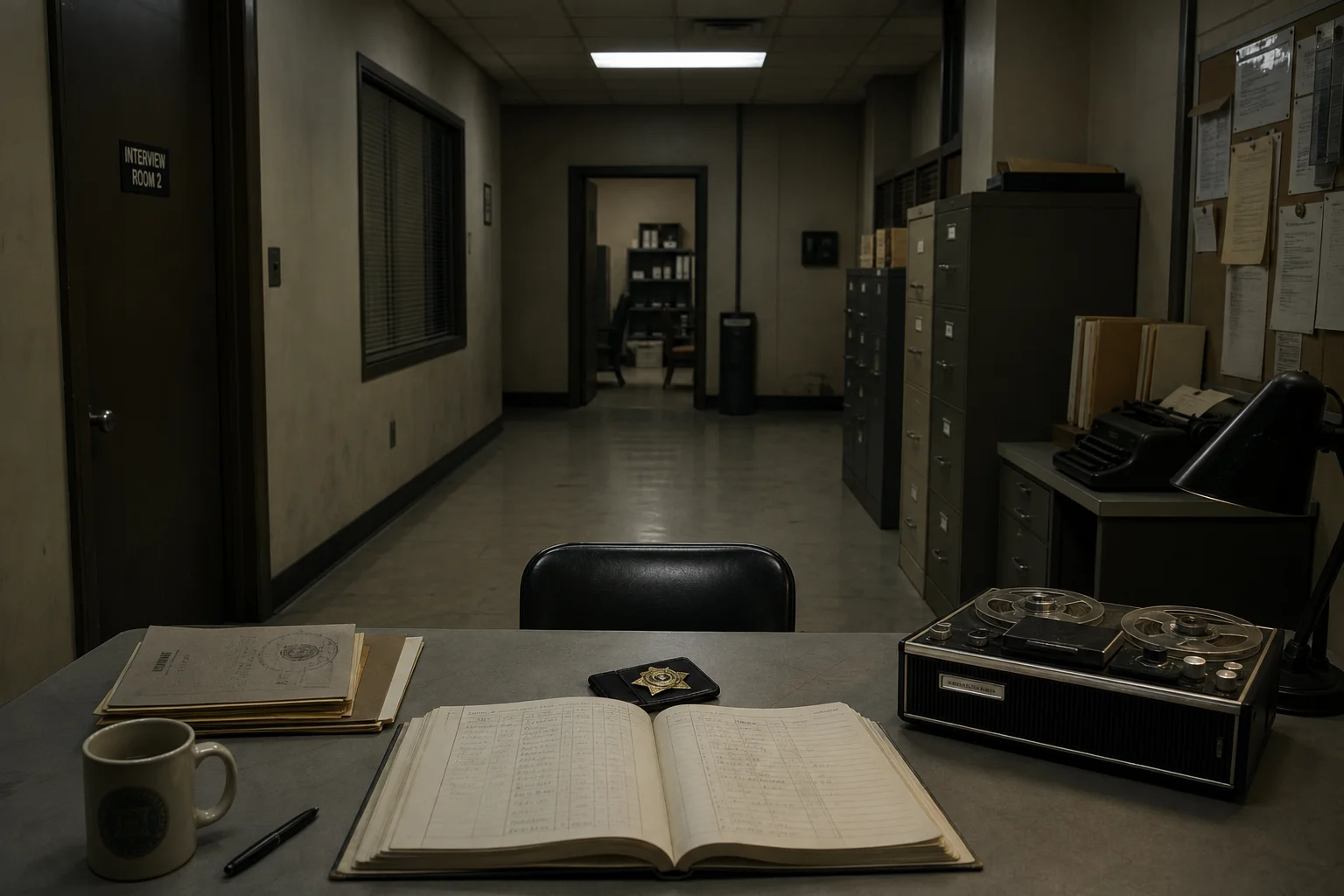
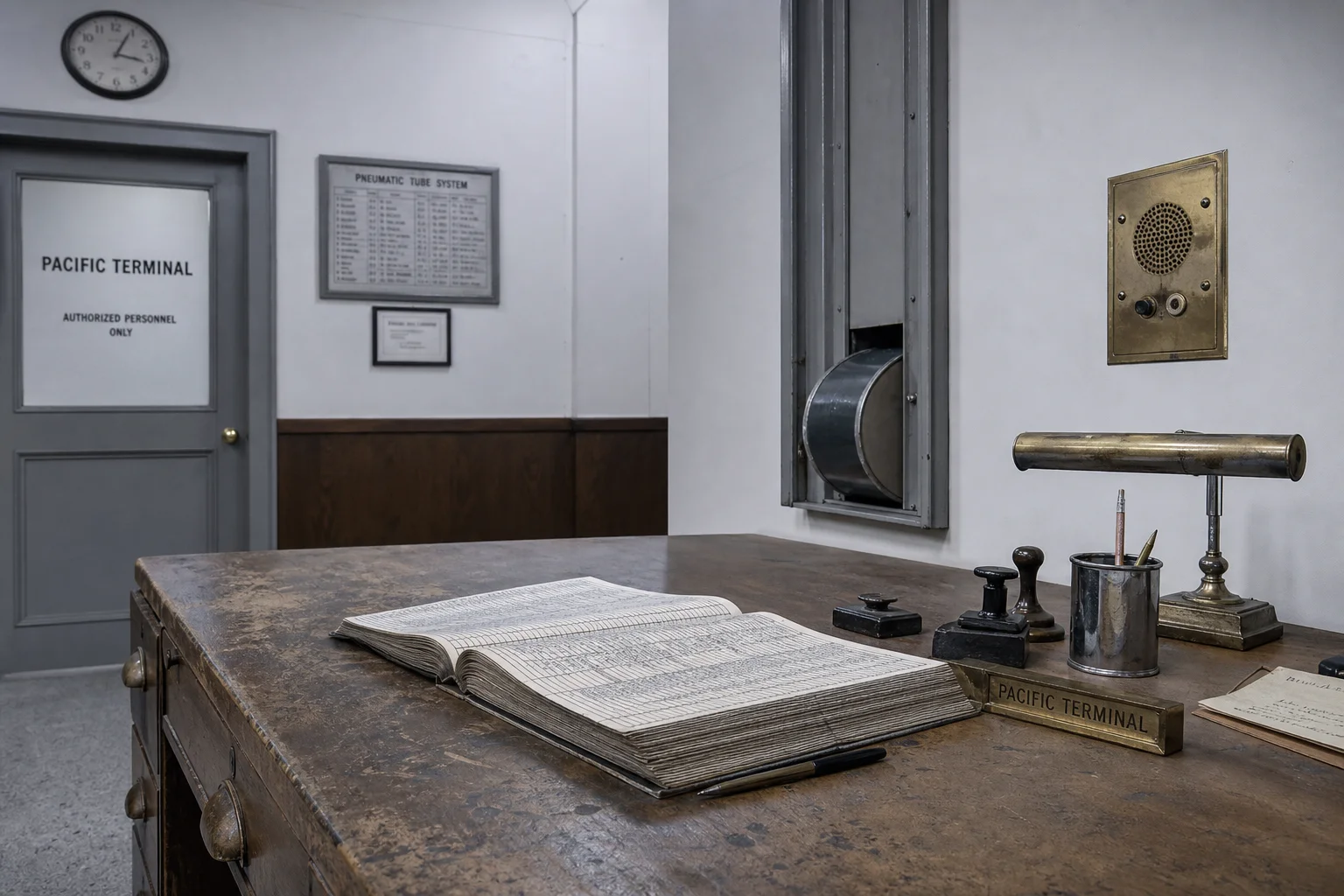
Analog and early-digital 1980s port authority systems: pneumatic tube message carriers, telex machines, carbon-copy manifests, heavy mechanical dock cranes with manual pressure gauges, hand-cranked cargo winches, physical logbooks with carbon paper duplicates, police-band radio intercepts, early desktop computers for customs processing (no networked databases).
✦ Related Cases ✦