The Protocol Fracture
In the sealed environment of a corporate neural-link facility, a senior researcher's session ends abruptly during a live link. The resulting data anomaly presents a 60-second gap in the central session log, an incident that requires a forensic specialist to untangle the overlapping audit trails, biometric access logs, and environmental sensor data to reconstruct the sequence of events.
 Initial Crime Scene
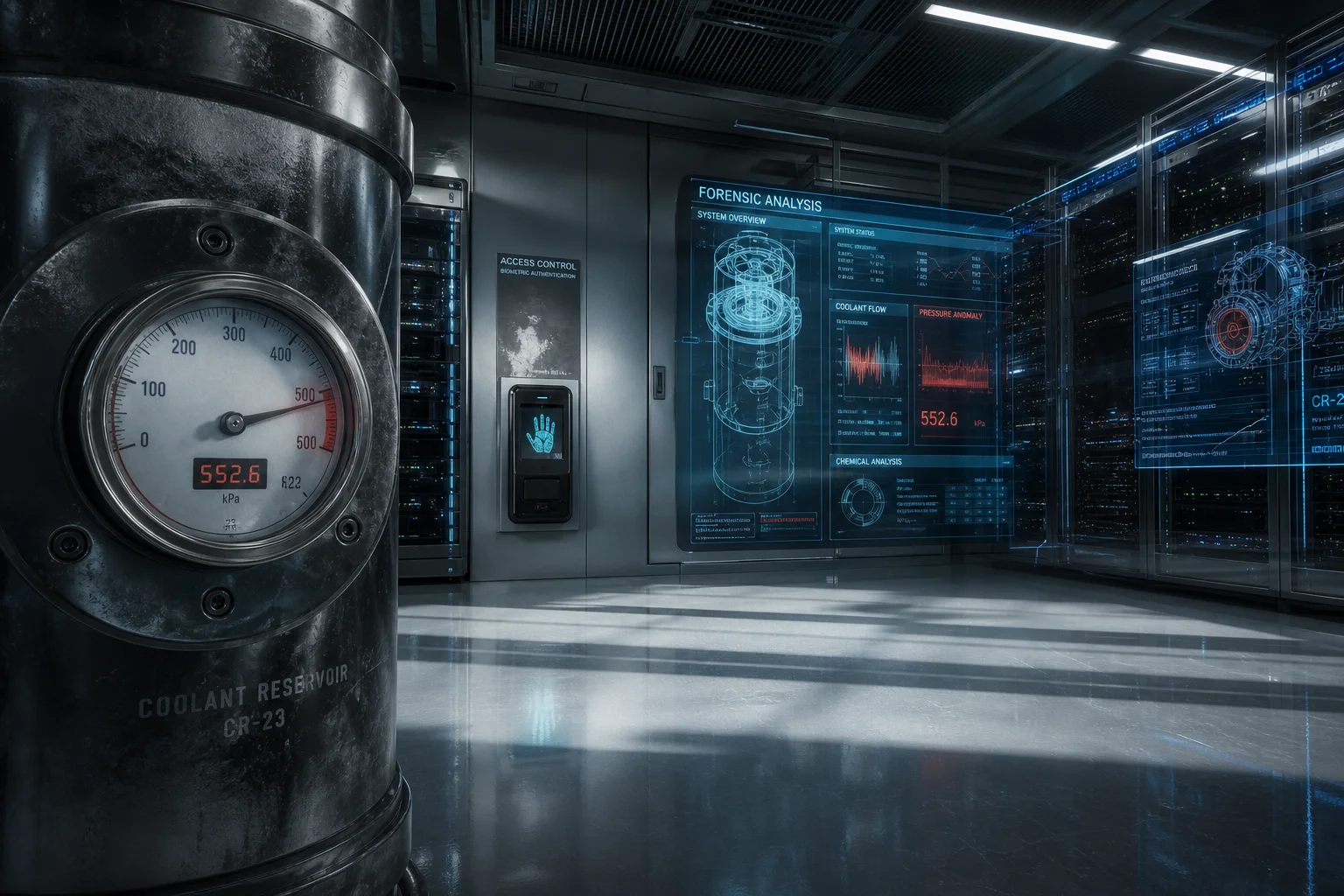
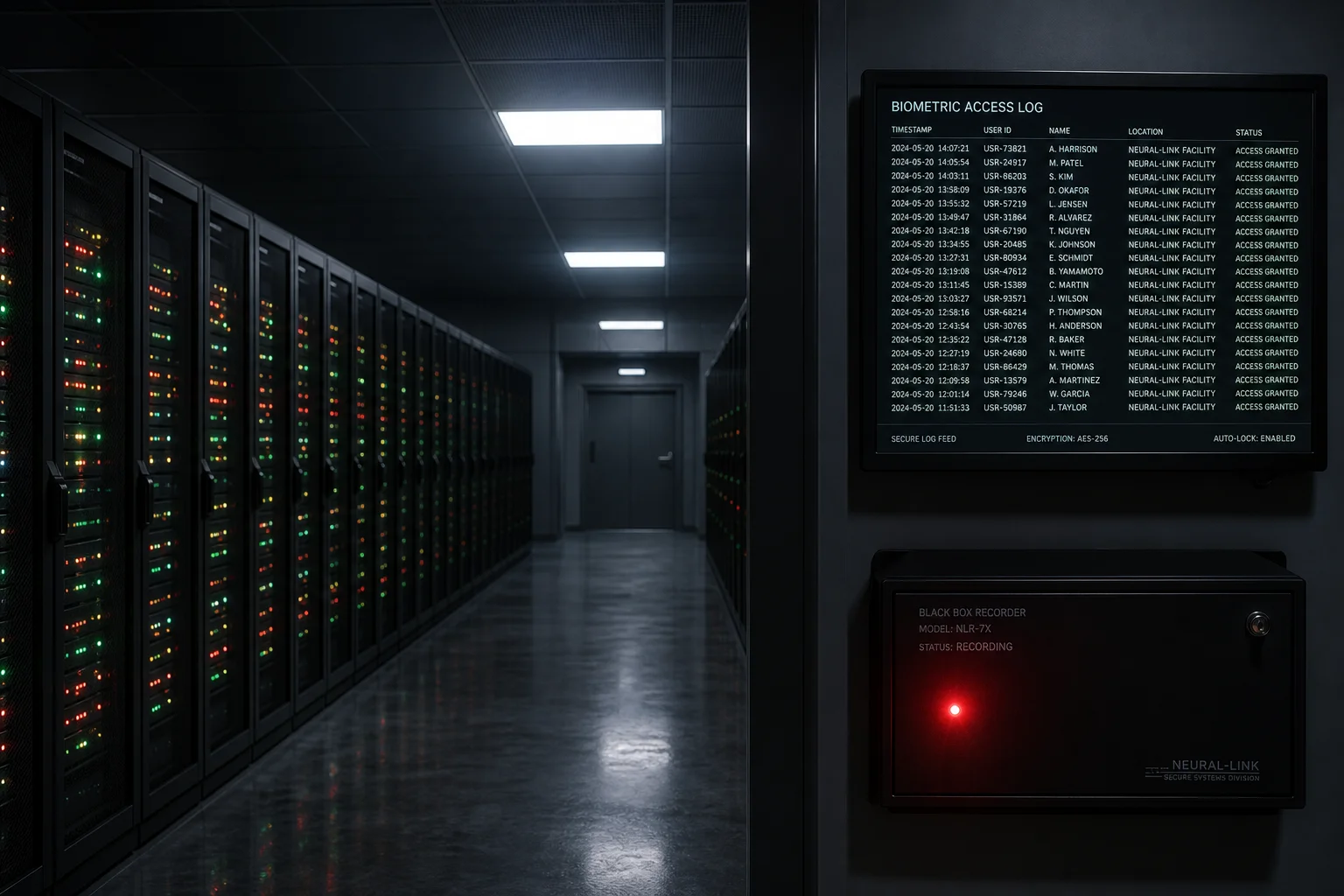
The first thing that hits you is the ozone tang, a sharp, sterile smell cutting through the chilled, recycled air. A constant, low-frequency hum vibrates up from the floor, the sound of massive cooling systems and active data-streams. Rows of identical black server racks stretch into the gloom, their fronts a constellation of blinking green, amber, and red status lights. On a wall-mounted monitor, a scrolling biometric access log casts a pale, rhythmic light across the polished floor. A single 'black box' recorder unit mounted near the entrance glows with a steady, unblinking red light.
 Crime Scene Environment
The lighting profile is a mix of cold, overhead fluorescent panels and the rhythmic, colored glow from server status indicators, creating pools of stark light and deep shadow. The humidity and temperature profile is meticulously controlled: the air is dry and cool, optimized for electronics, with no discernible draft. The acoustic density is dominated by the pervasive, low-frequency hum of cooling systems, punctuated by the occasional soft click of a relay or the whir of a fan spinning up under load.
 Investigation Constraints
Direct neural-link interfaces for conversation and data transfer; corporate-issued implants with biometric authentication and activity logs; sealed, climate-controlled server rooms housing local network archives; encrypted 'black box' recorders for all high-level neural sessions; rigid, tiered data-access protocols monitored by automated compliance systems.
✦ Related Cases ✦