The Protocol's Shadow
A municipal building's internal audit is initiated following the discovery of a deceased investigator in the basement archive room. The inquiry surfaces a network of delayed reports, misfiled documents, and irregular accounting entries across multiple city departments. Witness statements and system logs present conflicting timelines of the evening in question.
 Initial Crime Scene
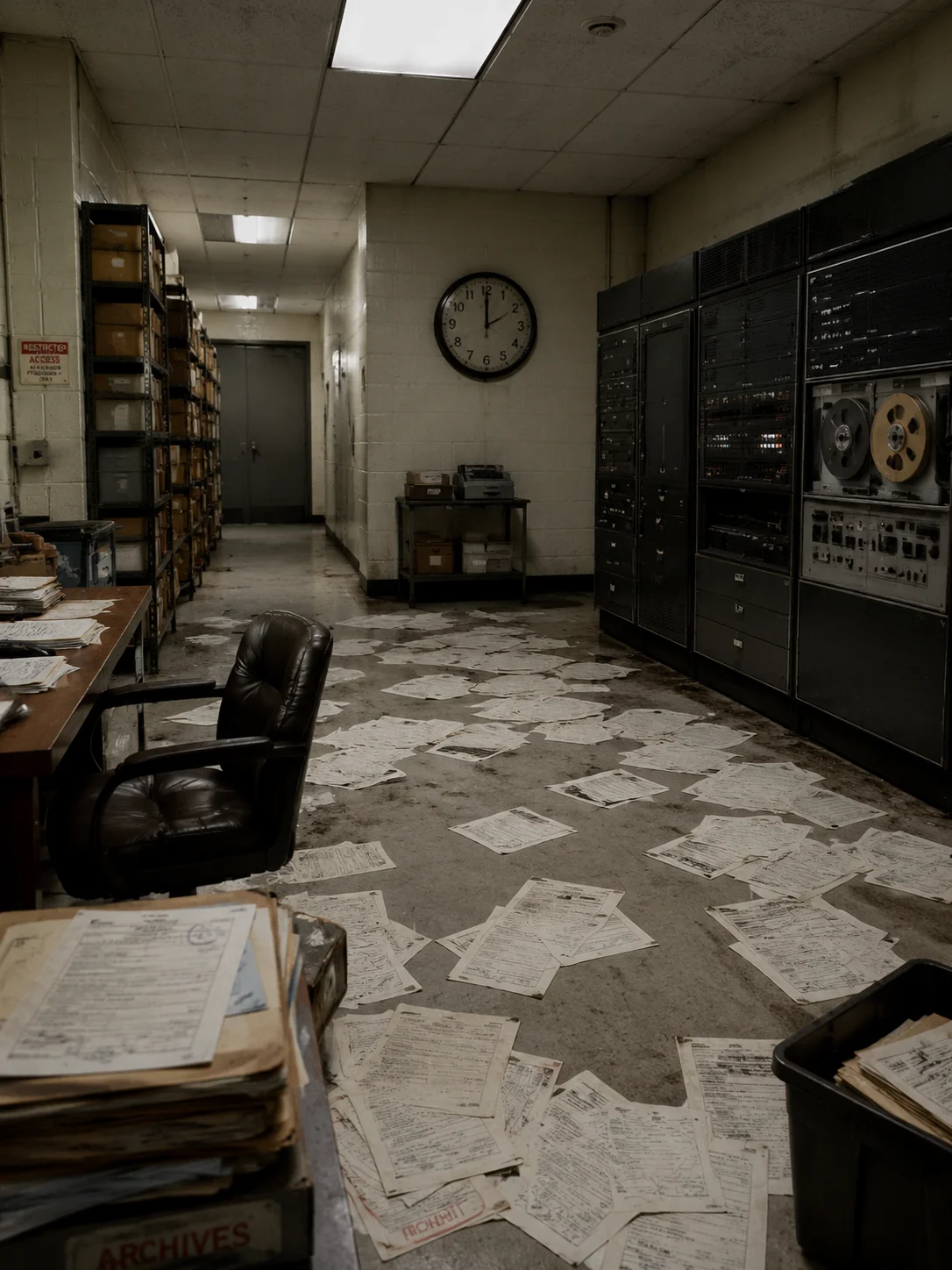
The threshold crossed, the first breath catches on the sharp, electric scent of ozone from overheated copier machines. A low, persistent hum of cold fluorescent lighting fills the space, punctuated by the distant, muffled thump of a pneumatic tube capsule arriving somewhere unseen. Visually, the gaze falls upon carbon-copy triplicate forms with misaligned pressure impressions scattered on the floor, a massive floor-mounted mainframe server unit humming against one wall, and an analog clock face frozen in its testimony on the opposite wall.
 Crime Scene Environment
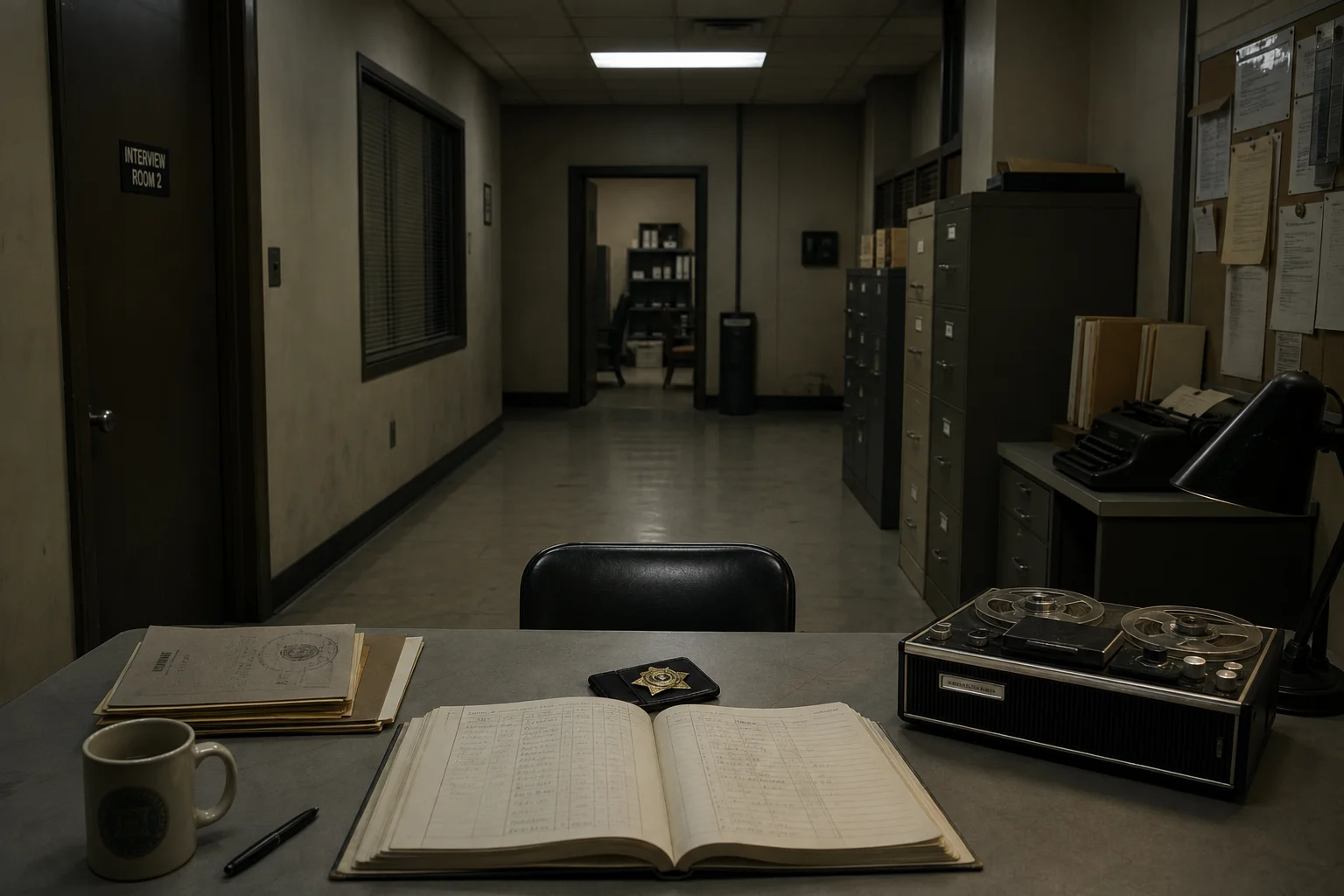
A government institutional environment characterized by cold, shadowless fluorescent lighting. The air is dry, carrying a humidity level below standard comfort, with a persistent, low acoustic density from ventilation systems and electrical hum. All textures and materials are defined by their bureaucratic function: worn file folders, institutional beige walls, rubber stamp ink, and the muted, tired leather of office furniture.
 Investigation Constraints
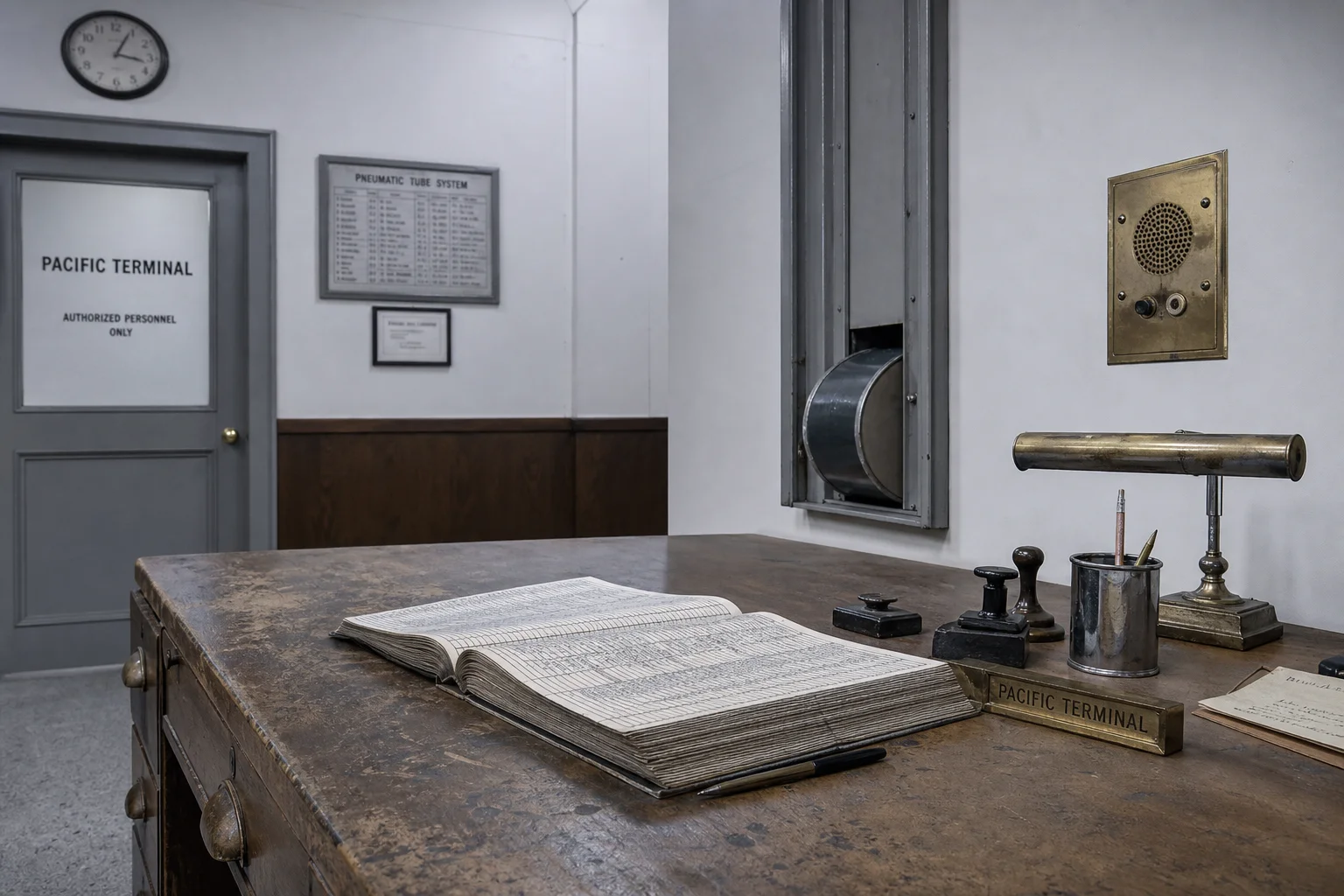
Corded landline telephones, pneumatic tube message systems in municipal buildings, analog closed-circuit television with time-stamped VHS tapes, mechanical and early electronic combination locks, carbon-copy invoice books, dot-matrix printers for official reports, pneumatic-tube-delivered internal memos, manual key-cutting machines, networked mainframe terminals for city records accessible only via physical terminal access and typed passwords.
✦ Related Cases ✦