The Quiet Ledger
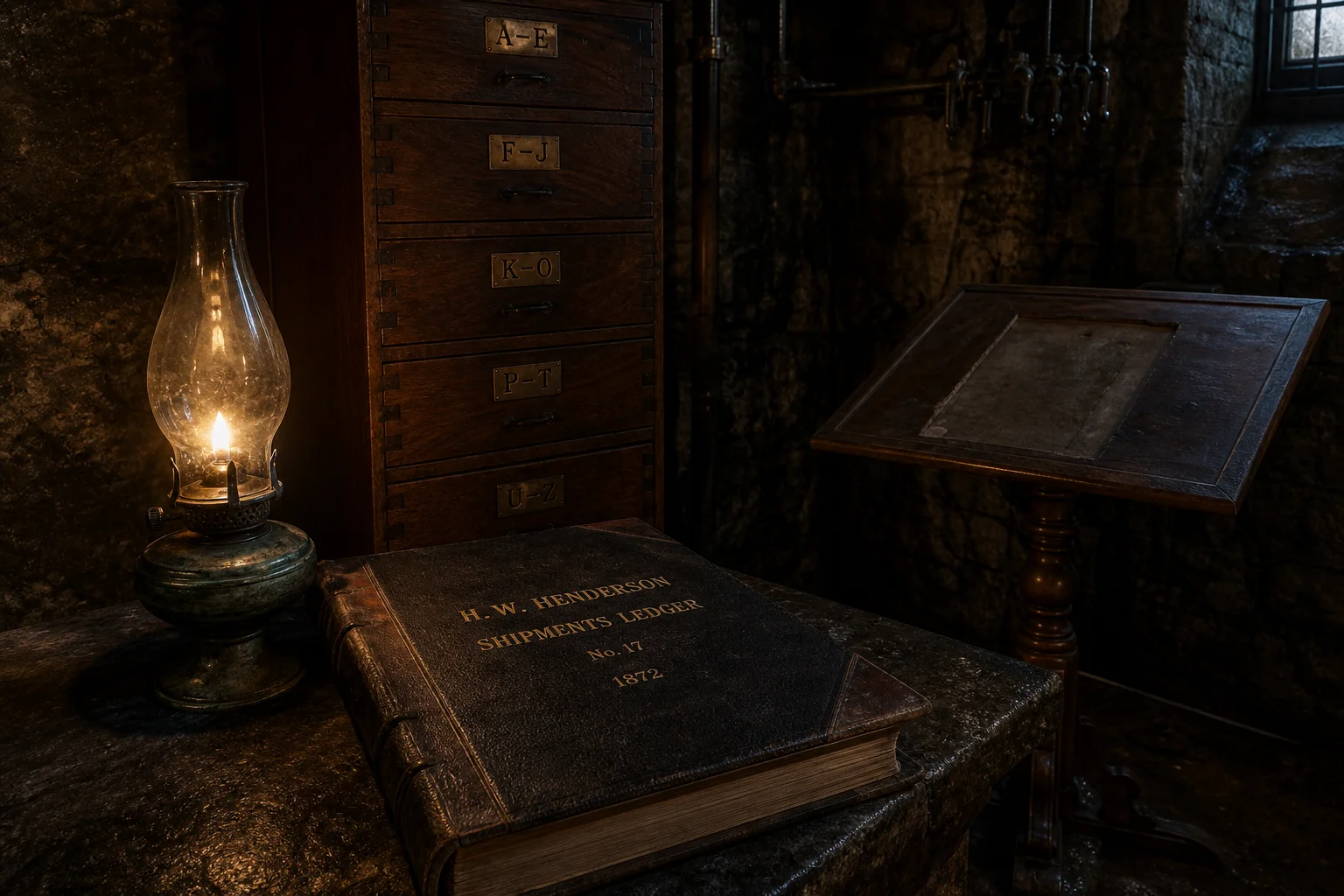
An independent investigator arrives to examine the circumstances surrounding the death of the town's church treasurer. The donation ledger, a key record, is absent from the study. The household and community figures present each offer their own accounts of their whereabouts and activities that evening.
 Initial Crime Scene
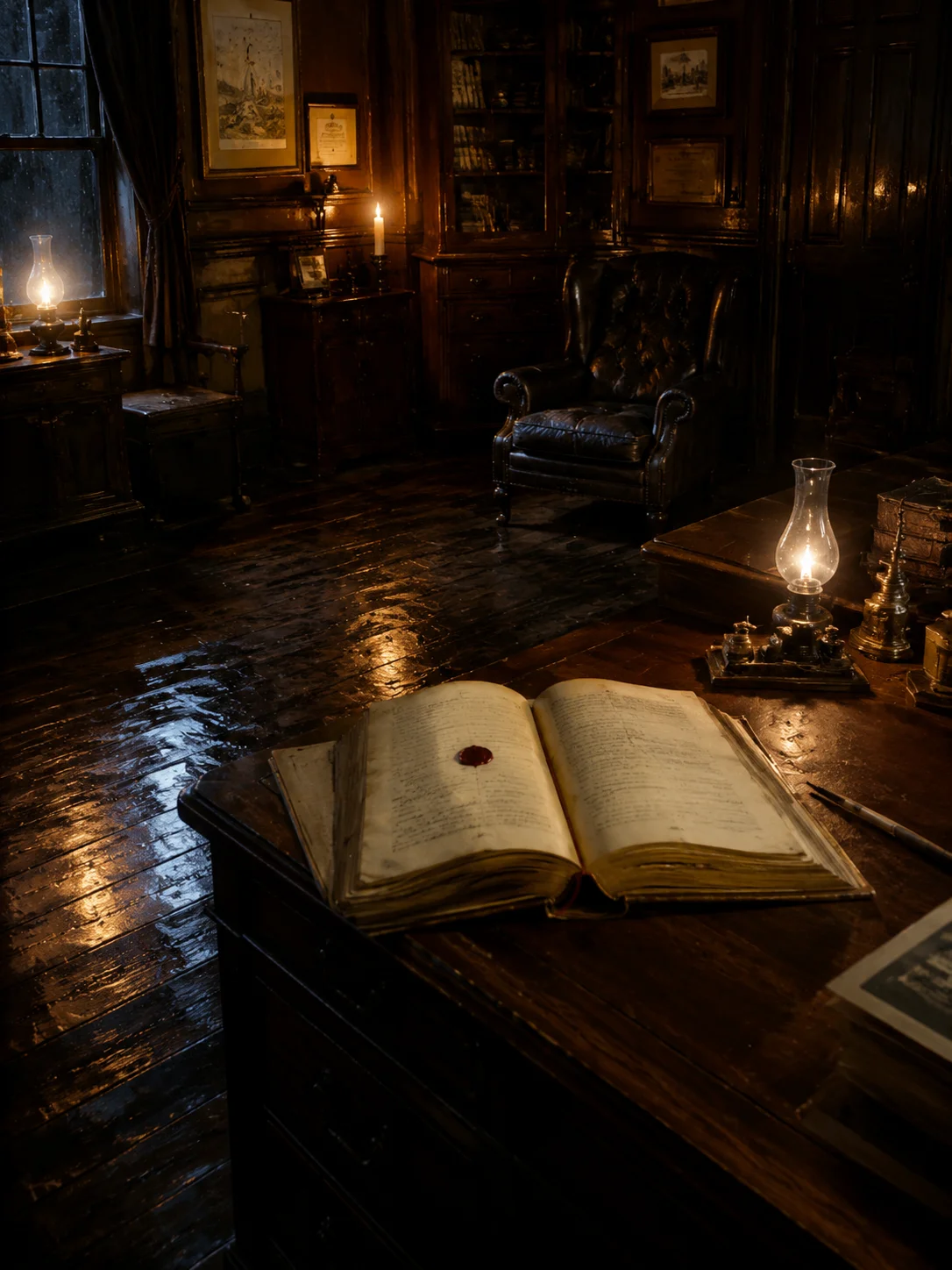
The scent of old paper and beeswax hangs in the air, underscored by the faint, distant chime of the town clock. Candlelight flickers across polished oak floorboards, catching the deep grain. A mahogany armchair sits in a far corner, its leather marked. A wax-sealed ledger lies open on a large desk, its pages slightly fanned.
 Crime Scene Environment
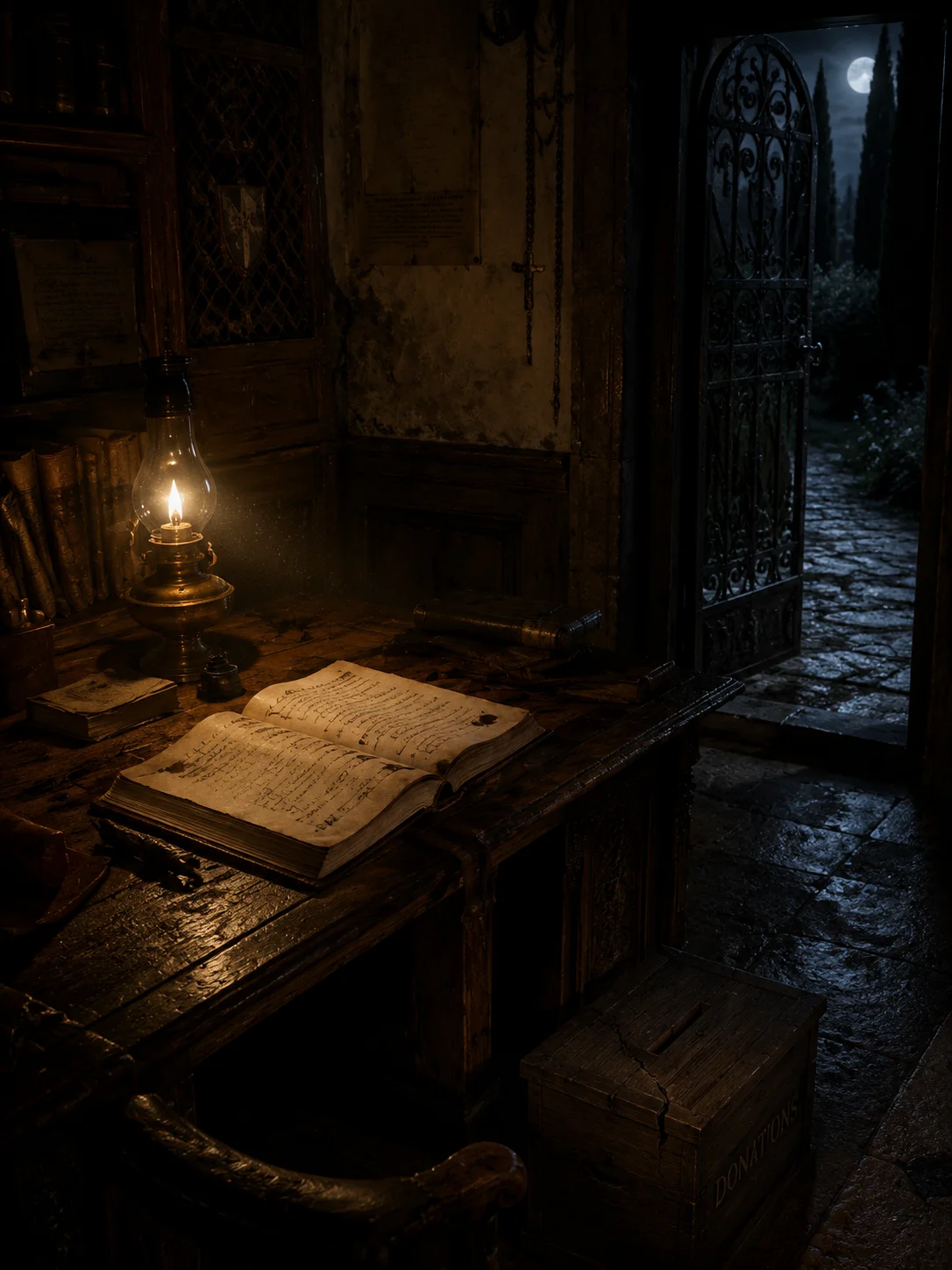
The primary illumination is from oil lamps and candlelight, creating pools of warm light and deep, shifting shadows. The air carries a moderate humidity, cool against the skin, with a persistent acoustic density of muffled household sounds and the occasional, soft creak of settling wood.
 Investigation Constraints
Candlelight and oil lamps for illumination; quill pens, inkwells, and blotting paper for writing; wax seals for documents; mechanical door locks with skeleton keys; a single, shared town telegraph office; hand-cranked printing press for the church bulletin; town clock tower for timekeeping; handwritten ledgers, diaries, and personal correspondence as primary records.
✦ Related Cases ✦